AFCAT Flying Branch 2026: Eligibility, Selection Process, Training & Career
Everything you need to know about joining the Indian Air Force Flying Branch through AFCAT 2026 — from eligibility and CPSS to AFA training, aircraft types, and career progression as an IAF pilot.
- What is the IAF Flying Branch?
- Flying Branch Eligibility Criteria 2026
- Complete Selection Process: AFCAT to Wings
- CPSS & PABT: The Pilot Aptitude Tests
- AFSB: What the Air Force Selection Board Tests
- Flying Training at AFA, Dundigal
- Aircraft You Could Fly as an IAF Pilot
- Salary, Allowances & Service Conditions
- Career Progression in Flying Branch
- Frequently Asked Questions
What is the IAF Flying Branch?
The Flying Branch is the most prestigious stream in the Indian Air Force — it produces the pilots who fly India’s frontline combat aircraft, transport fleet, and helicopters. Officers selected through AFCAT for the Flying Branch join as Flight Lieutenants after completing training at the Air Force Academy (AFA) in Dundigal, Hyderabad.
Unlike the Army or Navy, the IAF Flying Branch offers a career where you can fly some of the most advanced aircraft in South Asia — from the Dassault Rafale to the HAL Tejas. Every pilot in the IAF enters through a selection process that begins with AFCAT and ends with earning their wings at AFA. The journey from AFCAT application to first solo flight is approximately 18–24 months.
📌 Key Facts: Flying Branch through AFCAT 2026
Commission type: Short Service Commission (SSC) — 14 years initial, extendable | Starting rank: Flying Officer after AFA | First posting: Operational squadron | Age on joining: 20–24 years | Service period: Up to 26 years for extended SSC
Flying Branch Eligibility Criteria 2026
The Flying Branch has the strictest eligibility requirements of all AFCAT branches. Every condition must be met — a shortfall in any single criterion is disqualifying regardless of AFCAT score.
| Criterion | Requirement | Notes |
|---|---|---|
| Age | 20–24 years as on 01 Jan 2027 | NCC Special Entry: up to 26 years with NCC ‘C’ Certificate (Air Wing) |
| 10+2 Qualification | Physics AND Mathematics — mandatory subjects | Minimum 60% aggregate in 10+2. No exemption for engineering graduates. |
| Graduation | Any bachelor’s degree (3-year minimum) | Minimum 60% aggregate. Students in final year can apply provisionally. |
| Height (Male) | Minimum 162.5 cm | Plus leg length 99–120 cm, sitting height 81.5–96 cm |
| Height (Female) | Minimum 152 cm | Different cockpit accommodation standards apply |
| Vision | 6/6 (better eye), 6/9 (worse eye) corrected | LASIK accepted: 12+ months post-surgery, stable prescription |
| Colour Vision | CP-I (normal) — no colour deficiency permitted | Strictly enforced. CP-II/III disqualifies for Flying Branch. |
| Marital Status | Unmarried at time of joining | Married after selection but before joining must report; assessed case-by-case. |
⚠️ The 60% Rule at 10+2 Level Is Absolute — Even for Engineers
An engineering graduate with 80% in B.Tech but 55% in 10+2 Physics is NOT eligible for the Flying Branch. The 10+2 requirement applies universally. NCA Academy has counselled many such candidates who discovered this only after applying. Check your 10+2 marks in Physics and Mathematics specifically — not overall aggregate.
Complete Selection Process: AFCAT to Wings
AFCAT Written Exam
100 questions, 300 marks, 120 minutes. Sections: Verbal Ability, Numerical Ability, Reasoning & Military Aptitude, GK. Qualifying score for Flying Branch is typically higher than for GD branches due to fewer vacancies and higher competition. See our AFCAT Cut Off 2026 guide.
CPSS — Computerised Pilot Selection System
Conducted at Bangalore (ASTE). Tests hand-eye coordination, spatial awareness, and psychomotor skills using computer-based simulations. Flying Branch candidates only. One attempt allowed — fail once, ineligible for Flying Branch forever. Clearing CPSS is mandatory before AFSB.
AFSB — Air Force Selection Board (5 Days)
At AFSBs in Dehradun, Mysore, or Varanasi. Day 1: screening (Officer Intelligence Rating + PPDT). Days 2–4: Psychological tests, Group Tasks, Lecturette, GD, Command Task. Day 5: Conference Board. Same board structure as SSB, but with aviation-specific elements.
Medical Examination
At designated IAF medical centres (AFCME Delhi for initial, then IAM Bangalore for Flying Branch final medical). Strictest medical assessment in the Indian Armed Forces. Vision, ENT, orthopaedic, cardiovascular, neurological, and psychological fitness assessed.
Merit List & Final Selection
Combined merit based on AFCAT score + AFSB recommendation + medical fitness. Vacancies for Flying Branch are limited — typically 40–70 per cycle across all AFCAT entries.
AFA Training (74 weeks)
Air Force Academy, Dundigal, Hyderabad. Phase I (ground training) + Phase II (basic flying) + Phase III (advanced flying). Successful graduates receive their Wings at the Passing Out Parade and are commissioned as Flying Officers.
CPSS & PABT: The Pilot Aptitude Tests Explained
The Computerised Pilot Selection System (CPSS) is unique to the IAF Flying Branch selection. It replaced the older PABT (Pilot Aptitude Battery Test) and is conducted at the Aircraft and Systems Testing Establishment (ASTE) in Bangalore.
| Aspect | CPSS Details |
|---|---|
| Location | ASTE, Bangalore (only centre in India) |
| What It Tests | Multi-tasking ability, hand-eye-foot coordination, psychomotor responses, spatial orientation, instrument tracking, reaction time under dual-task conditions |
| Format | Computer-based simulation exercises. Candidates are seated in a cockpit-like setup with yoke, rudder pedals, and instrument panels. |
| Attempts | Only one lifetime attempt. If you fail CPSS, you are permanently disqualified from the IAF Flying Branch through any entry (AFCAT, NDA, CDS). This is the most critical factor for Flying Branch aspirants. |
| Preparation | CPSS cannot be directly “prepared for” like a written exam. However, video game exposure (flight simulators, tracking games) and stress management skills help. Many CPSS candidates fail due to anxiety rather than inability. |
| Timing | Called by IAF after qualifying AFCAT, before AFSB reporting |
⚠️ Never Attempt CPSS Without Being Fully Ready
Because CPSS is a one-lifetime-attempt test, NCA Academy strongly advises candidates to attempt it only when mentally prepared. If you feel unwell, highly anxious, or are having an off day, it is worth exploring if the attempt date can be rescheduled. The IAF has been known to accommodate genuine medical postponements. Never rush into CPSS unprepared — failure is permanent and closes the Flying Branch forever.
Aircraft You Could Fly as an IAF Pilot
Dassault Rafale
4.5-gen multirole fighter. IAF’s newest frontline combat aircraft.
HAL Tejas Mk1A
India’s indigenous LCA. In active induction as MiG-21 replacement.
Su-30MKI
IAF’s primary air superiority fighter. 272 aircraft — backbone of the combat fleet.
Apache AH-64E
Attack helicopter. Deployed for precision strike missions.
C-17 Globemaster
Strategic transport. Deployed in Galwan, COVID relief, and humanitarian missions.
IL-76 / C-130J
Transport and special operations aircraft. Long-range airlift capability.
Salary, Allowances & Service Conditions
💰 Flying Branch — Pay & Allowances (Approximate, 7th Pay Commission)
Career Progression in Flying Branch
| Rank | Years in Service | Typical Role |
|---|---|---|
| Flying Officer | 0–3 years | Junior pilot, operational squadron, converting to aircraft type |
| Flight Lieutenant | 3–6 years | Section leader, advanced flying, instructor eligibility |
| Squadron Leader | 6–10 years | Flight commander, test pilot pathway, Staff College |
| Wing Commander | 10–14 years | Squadron CO, staff appointments, exchange postings abroad |
| Group Captain | 14–20 years | Base commander, senior staff, Air HQ roles |
| Air Commodore+ | 20+ years | Command roles, AFSB presidents, AOC level appointments |
Frequently Asked Questions — AFCAT Flying Branch 2026
✈️ Aiming for the Flying Branch? Start with the Right Preparation
AFCAT score for Flying Branch calls is consistently higher than for GD branches. NCA Academy’s ex-IAF pilot faculty guide Flying Branch aspirants with targeted scoring strategy, CPSS orientation, and AFSB preparation. Limited Flying Branch track seats per batch.
Explore AFCAT Coaching → 💬 WhatsApp for Flying Track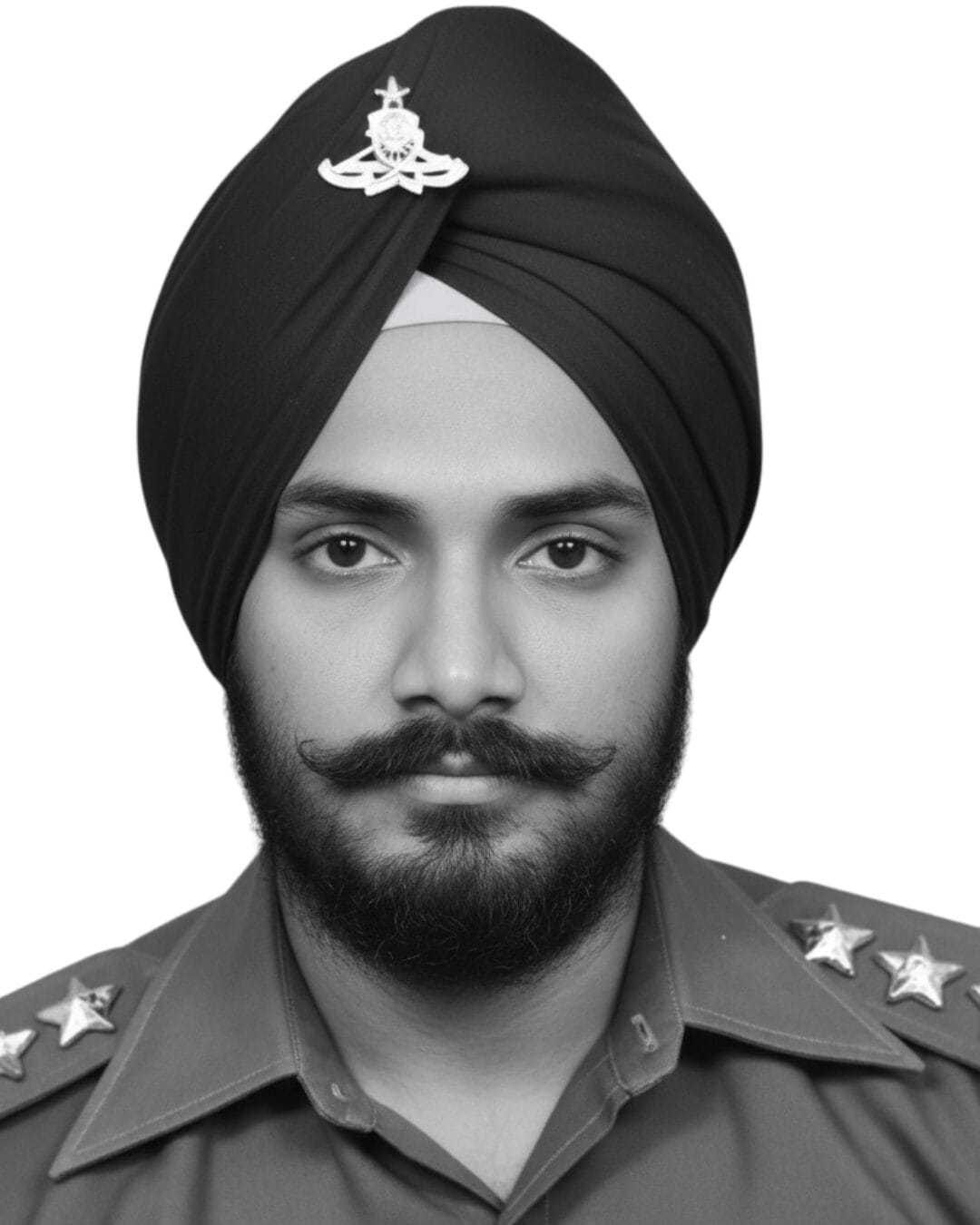
Written by
Capt. Dhaliwal · Director, New Careers Academy
Ex-Indian Army officer and SSB mentor at NCA Academy, Chandigarh (est. 1967), coaching NDA, CDS, AFCAT and SSB aspirants since the 1980s. About the author →
Reviewed by Hartaj Dhaliwal — SSB Strategist, NCA · third-generation officer · recommended by the SSB three times.