AFCAT 2026 Study Plan: Complete 90-Day Week-by-Week Schedule to Score 165+
NCA Academy’s structured AFCAT 2026 study plan — 13 weeks, section-wise daily targets, mock test schedule, and score milestones used by students who cleared AFCAT in their first attempt.
How This Study Plan Is Structured
This AFCAT 2026 study plan assumes you are starting from a baseline of 100–120 marks on a practice paper and targeting 165+ for Flying Branch eligibility. It allocates study time based on two principles: section weight in the exam and time required to improve per section. Spatial Ability gets the most time — not because it has the highest marks, but because it takes longest to develop.
The plan is divided into three phases: a 4-week Foundation phase, a 5-week Depth & Speed phase, and a 4-week Mock Sprint phase. Each phase has clear weekly and daily targets so you always know exactly what to do. Refer to the AFCAT 2026 exam pattern and AFCAT 2026 syllabus before beginning so you know what you’re covering.
Total Study Hours Breakdown by Section (90 Days)
~32 min/day
~23 min/day
~20 min/day
~37 min/day
~28 min/day
+20 hrs analysis
Total: ~250 hours over 90 days — approximately 2.75 hours per day on weekdays, 5–6 hours on weekends (when mocks are scheduled). Spatial Ability receives the most hours (55) despite not being a separate section — it forms the core of the Reasoning section and is the single biggest determinant of AFCAT rank.
Phase 1: Foundation (Weeks 1–4)
Vocabulary Sprint + Number Sense + Series Patterns
Build the raw material you’ll use for the next 12 weeks. No shortcuts here.
| Section | Daily Task | Time | Resource |
|---|---|---|---|
| Verbal | 50 Synonyms/Antonyms from Norman Lewis Chapters 1–5 | 30 min | Word Power Made Easy |
| Numerical | Percentages, Fractions, Decimals — 20 questions | 25 min | RS Aggarwal Ch. 10–12 |
| Reasoning | Number series, Letter series — 25 questions | 25 min | Verbal Reasoning section |
| GK | IAF aircraft (Tejas, Rafale, Su-30, Mirage 2000), ranks, bases | 30 min | NCA GK notes / online |
Week 1 Checkpoint
By Friday: correctly identify 80% of 50 vocabulary words tested blind. If below 70%, slow down — vocabulary built in Week 1 compounds through all 13 weeks.
Reading Comprehension + Time-Speed-Distance + Analogies
| Section | Daily Task | Time |
|---|---|---|
| Verbal | 2 RC passages daily (350–500 words each). Answer all 4–5 questions per passage. Don’t look up answers until after attempting. | 35 min |
| Numerical | Time-Speed-Distance (15 Qs) + Time & Work (10 Qs) | 25 min |
| Reasoning | Analogies (verbal + non-verbal) — 20 questions. Blood relations, direction sense — 10 questions. | 30 min |
| GK | Indian Geography: states, rivers, mountain passes, highest peaks | 30 min |
Error Detection + Profit/Loss + Coding-Decoding
| Section | Daily Task | Time |
|---|---|---|
| Verbal | Error Detection / Spotting — 20 questions. Focus on subject-verb agreement, tenses, articles, prepositions. | 30 min |
| Numerical | Profit/Loss, Discount — 15 Qs. SI/CI — 10 Qs. Formula-first approach. | 25 min |
| Reasoning | Coding-Decoding — 20 questions. Syllogisms — 10 questions. | 30 min |
| GK | Indian Polity: Constitution basics, Fundamental Rights, DPSP, Preamble | 30 min |
Idioms/Para Jumbles + Algebra/Mensuration + Non-Verbal Reasoning
| Section | Daily Task | Time |
|---|---|---|
| Verbal | Idioms & Phrases — 30 per day. Para jumbles — 5 per day. Sentence completion — 10 per day. | 30 min |
| Numerical | Algebra basics, Quadratic equations — 15 Qs. Mensuration (2D/3D) — 10 Qs. | 30 min |
| Reasoning | Non-verbal reasoning: Pattern completion, odd-one-out, matrix reasoning — 30 Qs. | 35 min |
| GK | Science & Technology, Defence R&D (DRDO, BrahMos, Tejas programme, ISRO) | 30 min |
Phase 1 End Checkpoint — Take a Full Practice Test
At end of Week 4, attempt a full 100-question AFCAT PYQ paper (2021 or 2022) under strict time conditions. Target: 125+ marks. If below 115, spend one extra week on your weakest section before entering Phase 2. If above 135, you can compress Phase 2 by 1 week.
Phase 2: Depth & Speed (Weeks 5–9)
This phase is dominated by Spatial Ability — the single topic most students neglect and most regret. Alongside Spatial work, you’ll shift from “learning” to “speed-solving” across all sections.
Spatial Ability Intensive (3D Rotation, Mirror Images, Paper Folding)
Dedicate 50% of daily study time to Spatial Ability. This is non-negotiable. The goal is 70%+ accuracy on 20 Spatial questions within 18 minutes by end of Week 6.
| Day | Spatial Focus (40 min) | Other Sections (80 min) |
|---|---|---|
| Mon/Thu | 3D Cube rotation — 20 Qs. Goal: visualise rotation without drawing. | Verbal: RC × 2 + 30 vocab | Numerical: TSD speed drills |
| Tue/Fri | Mirror & Water images — 25 Qs. Left-right vs top-bottom flips. | GK: History + Modern India | Reasoning: Analogies |
| Wed/Sat | Paper folding & cutting — 20 Qs. Count fold layers systematically. | Numerical: Profit/Loss + Averages | Verbal: Error detection |
| Sunday | Sectional Mock: Full Reasoning section (32 questions in 32 minutes) + 60-min analysis | |
Speed Mode: Timed Section Practice Across All 4 Sections
| Section | Target Time | Target Accuracy | Focus |
|---|---|---|---|
| Verbal (25 Qs) | 20 minutes | 80%+ (20/25) | Skip unknown vocabulary — don’t waste time |
| Numerical (18 Qs) | 22 minutes | 78%+ (14/18) | Formula recall — no derivation during exam |
| Reasoning — Verbal (16 Qs) | 14 minutes | 85%+ (14/16) | Easy marks — must be fast and accurate |
| Spatial Ability (16 Qs) | 18 minutes | 65%+ (10/16) | Systematic method over intuition |
| GK (25 Qs) | 10 minutes | 68%+ (17/25) | Attempt only known — skip the rest |
GK Sprint + First 2 Full Mock Tests
Week 9 is the bridge between depth work and the mock sprint. Intensive GK coverage (current affairs, defence operations, awards) plus your first two full-length timed mock exams.
| Day | GK Sprint Focus | Study Time |
|---|---|---|
| Mon–Wed | Current affairs: Defence acquisitions, IAF operations (2024–2026), major awards & sports | 45 min/day |
| Thu–Fri | Static GK revision: Indian History summary sheets + World Geography fast notes | 45 min/day |
| Saturday | Full Mock Test 1 (120 minutes, strict negative marking) + 60-min analysis | 3 hours total |
| Sunday | Full Mock Test 2 + analysis + compare error categories between Mock 1 and 2 | 3 hours total |
Phase 2 Target Score
After Mocks 1 & 2 (Week 9), you should be scoring 145–155 marks. If below 140, identify the section dragging you down — usually Spatial Ability or GK — and add 30 extra minutes/day to that section through Phase 3.
Phase 3: Mock Sprint (Weeks 10–13)
| Week | Mocks | Weekly Focus | New Learning |
|---|---|---|---|
| 10 | 2 full mocks | Negative marking discipline — eliminate Type C errors (blind guesses) | Current affairs update |
| 11 | 2 full mocks | Attempt order optimisation — lock in Verbal → GK (known) → Numerical → Reasoning sequence | Spatial Ability 20 Qs/day |
| 12 | 2 full mocks | Speed drilling — finish paper in 105 min (15 min buffer for review) | GK: IAF + science + history fast revision |
| 13 (Final) | 1–2 mocks, then rest | Confidence calibration — no new topics. Sleep 8 hours nightly. | Light revision only |
⚠️ Week 13 Rule: No New Topics
The single biggest mistake in the final week is starting new topics. Your brain needs consolidation time, not new information. Revise what you know, attempt 1–2 light mocks for confidence, and rest. Candidates who study intensively on the day before AFCAT consistently underperform their mock test average.
How to Adjust If You’re Behind Schedule
| Situation | Adjustment | Priority Swap |
|---|---|---|
| Behind by 1 week | Add 45 min/day for 2 weeks | Cut GK study time — focus on weak section |
| Spatial Ability still below 50% | Add dedicated 30-min Spatial session every evening regardless of phase | Reduce Numerical time (already closest to target) |
| Mock scores plateaued at 140–148 | Do deep error analysis — 90% chance the plateau is Type B errors (careless), not concept gaps | Slow down Reasoning questions — accuracy over speed |
| Only 60 days remaining | Skip Phase 1. Start Phase 2 directly after a baseline test. Compress to 5–6 hrs/day. | Spatial + Verbal as dual priority. Numerical is fastest to improve. |
Frequently Asked Questions — AFCAT 2026 Study Plan
📅 Get NCA Academy’s Personalised AFCAT Study Plan
Every NCA Academy AFCAT student gets a personalised study plan based on their Day 1 baseline score and target branch. Our 90-day batch includes weekly progress reviews, 500+ practice questions, and 15 full-length mocks. Batch seats fill fast — register now for AFCAT 2 2026.
Join AFCAT 2026 Coaching → 💬 Get My Study Plan⏱️ Short on time? See How to Prepare for AFCAT 2 2026 in One Month — a week-by-week 30-day plan.
Written by
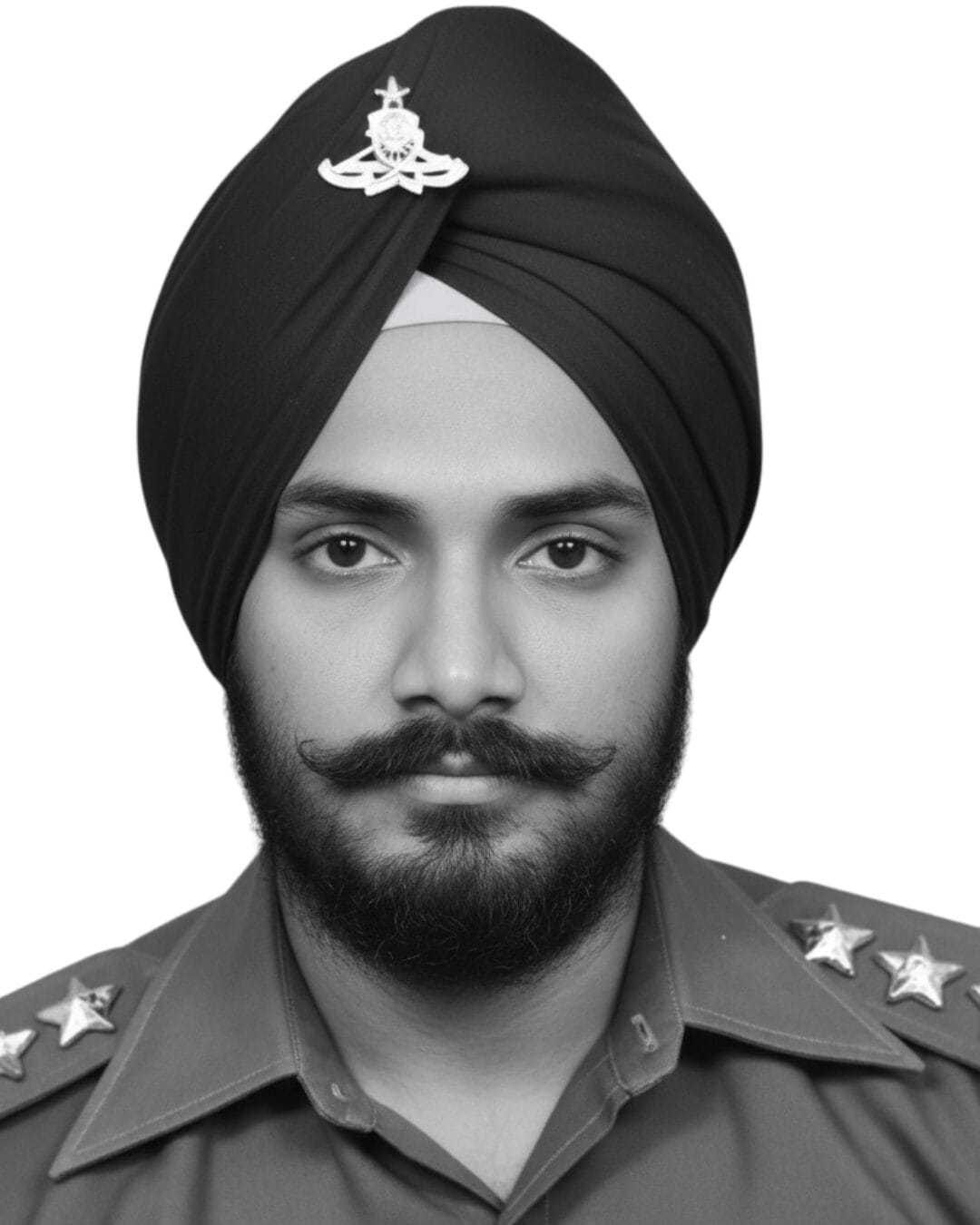
Capt. Dhaliwal · Director, New Careers Academy
Ex-Indian Army officer and SSB mentor at NCA Academy, Chandigarh (est. 1967), coaching NDA, CDS, AFCAT and SSB aspirants since the 1980s. About the author →
Reviewed by Hartaj Dhaliwal — SSB Strategist, NCA · third-generation officer · recommended by the SSB three times.