1️⃣ Introduction

India’s tribal population — representing nearly 8.6% of the country’s citizens — forms the backbone of our cultural diversity and ecological sustainability. Recognizing the need for inclusive development, the Government of India has launched the Dharti Aaba Janjatiya Gram Utkarsh Abhiyan 2.0, a flagship tribal development mission under the Ministry of Tribal Affairs.
The program’s vision aligns with the Viksit Bharat @2047 framework and aims to achieve 100% saturation of essential services in tribal villages across India — from education and healthcare to digital inclusion and self-governance.
Launched during Janjatiya Gaurav Varsh (2024–25), the Abhiyan embodies the spirit of India’s tribal hero, Birsa Munda — Dharti Aaba, the “Father of Earth”, who inspired a movement for tribal dignity, rights, and self-rule.
2️⃣ Meaning and Inspiration Behind the Name
The name itself reflects India’s respect for tribal heritage:
“Dharti Aaba” refers to Birsa Munda, the legendary tribal freedom fighter from Jharkhand, revered as a symbol of courage, environmental consciousness, and social reform.
“Gram Utkarsh” translates to Village Upliftment, representing a mission to transform every tribal village into a self-reliant and progressive model of development.
Thus, the Dharti Aaba Janjatiya Gram Utkarsh Abhiyan symbolizes “village advancement inspired by tribal wisdom and the legacy of Birsa Munda.”
3️⃣ What’s New in Version 2.0
The 2.0 version of this Abhiyan introduces a “Convergence + Technology” model — ensuring that every welfare scheme truly reaches the last tribal household.
Key innovations include:
Integrated Convergence Model
Coordination among Central, State, and Local Bodies.
Converges flagship missions like PM JANMAN, Jal Jeevan Mission, PMAY, NHM, and Financial Inclusion Programs.
Digital Monitoring
Use of GIS mapping, mobile-based dashboards, and real-time progress tracking.
Digital transparency ensures zero leakages in scheme implementation.
Tribal Village Vision 2030 Alignment
Every tribal village will have a “Village Development Index”, allowing customized plans under the Vision 2030roadmap.
Janjatiya Gaurav Varsh 2024–25 Framework
Part of the larger “Janjatiya Gaurav Varsh”, celebrating tribal culture, leadership, and contributions to nation-building.
Synergy with New Schemes
Adi Karmayogi Abhiyan – for training local tribal youth in governance.
PM JANMAN (PM Janjati Adivasi Nyaya Maha Abhiyan) – for PVTG empowerment.
4️⃣ Core Objectives of Dharti Aaba Janjatiya Gram Utkarsh Abhiyan 2.0
The Abhiyan’s goals are not limited to infrastructure — it’s about achieving human development through inclusion.
| Focus Area | Targeted Outcomes |
|---|---|
| Health | 100% vaccination, maternal & child health, nutrition, sanitation. |
| Education | Reduction in dropout rates, better school infrastructure, digital classrooms. |
| Water & Sanitation | Safe drinking water via Jal Jeevan Mission, household toilets, hygiene awareness. |
| Housing | 100% coverage under PM Awas Yojana (Gramin). |
| Financial Inclusion | Access to bank accounts, DBT, microcredit for SHGs. |
| Livelihoods | Skill development, Minor Forest Produce (MFP) value chains, tribal entrepreneurship. |
| Governance | Strengthen Gram Sabha and tribal local self-rule mechanisms. |
| Culture | Preserve tribal languages, heritage, and ecological practices. |
5️⃣ Target Beneficiaries
The Abhiyan prioritizes Scheduled Tribe (ST) communities nationwide, especially:
PVTGs (Particularly Vulnerable Tribal Groups)
Forest-dwelling & remote tribal habitations
Villages in aspirational districts and hilly terrains
By 2030, the mission aims to bring over 50,000 tribal villages under the “saturation of essential services” model.
6️⃣ Implementation Mechanism
Implementation follows a “Mission Mode” approach with decentralized accountability.
Key Steps:
Baseline Survey:
Every tribal village is assessed based on 25+ development indicators — health, education, housing, water, digital access, etc.Village Development Index (VDI):
Helps measure progress and identify service delivery gaps.Village-Wise Action Plans:
Created by local Gram Panchayats, aligned with Tribal Vision 2030.Frontline Workforce:
Adi Karmayogis (Tribal Volunteers) trained to assist in governance and data tracking.
Self-Help Groups (SHGs) manage local livelihood projects.
Monitoring & Evaluation:
Monthly reviews at district and state levels with dashboard-based tracking.
7️⃣ Technology Enablers
Technology plays a crucial role in bridging governance gaps.
| Tool | Function |
|---|---|
| Mobile App | Enables on-ground reporting by volunteers. |
| GIS Mapping | Identifies service gaps (schools, hospitals, water pipelines). |
| Adi Vaani App | Communicates in tribal languages, ensuring inclusivity. |
| Dashboard Analytics | Tracks progress for each tribal village. |
This data-driven approach ensures transparency, accountability, and citizen-centric governance.
8️⃣ Significance of the Mission
The Dharti Aaba Janjatiya Gram Utkarsh Abhiyan 2.0 is not just another scheme — it’s a transformational governance model.
Socio-Economic Impact
Addresses multi-dimensional poverty in tribal regions.
Ensures service delivery saturation at the grassroots.
Empowers women through Self-Help Groups (SHGs).
Governance Impact
Promotes local self-rule and participation.
Introduces a data-driven, transparent tribal development framework.
Cultural Impact
Protects tribal heritage, traditions, and ecological wisdom.
Integrates indigenous knowledge into local planning.
As The Hindu (July 2025) highlighted, “The Abhiyan marks a paradigm shift in India’s tribal policy — from welfare delivery to empowerment-based governance.”
9️⃣ Linkages with Other Government Programs
| Linked Initiative | Purpose |
|---|---|
| PM JANMAN (PM Janjati Adivasi Nyaya Maha Abhiyan) | Upliftment of PVTGs through health, education, and housing interventions. |
| Adi Karmayogi Abhiyan | Leadership and capacity building among tribal youth. |
| Tribal Village Vision 2030 | Long-term, decentralized development roadmap. |
| Jal Jeevan Mission, PMAY, NHM | Core convergence programs under service saturation. |
This multi-ministerial convergence ensures efficiency, coordination, and sustainable tribal transformation.
🔟 Exam Relevance (UPSC, CAPF, NDA, CDS)
For aspirants, this mission is highly relevant for Prelims, Mains, and Essay papers under the topics:
Government Schemes for Vulnerable Sections
Inclusive Growth & Governance
Tribal Development & Constitutional Safeguards
Environment & Indigenous Knowledge
Probable UPSC Prelims Question:
“The Dharti Aaba Janjatiya Gram Utkarsh Abhiyan 2.0 aims at: (a) 100% service saturation in tribal villages (b) MSP for MFP products (c) Forest conservation only (d) None of the above”
Answer: (a)
Essay Use:
“Dharti Aaba Janjatiya Gram Utkarsh Abhiyan 2.0 integrates technology, governance, and tribal identity to build a self-reliant Bharat.”
1️⃣1️⃣ Challenges Ahead
Despite its strong design, certain challenges remain:
Connectivity and infrastructure in remote tribal areas.
Coordination between central, state, and district-level agencies.
Availability of trained Adi Karmayogis and SHG networks.
Balancing rapid development with cultural preservation.
However, with digital monitoring and convergence-based planning, these gaps are expected to narrow significantly by 2030.
1️⃣2️⃣ Way Forward
To ensure success:
Continuous community participation through Gram Sabhas.
Expansion of digital literacy in tribal areas.
Strengthened inter-ministerial coordination for resource pooling.
Integration of education, skill, and entrepreneurship programs for youth.
By 2030, the Abhiyan envisions every tribal village as a “Model Gram” — self-reliant, sustainable, and digitally connected.
🪶 Conclusion
The Dharti Aaba Janjatiya Gram Utkarsh Abhiyan 2.0 stands as a milestone in India’s journey towards inclusive development. Inspired by Birsa Munda’s vision, it celebrates tribal identity while ensuring no village is left behind.
By integrating technology, empowerment, and convergence, this mission marks India’s shift from beneficiary-driven welfare to citizen-led transformation.
For aspirants preparing for UPSC, CAPF, CDS, and NDA exams, this scheme exemplifies “Development with Dignity” — a key theme in India’s policy discourse for Viksit Bharat @2047.
Why New Careers Academy (NCA) is the Best Defence Coaching Institute in India
When it comes to mastering Current Affairs, Defence Studies, and UPSC topics like Janjatiya Gram Utkarsh Abhiyan, one name stands above all — New Careers Academy (NCA), Chandigarh.
Reasons Why NCA Has the Edge
| Advantage | Description |
|---|---|
| 59+ Years of Legacy (Since 1967) | India’s oldest Defence academy with 39,000+ officer selections. |
| Faculty of Ex-Defence Officers | Learn directly from retired Army, Navy, and Air Force personnel. |
| 90% Current Affairs Paper Match | Notes and analysis verified from NDA, CDS, and CAPF exams. |
| Offline + Online Batches | Study in Chandigarh or join from anywhere in India. |
| Integrated SSB + Personality Development | Included in every NDA and CDS course. |
| Daily Current Affairs Notes | Derived from The Hindu, Indian Express, PIB, and Government Schemes. |
NCA doesn’t just teach — it builds officers through discipline, mentorship, and Defence ethos.
Final Word
If you aim to clear NDA 1 2026, NDA 2 2026, or CAPF 2025, mastering Government Schemes like Dharti Aaba Janjatiya Gram Utkarsh Abhiyan 2.0 is crucial.
At New Careers Academy, you’ll not only learn these topics — you’ll understand their policy, impact, and exam relevance.
Because at NCA, “We Don’t Just Prepare Students — We Create Officers.”
📞 Helpline: 9501070051 / 6239661414
📍 Location: SCO 71, Sector 91, Mohali – Chandigarh
🌐 Visit NCA Official Site →
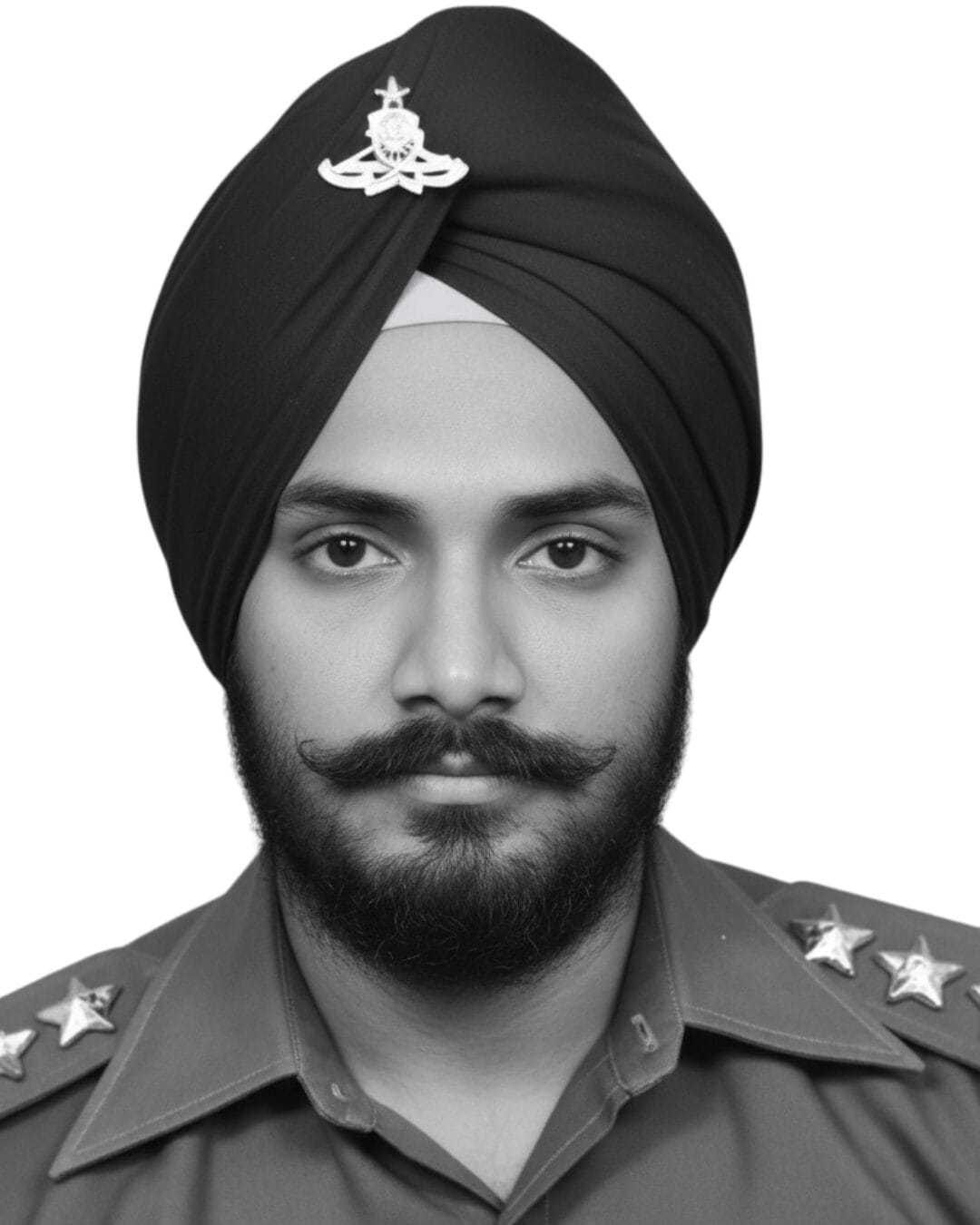
Written by
Capt. Dhaliwal · Director, New Careers Academy
Ex-Indian Army officer and SSB mentor at NCA Academy, Chandigarh (est. 1967), coaching NDA, CDS, AFCAT and SSB aspirants since the 1980s. About the author →
Reviewed by Hartaj Dhaliwal — SSB Strategist, NCA · third-generation officer · recommended by the SSB three times.