PM JANMAN — Mission for Upliftment of Particularly Vulnerable Tribal Groups (PVTGs) |

1. Introduction & Background
India’s tribal population represents the country’s cultural diversity and ecological heritage. Yet, a section among them known as the Particularly Vulnerable Tribal Groups (PVTGs) remains largely excluded from mainstream development.
To address this, the Government of India launched the PM JANMAN (PM Janjati Adivasi Nyaya Maha Abhiyan)on 15 November 2023, celebrated as Janjatiya Gaurav Divas, from Khunti, Jharkhand — the birthplace of tribal leader Birsa Munda.
PM JANMAN is a flagship mission of the Ministry of Tribal Affairs, designed to provide saturation-based development for 75 identified PVTG communities spread across 18 States and 1 Union Territory (Andaman & Nicobar Islands).
The program operates in mission mode, converging multiple central ministries and state departments to deliver essential infrastructure and services to the most remote and deprived tribal habitations.
(Source: Press Information Bureau, Indian Express, Drishti IAS)
2. Objectives of PM JANMAN
The mission’s objective is to bring measurable and sustainable transformation in the lives of PVTGs by ensuring 100% access to basic amenities and livelihood opportunities.
Key Objectives:
Provide pucca houses to every PVTG household.
Ensure clean drinking water, sanitation, and hygiene facilities.
Improve education, nutrition, and healthcare access.
Provide electricity and all-weather road connectivity.
Enable sustainable livelihoods through skill development.
Facilitate digital and telecom connectivity.
Strengthen tribal governance and self-sufficiency.
PM JANMAN is not just a welfare initiative; it is a justice-oriented mission aimed at delivering long-denied developmental rights to the most vulnerable citizens of India.
3. Mission Duration and Financial Outlay
| Parameter | Details |
|---|---|
| Total Outlay | ₹24,104 crore |
| Central Share | ₹15,336 crore |
| State Share | ₹8,768 crore |
| Duration | 2023–24 to 2025–26 (Three years) |
| Coverage | 18 States and 1 UT (Andaman & Nicobar Islands) |
| Implementing Ministries | 9 Central Ministries with State coordination |
The Ministry of Tribal Affairs serves as the nodal authority, while implementation occurs through 11 intervention areas covering infrastructure, education, health, and livelihoods.
(Source: Press Information Bureau and adiprasaran.tribal.gov.in)
4. Key Components and Interventions
PM JANMAN covers 11 critical interventions across multiple ministries, each targeting a major developmental gap among PVTG communities.
Major Interventions:
Housing:
Pucca homes for PVTG families through Pradhan Mantri Awas Yojana (Gramin), with designs adapted to hilly and forested terrains.Water and Sanitation:
Household tap connections via Jal Jeevan Mission and toilets under Swachh Bharat Mission (Gramin).Healthcare:
Mobile medical units, health outreach under National Health Mission, immunization, and nutrition drives for children and mothers.Education:
New residential schools, hostels, and digital classrooms, alongside strengthening of Anganwadis and vocational centers.Electrification:
Electrification of remote habitations through solar micro-grids under the Ministry of New and Renewable Energy (MNRE).Connectivity:
Construction of roads and bridges through Pradhan Mantri Gram Sadak Yojana (PMGSY).Digital and Telecom Access:
Mobile towers, internet connectivity, and village-level e-service centers.Livelihood and Skill Development:
Capacity building for Minor Forest Produce (MFP) value addition, tribal entrepreneurship, and handicrafts.Financial Inclusion:
Opening of bank accounts, Direct Benefit Transfer (DBT) facilities, and linkage with Self-Help Groups (SHGs).Institutional Strengthening:
Training local governance institutions and tribal youth (Adi Karmayogis) for micro-planning.Sustainability:
Integration of traditional knowledge and environment-friendly practices in planning.
5. Coverage and Target Beneficiaries
PM JANMAN specifically focuses on 75 Particularly Vulnerable Tribal Groups (PVTGs) identified across India based on isolation, pre-agricultural economy, and low literacy levels.
Geographical Reach:
States: 18
Union Territory: 1 (Andaman & Nicobar Islands)
Habitations Covered: Over 22,000 remote and forested tribal settlements
Examples of Target Groups:
Odisha: Dongria Kondh, Bonda, Lanjia Saora
Jharkhand: Asur, Birhor, Korwa
Madhya Pradesh: Sahariya, Baiga
Andaman & Nicobar Islands: Great Andamanese, Onge, Jarawa
Each PVTG habitation is to receive comprehensive coverage of all eligible interventions rather than incremental benefits.
6. Implementation Strategy
The mission adopts a convergence-based model, ensuring collaboration among central ministries, state departments, and local institutions.
Key Features:
Micro-Planning: Village-level development plans aligned with habitation needs.
Convergence of Ministries: Coordination among nine ministries including Tribal Affairs, Health, Rural Development, and Renewable Energy.
Digital Monitoring: Real-time dashboards and mobile applications for progress tracking.
District-level Review: Performance tracking and issue resolution at the state and district levels.
Data-driven Governance: Evidence-based planning through habitation surveys.
This integrated approach ensures efficiency, accountability, and localized decision-making.
7. Technology Integration
PM JANMAN leverages modern technology to ensure transparency and real-time monitoring.
| Tool | Purpose |
|---|---|
| Mobile App | Data collection from field-level workers |
| GIS Mapping | Identifying service gaps and infrastructure planning |
| Dashboard Portal | Real-time tracking of implementation |
| GPS-enabled Medical Units | Monitoring service delivery in remote regions |
| Digital Payment Systems | Ensuring DBT transparency |
This digital governance model enables the mission to achieve saturation without duplication.
8. Media Reports and Implementation Examples
The Indian Express (2024) reported that over 22,000 remote habitations across Odisha, Jharkhand, and Chhattisgarh have been mapped for electrification and safe housing under PM JANMAN.
The Times of India (2024) documented improvements in road connectivity and rural infrastructure development in tribal belts of Madhya Pradesh and Odisha.
The New Indian Express highlighted Anganwadi modernization, solar lighting, and hostel construction for tribal students as early indicators of success.
Editorial insights have emphasized that while PM JANMAN represents a significant step forward, challenges like terrain difficulty and inter-agency coordination remain key issues.
Overall, the mission has been widely recognized as India’s most ambitious tribal inclusion program since independence.
9. Significance of PM JANMAN
For Tribal Empowerment:
Directly targets the most marginalized within the ST population.
Empowers communities through self-reliance and capacity building.
For Governance:
Demonstrates convergence-based and mission-mode governance.
Introduces data-driven and transparent planning systems.
For Economy:
Creates employment through infrastructure and service delivery.
Promotes sustainable and green livelihoods.
For Examinations:
PM JANMAN is highly relevant for UPSC, CAPF, NDA, and State PSC exams. It represents inclusive development, bottom-up planning, and convergence — themes frequently tested in both prelims and mains papers.
10. Quick Facts for Revision
| Parameter | Details |
|---|---|
| Launch Date | 15 November 2023 (Janjatiya Gaurav Divas) |
| Launched By | Prime Minister Narendra Modi, Khunti, Jharkhand |
| Target Communities | 75 Particularly Vulnerable Tribal Groups (PVTGs) |
| Coverage | 18 States and 1 Union Territory |
| Duration | 2023–24 to 2025–26 |
| Financial Outlay | ₹24,104 crore (Centre ₹15,336 cr + States ₹8,768 cr) |
| Ministries Involved | 9 |
| Key Interventions | 11 |
| Nodal Ministry | Ministry of Tribal Affairs |
11. Challenges Ahead
Limited connectivity and infrastructure in remote areas.
Shortage of skilled manpower and administrative coordination.
Maintaining balance between modernization and cultural preservation.
Ensuring real-time data accuracy and transparency.
Despite these, PM JANMAN’s convergence model and digital monitoring tools make it a landmark effort in inclusive and sustainable governance.
12. Conclusion
The PM JANMAN (PM Janjati Adivasi Nyaya Maha Abhiyan) represents India’s commitment to development with justice. By focusing exclusively on PVTGs, it bridges a historical development gap through targeted action, convergence, and technology.
This mission exemplifies India’s vision for Viksit Bharat 2047, ensuring no community is left behind. For students of governance and civil services, PM JANMAN offers a textbook example of inclusive, data-driven policy innovation.
Why New Careers Academy (NCA) is India’s Best Defence and Current Affairs Coaching Institute
When it comes to mastering government schemes, current affairs, and Defence exam preparation, New Careers Academy (NCA) stands as India’s most trusted name.
1. Legacy of 59 Years (Since 1967):
India’s oldest Defence Coaching Institute, training officers for NDA, CDS, CAPF, AFCAT, and SSB.
2. Proven Success (39,000+ Selections):
NCA has the highest Defence selection rate in Northern India, with students serving as officers across all three services.
3. Faculty of Ex-Defence Officers:
Mentorship from retired Army, Navy, and Air Force officers ensures real Defence insight.
4. Comprehensive Current Affairs Coverage:
NCA provides daily current affairs from The Hindu, Indian Express, PIB, and Government sources — ensuring exam relevance.
5. Offline, Online, and Hybrid Batches:
Flexible learning modes to suit aspirants across India.
6. Integrated SSB and Personality Development:
All NDA and CDS courses include SSB interview guidance, psych tests, and communication skill training.
At NCA, students not only study but also learn to think like future officers — disciplined, analytical, and mission-driven.
Final Word
To clear exams like NDA 1 2026, NDA 2 2026, and CAPF 2025, understanding flagship missions such as PM JANMAN is crucial.
With New Careers Academy, aspirants gain in-depth conceptual clarity, updated notes, and exam-oriented analysis — all under the guidance of India’s leading Defence educators.
New Careers Academy — Building Officers Since 1967.
Contact Information:
Address: SCO 71, Sector 91, Mohali – Chandigarh
Helpline: 9501070051 / 6239661414
Website: www.ncaacademy.com
Written by
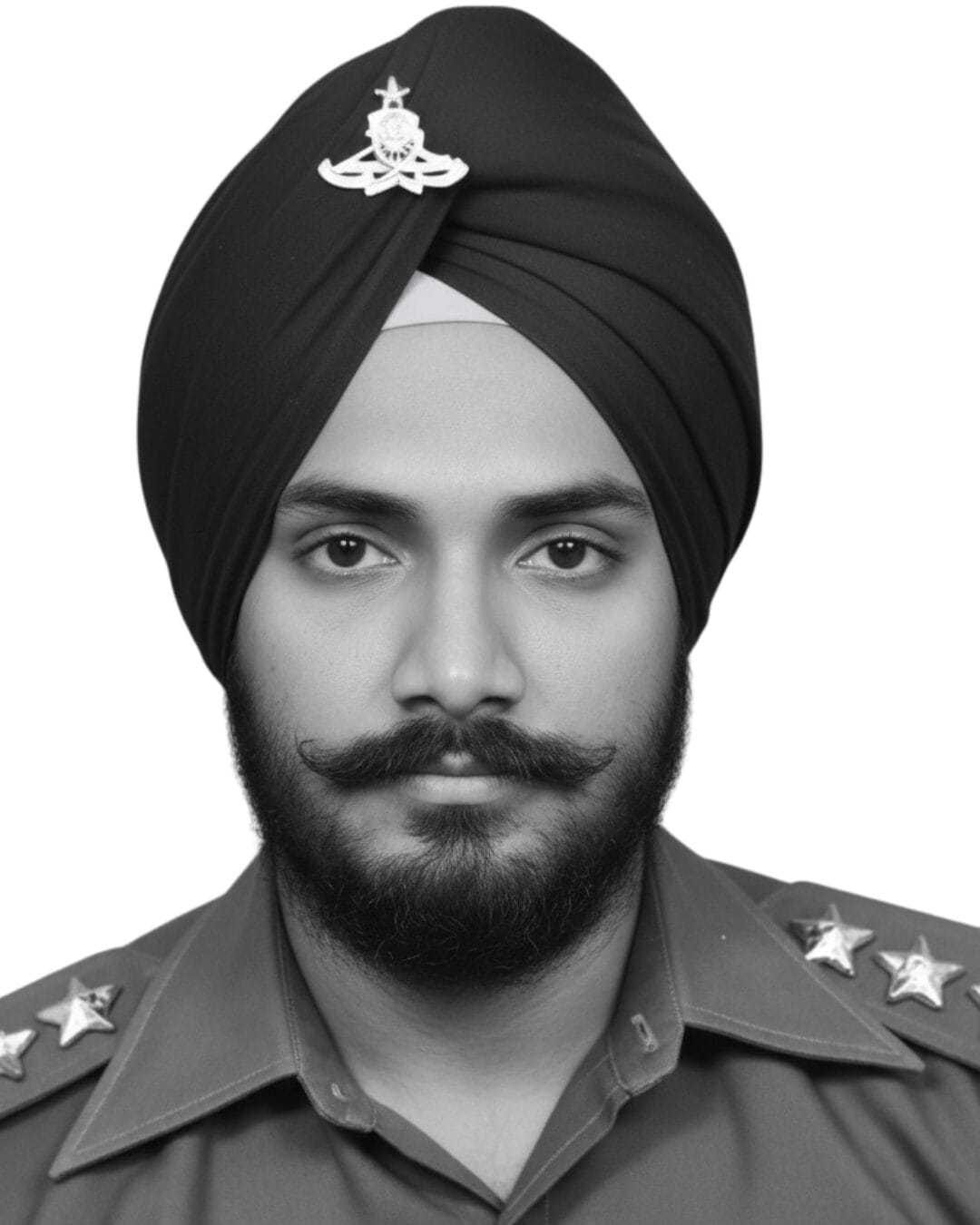
Capt. Dhaliwal · Director, New Careers Academy
Ex-Indian Army officer and SSB mentor at NCA Academy, Chandigarh (est. 1967), coaching NDA, CDS, AFCAT and SSB aspirants since the 1980s. About the author →
Reviewed by Hartaj Dhaliwal — SSB Strategist, NCA · third-generation officer · recommended by the SSB three times.