WAT (Word Association Test) is one of the most underestimated tests in the SSB interview. Candidates who practise WAT words for SSB consistently before their board date perform significantly better than those who attempt it cold. This guide explains what WAT is, how it works, the best approach to each word, and gives you 300+ practice words to prepare with.
What is WAT in SSB Interview?
Word Association Test is part of the Psychological Tests conducted on Day 2 of the SSB interview. You are shown 60 words on a screen, one at a time, at an interval of 15 seconds each. For each word, you must write the first sentence that comes to your mind. The total time is approximately 15 minutes.
The WAT is not about vocabulary — it is about revealing your instinctive thought patterns, personality traits, and emotional responses. A psychologist analyses your responses to identify your dominant officer-like qualities (OLQs), emotional maturity, and potential weaknesses.
How WAT Responses Reveal Your Personality
Every word you respond to tells the assessor something about you. Consider the word “Failure”: a candidate who writes “Failure teaches the most important lessons” shows resilience. One who writes “Failure is the end of all hopes” signals low mental toughness. The WAT is designed to get past your prepared, conscious answers and surface your authentic mindset.
The 15-second timer is intentional — there is not enough time to overthink. Your first instinct, shaped by weeks of practice, will come out. This is exactly why daily WAT word practice is so effective — it gradually reprogrammes your instinctive responses toward positive, action-oriented thinking.
Golden Rules for WAT in SSB
Follow these rules for every WAT response: always write a complete sentence (not just a phrase), keep the response positive and proactive, use first or third person consistently, avoid religious, political, or controversial content, and never leave a word blank. If you genuinely have no idea, write a simple, neutral positive sentence. Above all, be natural — forced responses that sound artificial are easy for assessors to spot.
WAT Practice Words — Set 1: Leadership and Action
| Word | Model Response |
|---|---|
| Leader | A true leader leads from the front and inspires others by example. |
| Courage | Courage is not the absence of fear but the decision to act despite it. |
| Responsibility | He took responsibility for his team’s mistake and found a solution quickly. |
| Initiative | Taking initiative in critical moments separates good officers from great ones. |
| Challenge | Every challenge is an opportunity to grow stronger and more capable. |
| Discipline | Discipline is the foundation on which every successful career is built. |
| Decision | He made a swift decision under pressure that saved the entire operation. |
| Command | With calm authority, she took command of the rescue operation. |
WAT Practice Words — Set 2: Positive Emotions and Character
| Word | Model Response |
|---|---|
| Confidence | Confidence built through preparation is the most reliable kind. |
| Honesty | His honesty earned him the trust and respect of his entire unit. |
| Loyalty | Loyalty to one’s team and nation is the mark of a true officer. |
| Patience | Patience during uncertainty allowed him to make the right decision at the right time. |
| Determination | Her determination to succeed pushed her through every obstacle in training. |
| Enthusiasm | His enthusiasm for the mission was contagious and lifted the whole team. |
| Gratitude | She expressed gratitude to her team after a successful rescue operation. |
| Integrity | He maintained his integrity even when it was the harder path to take. |
WAT Practice Words — Set 3: Challenges and Adversity
| Word | Model Response |
|---|---|
| Failure | Failure taught him what no success ever could, and he came back stronger. |
| Difficulty | Difficulty reveals character — he rose to meet every obstacle with calm resolve. |
| Fear | He acknowledged his fear and channelled it into focused, decisive action. |
| Problem | Every problem has a solution if you approach it with a clear and calm mind. |
| Obstacle | The obstacle on the path became the stepping stone to his greatest achievement. |
| Defeat | Defeat was not the end of the story — it was the beginning of a stronger effort. |
| Pressure | Under pressure, he remained composed and led his team to safety. |
| Risk | He assessed the risk carefully and made a bold, calculated decision. |
WAT Practice Words — Set 4: Social and National Themes
| Word | Model Response |
|---|---|
| Nation | Serving the nation is the highest honour a citizen can aspire to. |
| Society | A responsible officer contributes positively to society both in and out of uniform. |
| Unity | The unity of the team was their greatest strength in the face of adversity. |
| Service | Service to others gave his life a purpose greater than himself. |
| Education | He believed education was the most powerful tool for national development. |
| Progress | Progress comes to those who act with consistent effort and clear direction. |
| Poverty | He worked tirelessly to improve the lives of underprivileged children in his village. |
| Environment | Protecting the environment is a duty every responsible citizen must take seriously. |
WAT Practice Words — Set 5: Military and Professional
| Word | Model Response |
|---|---|
| Army | The Indian Army stands as an unwavering guardian of the nation’s sovereignty. |
| Mission | The team completed their mission with precision, discipline, and mutual trust. |
| Training | Rigorous training builds the mental and physical resilience an officer needs. |
| Weapon | Knowledge and discipline are the most powerful weapons a soldier carries. |
| Border | He served proudly on the border, protecting every citizen’s freedom to live safely. |
| Sacrifice | The soldiers’ sacrifice at the border will never be forgotten by a grateful nation. |
| Victory | True victory comes not just from winning battles but from earning your team’s trust. |
| Duty | He carried out his duty without complaint, knowing its importance to the nation. |
Additional WAT Words for SSB Practice (No Model Answers — Write Your Own)
Use the following words for timed self-practice. Set a 15-second timer per word and write the first complete, positive sentence that comes to you. Do not re-read your response until you have finished all words.
Group A: Achievement, Adventure, Ambition, Anger, Awareness, Balance, Belief, Bravery, Brotherhood, Change, Character, Clarity, Commitment, Communication, Competition, Cooperation, Creativity, Crisis, Culture, Death, Defeat, Democracy, Desire, Dignity
Group B: Dream, Drive, Effort, Emotion, Empathy, Energy, Excellence, Experience, Failure, Faith, Family, Focus, Force, Freedom, Friend, Growth, Happiness, Hard Work, Health, Help, Hope, Humility, Identity, Imagination
Group C: Independence, Influence, Intelligence, Joy, Justice, Kindness, Knowledge, Law, Life, Loss, Love, Loyalty, Maturity, Mind, Mistake, Money, Motivation, Nature, Opportunity, Order, Passion, Peace, Perseverance, Plan
Group D: Power, Pride, Purpose, Question, Respect, Sadness, Safety, Self, Silence, Skill, Soldier, Strength, Struggle, Success, Support, Talent, Team, Time, Trust, Truth, Unity, Vision, War, Wisdom, Work, Youth
WAT Preparation Strategy
Practise 30–40 WAT words daily under timed conditions for at least 3 weeks before your SSB. Review your responses each evening — are they positive? Complete? Natural? Revise any that sound forced or negative. Over 3 weeks, your instinctive responses will shift significantly toward the OLQ-aligned patterns that SSB assessors look for.
For structured SSB psychological test preparation including WAT, TAT, SRT, and SDT, join NCA Academy’s SSB coaching where ex-assessors guide you through every psychological test with personalised feedback.
FAQs on WAT Words for SSB
How many words are shown in SSB WAT?
60 words are shown in the WAT, one at a time, for 15 seconds each. The total duration is approximately 15 minutes.
Can I write negative responses in WAT if the word itself is negative?
Even for inherently negative words like “Failure”, “Death”, or “Fear”, your response should reflect a positive, resilient outlook. The word is a stimulus — your response reveals your character.
Is it okay to write the same type of response for many words?
Variety is good — using the same pattern for all words may make your responses look rehearsed. Vary between first-person and third-person, and between different themes (leadership, service, resilience).
Does handwriting matter in WAT?
Write as neatly and legibly as possible given the time constraint. Illegible responses cannot be assessed and may be skipped.
How does WAT relate to other SSB psychological tests?
WAT, TAT (Thematic Apperception Test), SRT (Situation Reaction Test), and SDT (Self Description Test) together form the psychological test battery. All four tests are designed to reveal the same underlying personality traits from different angles — consistency across all four is what counts.
Conclusion
Daily practice with WAT words for SSB is one of the highest-return activities in your entire SSB preparation. Fifteen minutes of daily WAT practice transforms your instinctive responses over time. Use the word lists above, time yourself rigorously, and review your answers honestly. For comprehensive SSB preparation, NCA Academy has been building officers since 1967.
📝 Complete the set: SSB Self Description (SD) examples & how to write it.
🎯 Want expert guidance for the SSB? Explore the SSB coaching in India at New Careers Academy — ex-officer mentors, live mock SSB and a proven selection record since 1967.
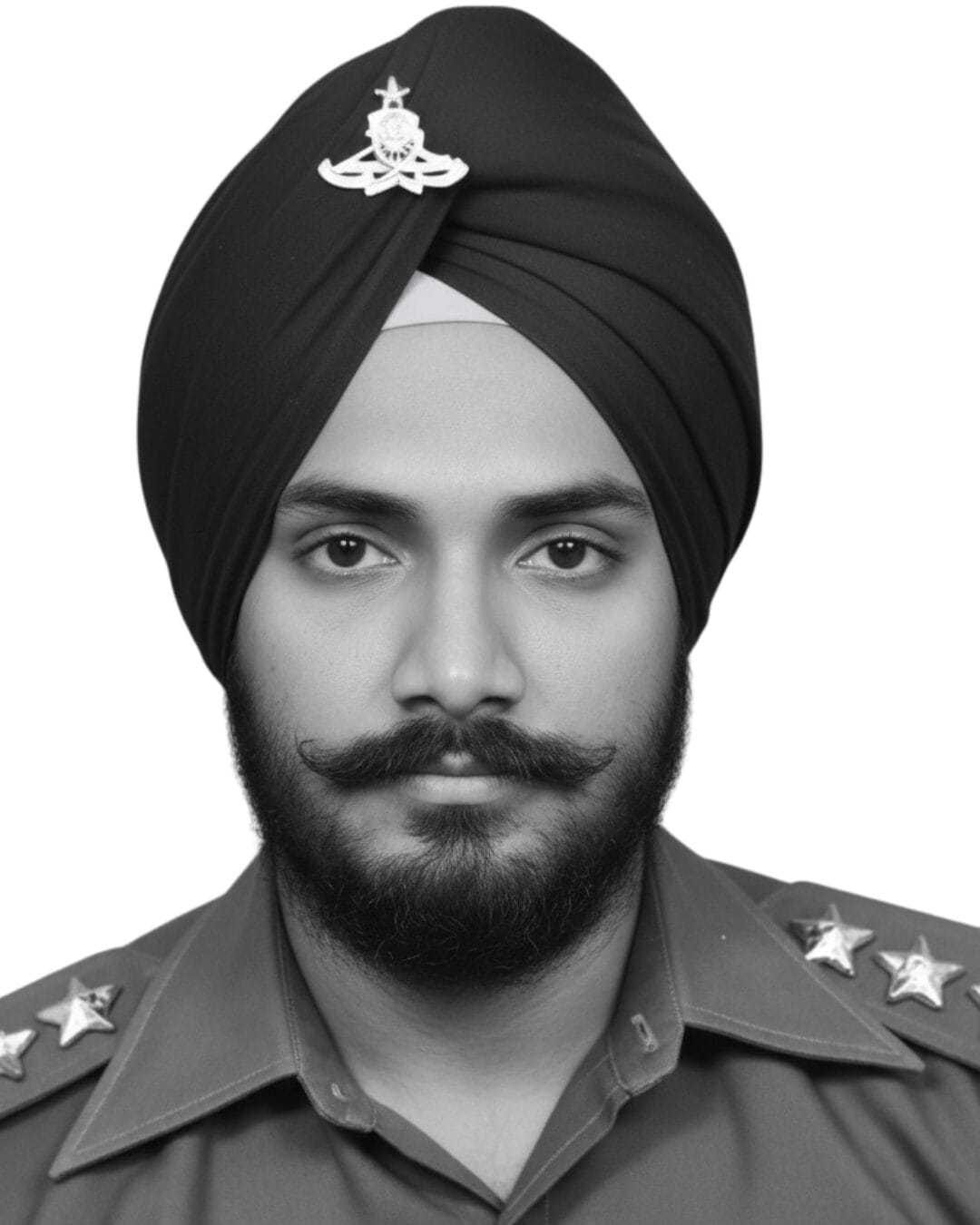
Written by
Capt. Dhaliwal · Director, New Careers Academy
Ex-Indian Army officer and SSB mentor at NCA Academy, Chandigarh (est. 1967), coaching NDA, CDS, AFCAT and SSB aspirants since the 1980s. About the author →
Reviewed by Hartaj Dhaliwal — SSB Strategist, NCA · third-generation officer · recommended by the SSB three times.