SSB OIR Test: Complete Guide to Pattern, Questions & Preparation (2026)
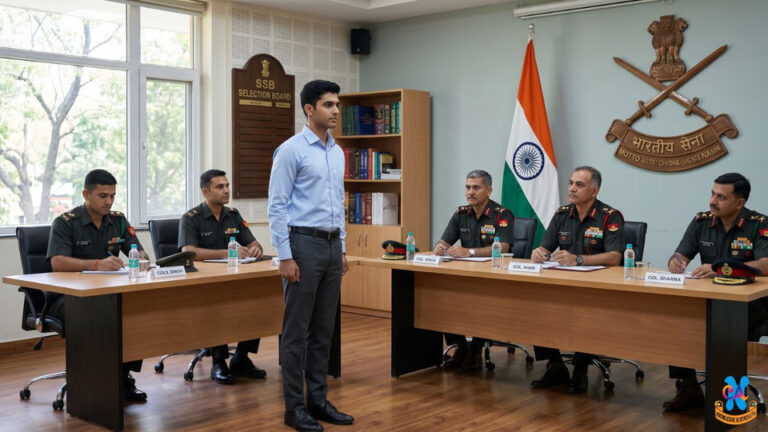
The SSB OIR Test (Officer Intelligence Rating Test) is the very first assessment you face at the Services Selection Board — and it determines whether you even get to continue your SSB interview. Held on Day 1 alongside the PPDT, the OIR test screens out candidates who don’t meet the minimum intelligence threshold for an officer’s commission.
This complete guide covers everything you need to know about the SSB OIR Test in 2026 — exact pattern, verbal and non-verbal question types with examples, the Grade 1–5 scoring system, how screening decisions are made, and a step-by-step preparation strategy to get you through.
What is the SSB OIR Test?
OIR stands for Officer Intelligence Rating. It is a timed written test administered on the first day of the SSB interview to measure a candidate’s verbal and non-verbal reasoning ability under time pressure. The test is not about academic knowledge — it assesses raw cognitive speed, logical thinking, and pattern recognition.
The OIR test is conducted at all SSB centres for NDA, CDS, AFCAT, TES, and other officer-entry examinations. Your score is graded on a scale of Grade 1 to Grade 5, with Grade 1 being the highest. Only candidates who achieve a sufficient OIR grade — combined with a passing PPDT score — are screened in and allowed to proceed to the remaining four days of SSB testing.
SSB OIR Test Pattern & Format
| Detail | Specification |
|---|---|
| Test Name | Officer Intelligence Rating (OIR) Test |
| Day | Day 1 of SSB (Screening Day) |
| Booklets | Two — Verbal (Booklet 1) + Non-Verbal (Booklet 2) |
| Questions per Booklet | ~50–55 questions per booklet |
| Time per Booklet | ~17 minutes per booklet |
| Negative Marking | None — attempt every question |
| Mode | Pen and paper (OMR sheet) |
| Grading | Grade 1 (highest) to Grade 5 (lowest) |
| Purpose | Screening in / out at Stage 1 |
Key point: There is no negative marking in the OIR test. You should attempt every question. Even guessing on the last 5–10 questions you can’t solve is better than leaving them blank.
SSB OIR Test: Verbal Reasoning (Booklet 1)
The verbal booklet tests your ability to reason with words, numbers, and language-based logic. Here are the main question types with examples:
1. Number Series
A sequence of numbers is given with one number missing. You must identify the pattern and fill in the blank.
Example: 2, 6, 12, 20, 30, ___
Answer: 42 (differences: 4, 6, 8, 10, 12)
2. Alphabet Series / Coding-Decoding
Letters are rearranged or coded according to a rule. You must decode or continue the pattern.
Example: If CAT = XZG, then DOG = ?
Answer: WLT (each letter replaced by its mirror in the alphabet)
3. Analogies (Word Pairs)
Identifying the relationship between a given pair of words and applying it to a second pair.
Example: Doctor : Hospital :: Teacher : ___
Answer: School
4. Odd One Out
Four or five options are given; three share a common property and one does not.
Example: Mango, Apple, Banana, Carrot
Answer: Carrot (it’s a vegetable, not a fruit)
5. Synonyms & Antonyms
A word is given and you must select the closest meaning (synonym) or opposite meaning (antonym) from four options.
6. Sentence Completion / Jumbled Words
A sentence with a blank is given, or words are jumbled and you must form a meaningful sentence. Tests command of English and logical sentence structure.
7. Arithmetic Problems
Simple arithmetic — percentages, ratios, time-distance, profit-loss — at Class 8–9 difficulty level. Speed matters more than complexity here.
8. Common Sense / Logical Reasoning
Short logical puzzles — blood relations, seating arrangements, direction sense — testing your ability to reason quickly from given conditions.
SSB OIR Test: Non-Verbal Reasoning (Booklet 2)
The non-verbal booklet replaces words with shapes, patterns, and figures. It is considered more challenging by most candidates because it cannot be prepared through rote learning — only practice builds speed.
1. Figure Series Completion
A series of figures is shown with a blank. You must identify the pattern (rotation, reflection, number of elements) and pick the figure that correctly fills the blank.
2. Odd Figure Out
Five figures are shown; four share a common property (size, shading, orientation). You must identify the one that doesn’t fit.
3. Analogy (Figure Pairs)
A pair of figures is shown with a specific relationship (e.g., one is rotated 90° clockwise from the other). A third figure is given — you must select the fourth figure that has the same relationship.
4. Mirror Images
A figure is shown. You must pick which of the four options is its correct mirror image (flipped horizontally).
5. Embedded / Hidden Figures
A simple shape (e.g., a triangle) is shown, and four complex figures are given. You must identify in which complex figure the simple shape is hidden or embedded.
6. Paper Folding & Cutting
A paper is shown being folded and then punched/cut. You must identify what the paper looks like when unfolded.
7. Counting Figures
A complex figure made up of triangles, squares, or rectangles is shown. You must count the total number of a specific shape within it.
SSB OIR Grading System: Grade 1 to Grade 5 Explained
After both booklets are completed and scored, your performance is converted into an OIR Grade — a standardised score from 1 to 5 relative to the batch performance.
| OIR Grade | Performance Level | Screening Outcome |
|---|---|---|
| Grade 1 | Top 20% of batch — exceptional speed and accuracy | Strong screen-in signal |
| Grade 2 | Above average — solid accuracy, good pace | Likely to be screened in |
| Grade 3 | Average performance | Borderline — depends on PPDT story quality |
| Grade 4 | Below average | Likely screened out |
| Grade 5 | Poor performance | Almost certainly screened out |
Target: Aim for OIR Grade 1 or Grade 2. While the SSB does not publish exact cutoffs, candidates with Grade 1–2 have a strong screen-in probability. Grade 3 is a grey zone — your PPDT performance will be the deciding factor.
How OIR + PPDT Together Decide Your Screening
The OIR test and the PPDT (Picture Perception and Discussion Test) are both administered on Day 1. The assessors combine your performance in both to make the screening decision — neither alone guarantees a result.
Think of it as a two-axis system:
- OIR Grade 1 + Good PPDT story: Very likely screened in
- OIR Grade 2 + Average PPDT: Usually screened in
- OIR Grade 3 + Strong PPDT story: May be screened in — the PPDT compensates
- OIR Grade 3 + Weak PPDT: Very likely screened out
- OIR Grade 4 or 5: Almost always screened out regardless of PPDT
This is why it is a mistake to “just focus on SSB personality preparation” and neglect the OIR. A poor OIR grade means you won’t even reach the Psychology tests, GTO, or Personal Interview.
SSB OIR Test Preparation Strategy
1. Understand the time pressure first
~50 questions in 17 minutes means roughly 20 seconds per question. The difficulty of individual questions is not the challenge — the pace is. Your first priority is to build the habit of answering quickly, not perfectly.
2. Prioritise high-frequency question types
In verbal: number series, coding-decoding, analogies, and odd one out appear in almost every test. Master these four first — they are fast, rule-based, and highly predictable.
In non-verbal: figure series, mirror images, and odd figure out appear consistently. These require visual pattern recognition that improves rapidly with daily practice.
3. Practice full timed sets, not individual questions
Solving one question at a time from a book does not build the speed and stamina you need. Practice full 50-question timed sets under real conditions — 17 minutes, no breaks, no looking up answers mid-attempt.
4. Review errors to identify weak pattern types
After each practice set, analyse your wrong answers. You will typically find 2–3 specific question types where you consistently lose time or make errors. Target those specifically for the next week.
5. Attempt all questions — no blank answers
There is no negative marking. If you’re running out of time, mark a consistent answer (e.g., always option B) for the remaining questions. You will pick up a few correct answers by chance — and there is no penalty for wrong ones.
4-Week OIR Preparation Plan
| Week | Focus | Daily Target |
|---|---|---|
| Week 1 | Learn all verbal question types — rules, shortcuts, examples | 30 verbal questions with review |
| Week 2 | Learn all non-verbal question types — practice by type | 30 non-verbal questions with review |
| Week 3 | Full timed sets (verbal + non-verbal), build pace | 1 full OIR set (100 Qs, 34 min) |
| Week 4 | Simulated exam conditions + error analysis + revision of weak areas | 2 full OIR sets + review |
Common Mistakes to Avoid in SSB OIR Test
- Spending more than 30 seconds on any one question: If you don’t see the answer in 20–25 seconds, mark your best guess and move on. Don’t let one question cost you five.
- Not practising non-verbal at all: Many candidates over-prepare verbal and neglect figures. Non-verbal is often the harder booklet for first-timers.
- Leaving blanks: With no negative marking, every blank answer is a wasted chance. Always fill in something.
- Misreading the question type quickly: In the rush of the test, candidates sometimes solve the wrong question type (e.g., solving for a synonym when an antonym is asked). Read the question stem carefully — it takes 2 seconds and prevents careless errors.
- Ignoring OIR altogether: Some candidates believe SSB is entirely about personality and the 4-day process. They are wrong. A Grade 4 or 5 OIR ends your attempt on Day 1.
Frequently Asked Questions
What is the OIR test in SSB?
The OIR (Officer Intelligence Rating) test is a timed written assessment conducted on Day 1 of the SSB interview. It consists of two booklets — verbal reasoning and non-verbal reasoning — with approximately 50 questions each, to be completed in about 17 minutes per booklet. Your score is rated on a Grade 1–5 scale and is used, along with your PPDT result, to determine whether you are screened in to proceed with the full SSB.
What OIR grade is needed to get screened in?
While the SSB does not publish a fixed cutoff, candidates who achieve OIR Grade 1 or Grade 2 have the strongest screen-in probability. Grade 3 is a borderline zone where your PPDT performance will weigh heavily. Grade 4 or 5 almost always results in screening out, regardless of your PPDT.
Is there negative marking in the SSB OIR test?
No. There is no negative marking in the SSB OIR test. You should attempt every question. If you are running out of time, mark a guess for remaining questions rather than leaving them blank.
How many questions are there in the SSB OIR test?
Each booklet contains approximately 50–55 questions, giving a total of around 100–110 questions across both booklets. Each booklet is completed in roughly 17 minutes. Total OIR test time is approximately 35–40 minutes including instructions.
Is the OIR test the same for NDA, CDS, AFCAT, and TES?
Yes. The OIR test format is standard across all SSB centres and all officer-entry routes — NDA, CDS, AFCAT, TES 10+2, NCC Special Entry, and others. The specific question bank rotates between testing sessions, but the structure, number of questions, time limits, and grading system remain consistent.
How do I improve my OIR test score quickly?
The fastest gains come from: (1) learning the rules for number series, coding-decoding, analogies, and figure series — these cover 60%+ of the paper; (2) practising full timed sets rather than individual questions; and (3) reviewing errors to identify your specific weak question types. Four weeks of focused daily practice — 30–40 minutes per day — is typically enough to move from Grade 3 to Grade 1–2 territory.
What books or resources are recommended for SSB OIR preparation?
For verbal reasoning: R.S. Aggarwal’s “A Modern Approach to Verbal Reasoning” covers all topics you’ll encounter. For non-verbal: R.S. Aggarwal’s “A Modern Approach to Non-Verbal Reasoning” is the standard reference. For timed full-length OIR practice: SSBCrack’s OIR practice booklets and the official SSB preparation guide published by joinindiannavy.gov.in for Navy-entry candidates are useful. Online mock tests from testbook.com are also available for timed practice.
Final Word: SSB OIR Test
The OIR test is often underestimated — and that underestimation is exactly what gets candidates screened out on Day 1. It is not intellectually difficult, but it is deliberately fast. The only way to perform well under 17-minute pressure is to have done it dozens of times before you walk into the SSB centre.
Start your OIR preparation early, practice under real time conditions, and target Grade 1–2 with confidence. Once you clear screening, the real SSB journey — psychology tests, GTO, and Personal Interview — begins.
At NCA Academy, our SSB coaching programme covers the complete SSB process — from OIR and PPDT preparation to GTO tasks, psychology tests, and Personal Interview training. With over 59 years of experience and a track record of thousands of successful commissions, our structured approach ensures you walk into your SSB fully prepared at every stage.
Ready to start your SSB preparation? Explore NCA Academy’s SSB coaching programmes today.
📌 Preparing for the interview round? See 100 real SSB interview questions with model answers (2026).
💻 Prefer expert SSB guidance from home? Explore NCA’s online SSB coaching in India — live mock interviews, GTO and psychology training.
🎯 Want expert guidance for the SSB? Explore the best SSB coaching in India at New Careers Academy — ex-officer mentors, live mock SSB and a proven selection record since 1967.
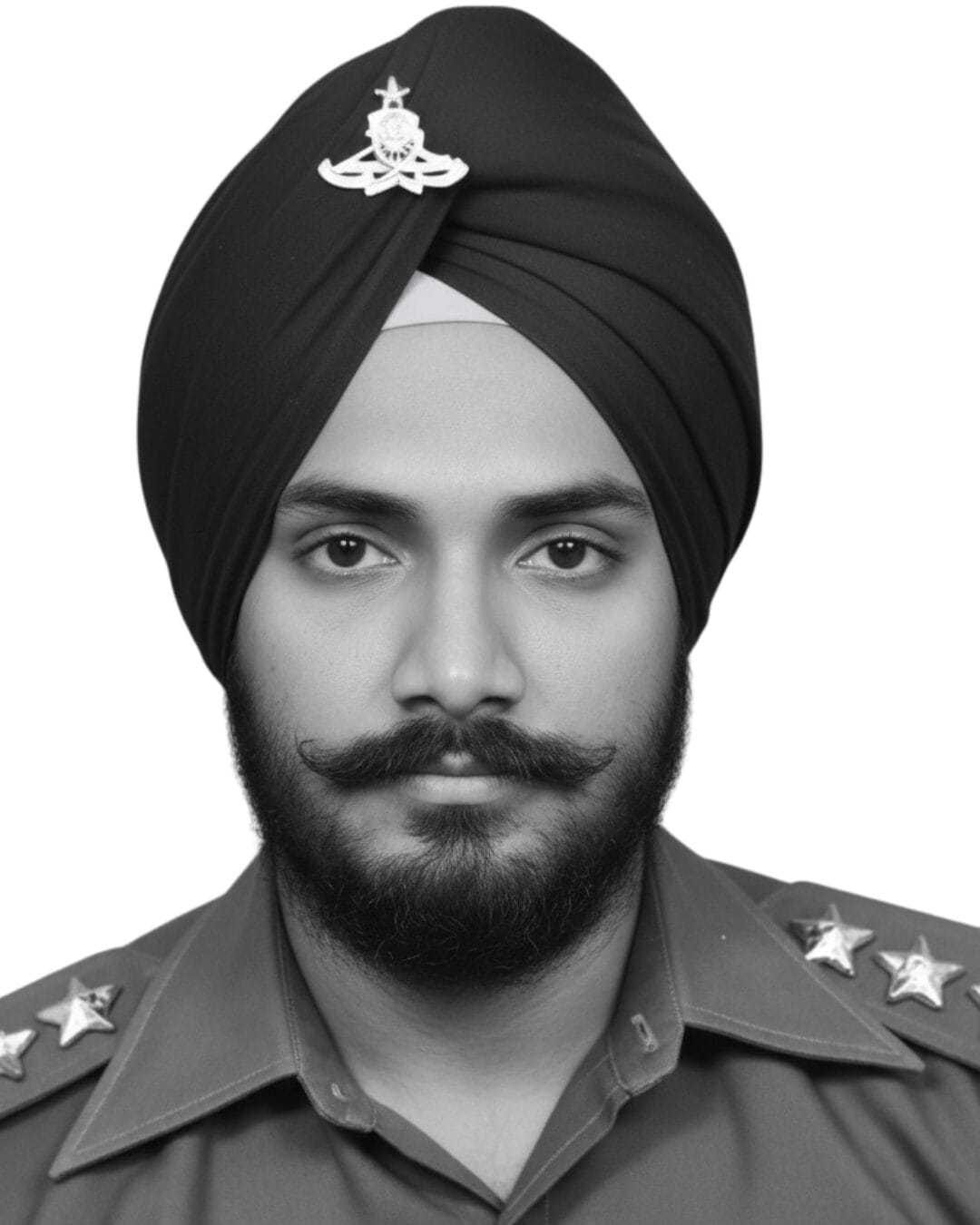
Written by
Capt. Dhaliwal · Director, New Careers Academy
Ex-Indian Army officer and SSB mentor at NCA Academy, Chandigarh (est. 1967), coaching NDA, CDS, AFCAT and SSB aspirants since the 1980s. About the author →
Reviewed by Hartaj Dhaliwal — SSB Strategist, NCA · third-generation officer · recommended by the SSB three times.