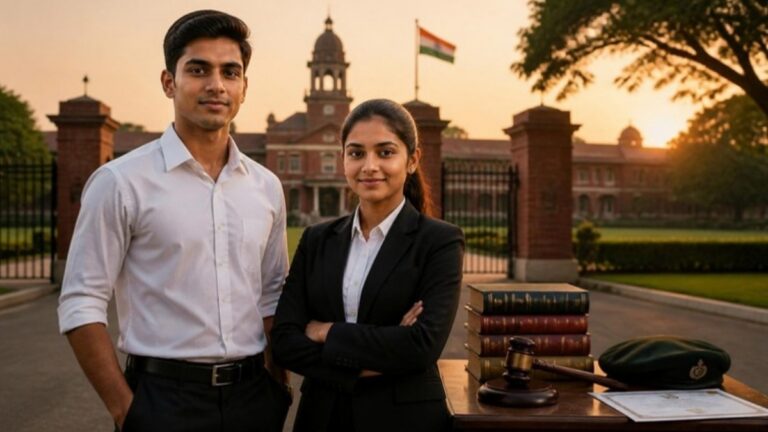
The PPDT (Picture Perception and Discussion Test) is one of the first filters in the SSB interview process — and many candidates underestimate it. In this guide, you will learn exactly how to attempt PPDT practice pictures, what assessors look for, common themes you will encounter, and how to frame a strong story that helps you clear the screening round.
What is PPDT in SSB Interview?
PPDT is the second part of the Day 1 screening at the Service Selection Board, conducted right after the Officer Intelligence Rating (OIR) test. You are shown a hazy, ambiguous picture for 30 seconds. You then have 4 minutes to write a story about what you perceive in the picture. This is followed by a group narration and discussion where each candidate shares their story and the group arrives at a common story.
The entire PPDT — both the written story and the group discussion — is observed and assessed by the psychologist and GTO. Candidates who are not selected after Day 1 screening (OIR + PPDT) are sent home. Only those who are screened in continue to the remaining 4 days of the SSB.
How to Attempt PPDT: The 4-Step Method
Step 1: Observe the Picture Carefully (30 seconds)
In just 30 seconds, note: the number of characters (clearly visible and implied), their approximate age and gender, the mood or emotion each character appears to have (positive, negative, or ambiguous), the setting or background (indoor/outdoor, urban/rural, day/night), and any object or activity that gives a clue to the story.
Step 2: Decide on a Positive, Action-Oriented Story
The most important rule of PPDT: always write a positive story. The hero of your story should face a problem and solve it through decisive action. Avoid negative endings, passive heroes, and unclear plots. The protagonist should ideally reflect officer-like qualities — initiative, leadership, and responsibility.
Step 3: Write Using the P-A-C Format
The best PPDT stories follow a clear structure: Past (what led to this situation), Action (what the character does), and Conclusion (positive outcome). Write in simple, clear English. Avoid overly complex vocabulary. The story should be 8 to 12 lines — crisp, complete, and coherent.
Step 4: Group Discussion — Be the First or Second Speaker
In the group narration, speak clearly and confidently. State the number and description of characters you saw, then narrate your story in 60–90 seconds. In the common story discussion, contribute actively, listen to others, and show flexibility. Do not dominate aggressively, but do not be a silent observer either.
Common PPDT Picture Themes in SSB 2026
PPDT pictures are intentionally hazy and ambiguous, but most fall into recurring themes. Familiarising yourself with these will help you respond faster and more naturally:
| Theme Category | Examples |
|---|---|
| Disaster / Emergency | Flood scene, fire, accident, landslide |
| Construction / Development | Building construction, road laying, factory |
| Social Issue | Poverty, unemployment, farmer distress |
| Military / Defence | Soldiers, patrol, camp, helicopter |
| Education / Youth | Students studying, classroom, sports ground |
| Community Service | Volunteers helping, medical camp, food distribution |
| Workplace / Professional | Office, laboratory, hospital, workshop |
PPDT Practice Pictures: How to Use Them Effectively
Simply staring at practice pictures is not enough. To actually improve your PPDT performance, follow this structured practice routine:
Set a timer for 30 seconds and look at each practice picture. Do not cheat yourself on time — 30 seconds is exactly what you get in the actual SSB. After 30 seconds, close the image and spend exactly 4 minutes writing your story. Then compare your story against the ideal PPDT story structure. What is your hero doing? Is the ending positive? Is the plot clear?
Practice at least 2–3 PPDT pictures per day in the month before your SSB. After writing, read your story aloud as if narrating to a group — this trains your verbal delivery simultaneously.
What Assessors Look for in Your PPDT Story
SSB assessors evaluate PPDT stories on several dimensions that reveal your personality and officer-like qualities (OLQ):
| What They Observe | What It Reveals |
|---|---|
| Story coherence and logic | Intelligence and structured thinking |
| Positive outcome | Optimism and mental resilience |
| Active hero who takes initiative | Leadership and sense of responsibility |
| Social awareness in the story | Awareness and empathy |
| Clarity of expression | Communication ability |
| Originality (not a cliche story) | Creativity and independent thinking |
Most Common PPDT Mistakes to Avoid
Candidates often make predictable mistakes that hurt their PPDT scores. Avoid these: writing a negative story (hero fails, disaster is unresolved), having too many characters which creates a confusing plot, using a very common story frame that assessors have heard hundreds of times (e.g. “a boy studies hard and passes the exam”), being too verbose and not completing the story in 4 minutes, and in the group discussion — arguing aggressively, going silent, or repeating exactly what others said without adding value.
Sample PPDT Story Framework
Here is a template you can adapt for most PPDT pictures: “The picture shows [describe characters and setting]. [Character name], a [age/profession], noticed [the problem or situation]. Without hesitation, [he/she] [took specific action]. [Supporting action or challenge faced]. As a result, [positive outcome]. The experience made [character name] more [quality — determined/confident/responsible].”
This framework works for disaster, social, military, and professional themes alike. Practice filling it in for different picture categories until it becomes second nature.
PPDT Preparation at NCA Academy
At NCA Academy’s SSB coaching programme, candidates undergo daily PPDT practice with actual hazy pictures, timed conditions, and group discussions observed by ex-SSB assessors. The feedback provided is specific and actionable — helping candidates identify and fix their story-writing patterns before the actual SSB.
FAQs on PPDT Practice Pictures
How many characters should I include in my PPDT story?
Ideally 1 to 3 characters. A single strong hero with a clear goal and decisive action is better than a story crowded with many characters where none stands out.
Should the hero in my PPDT story always be in the military?
No. The hero can be a doctor, engineer, student, farmer, or anyone — as long as they display initiative and leadership. Military heroes are fine but not mandatory.
Does everyone in the group need to agree on a common story?
The goal of the group discussion is to reach a common story, but the process (how you contribute, listen, and persuade) is what gets assessed. Focus on being an effective, collaborative group member rather than just winning the argument.
Can I write in Hindi or my regional language for PPDT?
The SSB PPDT story must be written in English. Your narration in the group discussion should also be in English.
How many PPDT practice pictures should I do before SSB?
Practice at least 60–80 PPDT pictures under timed conditions before your SSB. Daily practice of 2–3 pictures for 30 days is the most effective approach. For structured practice with real SSB-style pictures, join NCA Academy’s SSB programme.
Conclusion
PPDT practice pictures are your gateway to clearing the SSB screening. The more you practice under timed conditions, the more natural your story-writing and narration will become. Remember: positive hero, clear plot, decisive action, and confident group participation. For the most thorough SSB preparation in India, trust NCA Academy — India’s oldest defence coaching institute since 1967.
🎯 Want expert guidance for the SSB? Explore the expert SSB interview coaching at New Careers Academy — ex-officer mentors, live mock SSB and a proven selection record since 1967.
Written by
Capt. Dhaliwal · Director, New Careers Academy
Ex-Indian Army officer and SSB mentor at NCA Academy, Chandigarh (est. 1967), coaching NDA, CDS, AFCAT and SSB aspirants since the 1980s. About the author →
Reviewed by Hartaj Dhaliwal — SSB Strategist, NCA · third-generation officer · recommended by the SSB three times.