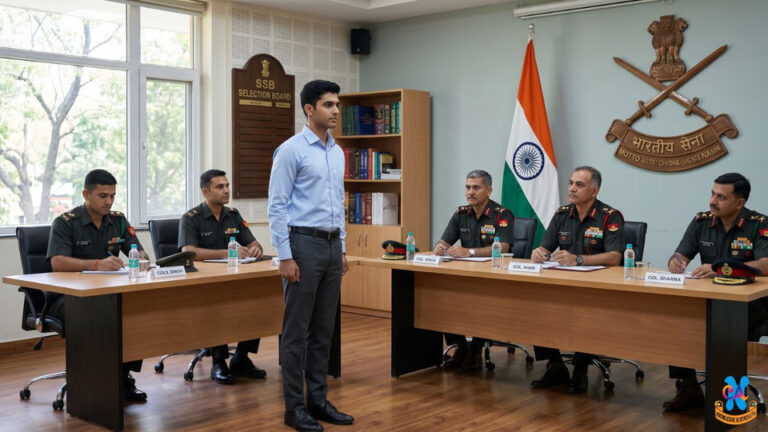
SSB Rejection Reasons: Why Candidates Fail and How to Avoid It (2026 Complete Guide)
More than 95% of candidates who walk into an SSB centre walk out without a recommendation. The Services Selection Board rejects thousands of otherwise capable aspirants every cycle — not because they lack intelligence, but because they misunderstand what the board is actually measuring. If you have cleared the NDA, CDS, or AFCAT written exam and are heading to SSB, understanding these rejection patterns could be the difference between a recommendation and a repeat attempt.
This guide breaks down every major SSB rejection reason, stage by stage — screening, psychology tests, GTO tasks, personal interview, and conference — and gives you concrete fixes for each one.
Key Takeaways
- Overall SSB recommendation rate is 5–6% — only around 300–500 candidates are recommended per NDA cycle
- The Stage 1 screening eliminates 50–70% of candidates on Day 1 itself
- Most Stage 2 failures stem from inconsistent personality projection across psychology, GTO, and interview
- Assessors evaluate 15 Officer Like Qualities (OLQs) grouped across 4 factors over 5 days
- The single most common rejection reason: coached behaviour that collapses under extended 5-day observation
The SSB Selection Rate: What the Numbers Tell You
Roughly 1 in 20 candidates who attend an SSB interview receives a recommendation — the overall selection rate across the Army, Navy, and Air Force hovers between 5% and 6%. Of those who clear the NDA written exam and are called to SSB, approximately 30–50% pass Stage 1 screening and proceed to Stage 2 testing over the remaining four days. The rest are screened out on Day 1 itself — before the psychologist or GTO has assessed them at all.
| Stage | Approx. Pass Rate | Primary Reason for Failure |
|---|---|---|
| Stage 1 Screening (OIR + PPDT) | 30–50% proceed to Stage 2 | Low OIR score; weak PPDT story or group discussion |
| Psychology Tests (TAT/WAT/SRT/SD) | Assessed over 5 days | Inconsistency; fabricated or coached OLQ profiles |
| GTO Tasks | Assessed over 5 days | Not helping the group; overconfidence; passivity |
| Personal Interview | Assessed over 5 days | Lack of self-awareness; dishonesty; poor current affairs |
| Conference (Final Board) | ~5–6% overall recommended | Borderline OLQ scores; inconsistency across streams |
Stage 1 Screening Rejection Reasons
Stage 1 screening — held on Day 1 — consists of the OIR (Officer Intelligence Rating) test and the PPDT (Picture Perception and Discussion Test). This single day eliminates the majority of the batch. OIR tests assess verbal and non-verbal reasoning across two booklets of approximately 50–55 questions each in 17 minutes per booklet. A poor OIR score, combined with a weak PPDT performance, almost always results in screening rejection before the 5-day process even begins.
The most common Stage 1 rejection reasons:
- Low OIR score: Insufficient reasoning speed or accuracy on the test booklets brings the overall screening score down regardless of PPDT performance
- Story without a hero: PPDT stories where the central character has no clear positive action, leadership role, or constructive resolution
- Passive or silent in PPDT group discussion: Candidates who write a solid story but barely speak during the group discussion are flagged immediately — participation is mandatory, not optional
- Copying others’ stories: Narrating a story that clearly wasn’t your own — assessors and GTO observers watch for this pattern across the batch
- Negative or ambiguous story theme: Stories involving accidents, deaths, crime, or unresolved conflict signal poor psychological orientation to assessors
Fix: Practise OIR daily — number series, analogies, coding-decoding, figure matrices. For PPDT, write stories where the hero identifies a problem, takes personal initiative, and resolves it constructively. Contribute meaningfully in the group discussion — not dominance, but clear, structured participation. For a detailed breakdown of the OIR test pattern and section-wise preparation, read our SSB OIR Test Complete Guide.
Psychology Test Rejection Reasons (TAT, WAT, SRT, SD)
The psychology battery is the most misunderstood component of the SSB. Research and data from former SSB officers indicate that roughly 25% of Stage 2 candidates fail because their psychological responses look fabricated or coached — assessors identify patterns that are too uniform, too perfect, or fundamentally inconsistent with the candidate’s real behaviour in GTO tasks. The four tests — TAT, WAT, SRT, and SD — together build a picture of your natural personality, not the idealised officer persona you may have prepared.
TAT (Thematic Apperception Test)
- Writing stories where every image has an identical hero template — assessors expect variation in how you process different situations
- Stories that are too short (under 12–15 lines) — insufficient content to assess personality dimensions reliably
- Heroes who are passive or rely entirely on external help rather than taking personal initiative
- Negative endings, tragedy, or unresolved conflict across multiple stories signals persistent negative orientation
WAT (Word Association Test)
- Consistently negative associations to neutral or positive stimulus words
- Leaving blanks — each unanswered word is a missed OLQ signal that weakens your psychology score
- Mechanical, textbook definitions rather than spontaneous, personal responses — this signals coaching rather than natural thinking
SRT (Situation Reaction Test)
- Responses that are impractical or generic (e.g., “I would inform the senior authority” for every situation)
- Responses that show avoidance of personal responsibility — waiting for someone else to act rather than taking initiative
- Incomplete responses due to poor time management across 60 situations in 30 minutes
SD (Self Description)
- Describing an entirely positive, weakness-free self — this reads as dishonest to trained psychologists
- Contradiction between what you write in SD and what comes out in the personal interview
- Using language that sounds like an SSB coaching manual rather than your actual self-perception
Fix: Develop a genuine self-image before entering SSB. Know your actual strengths and weaknesses. In TAT and SRT, let the hero be proactive but realistic — not superhuman. Your responses should reflect who you genuinely are, not who you think assessors want to see. Consistency across all four tests is more important than perfection in any single one.
GTO Task Rejection Reasons
The Group Testing Officer (GTO) assesses your OLQs through real-time group activity over approximately two days. Tasks include Group Discussion, Group Planning Exercise (GPE), Progressive Group Tasks (PGT), Half Group Tasks (HGT), Individual Obstacles (IO), Command Task, Lecturette, and Final Group Task. The critical insight most candidates miss: the GTO is not looking for the person who does the most — he is looking for the person who helps the group achieve the most.
- Bulldozing in Group Discussion: Repeatedly speaking over others or aggressively pushing your ideas signals poor cooperation and social adaptability
- Complete silence in group activities: Not contributing during GD or GPE is as damaging as speaking too much — both represent OLQ failures
- Not helping others on obstacles: Completing individual tasks while ignoring struggling teammates is directly observed and scored negatively
- Giving up on difficult obstacles: Quitting before the time limit, especially on the Individual Obstacle course, signals low determination and courage
- Poor Command Task planning: Rambling instructions to your subordinates or choosing resources inefficiently — the Command Task tests organising ability and power of expression under pressure
- Lecturette without structure: A 3-minute talk with no clear opening, body, or conclusion — and poor eye contact throughout — fails on Power of Expression and Social Effectiveness OLQs simultaneously
- Insufficient physical fitness: Struggling with basic physical demands (climbing, crawling, jumping obstacles) when baseline fitness is expected at officer level
Fix: Practise group discussions in your coaching batch or peer group. Physical preparation for GTO obstacles should begin 3–4 months before SSB. In Command Tasks, plan clearly: identify the problem, brief your team, assign roles, execute. Demonstrate leadership by organising others effectively — not just by being the most capable individual in the group.
Personal Interview Rejection Reasons
The Personal Interview (PI) is a 45–60 minute one-on-one session with an Interviewing Officer (IO). It is not a test of how much you know — it is an assessment of who you are, how honest you are about it, and whether you have the psychological stability and self-awareness of a commissioned officer. Candidates who study “most frequently asked SSB PI questions” and memorise answers almost always fail, because the IO probes deeper the moment a rehearsed answer appears.
- Inconsistency between PI and psychology tests: If your SD says you struggle with patience but your interview presents a perpetually calm persona, the IO notices the contradiction
- No genuine motivation for joining the armed forces: “It’s my dream since childhood” without specific incidents, experiences, or concrete reasons is a red flag for every IO
- Poor self-awareness: Not knowing your own strengths, weaknesses, major failures, and what you actually learned from them
- Weak current affairs and defence awareness: IO questions frequently cover recent national security events, defence acquisitions, border situations, and basic geopolitics
- Fake humility or fake confidence: Both extremes are spotted immediately by experienced IOs — one comes across as insecure, the other as arrogant
- Not maintaining eye contact: Dropping eye contact when answering difficult questions signals anxiety or dishonesty
- Vague Service and branch preference: Being unclear about why you prefer a specific Service, arm, or regiment — without studied reasoning — indicates poor motivation
Fix: Fill your PIQ (Personal Information Questionnaire) honestly and in detail — the IO uses it as the primary roadmap for the interview. Know every entry in your PIQ. Prepare your self-analysis: 3 genuine strengths with specific examples, 2 genuine weaknesses with what you are actively doing about them, and 3–5 real incidents from your life that shaped your character. Read a quality newspaper daily for 6 months before your SSB.
The 15 OLQs and Where Most Candidates Fall Short
The SSB evaluates 15 Officer Like Qualities (OLQs) across all three assessors — psychologist, GTO, and IO — over five days. A candidate must demonstrate an adequate level across most OLQs in all three assessment streams for a recommendation. The most commonly deficient OLQs that cause borderline failures are Self-Confidence, Sense of Responsibility, and Effective Intelligence under stress — qualities that are highly visible across all three assessment contexts.
| Factor | OLQs Included | Common Failure Signs |
|---|---|---|
| Planning & Organising | Effective Intelligence, Reasoning Ability, Organising Ability, Power of Expression | Weak GPE plans; incoherent lecturette; disorganised Command Task |
| Social Adjustment | Social Adaptability, Cooperation, Sense of Humour | Not helping teammates; rigidity in group; appearing tense or humourless |
| Social Effectiveness | Ability to Influence Group, Liveliness, Bearing | No visible impact on GD outcome; poor posture and grooming; flat energy |
| Dynamism | Self-Confidence, Determination, Courage, Initiative, Speed of Decision | Quitting obstacles early; waiting for others to decide; hesitating under pressure |
The 15 OLQs and their four-factor grouping are part of the official SSB assessment framework used across all three Services — Army, Navy, and Air Force. Candidates can review the official SSB process overview on the Indian Navy SSB Interview page and the Indian Army recruitment portal.
Conference Rejection Reasons
The Conference is the final stage of SSB — a brief board interaction where all three assessors share their independent evaluations and arrive at a consensus recommendation. Candidates who reach Conference are already in the top tier of the batch. Rejection at Conference almost always means the candidate’s scores across the three assessment streams were inconsistent — strong in one area but clearly weak in another — preventing the board from reaching consensus.
- Strong PI but poor psychology battery profile
- Excellent GTO performance but a weak personal interview
- Borderline OLQ scores across all three streams — not clearly recommended, not clearly rejected
- A specific concern raised by one assessor (such as observed dishonesty or contradiction) that cannot be overridden by positive scores elsewhere
At Conference, the President may ask you a brief final question. Answer honestly, simply, and directly. Trying to perform at the Conference itself is a mistake — the board has already formed its view based on five full days of systematic observation.
How to Avoid SSB Rejection: Actionable Fixes
The single most effective way to avoid SSB rejection is to spend 6–9 months developing genuine officer-like qualities before you appear — not 3 weeks memorising SSB tips. Authentic OLQ development cannot be sustained as a performance across a 5-day assessment by trained military psychologists and GTO officers. Here is the structured preparation approach that consistently produces recommendations:
- Build genuine leadership experience: Organise events, take on team responsibilities in college, sports, NCC, or community settings — real experiences produce authentic stories that hold up under IO questioning
- Read quality newspapers daily: 30 minutes of defence news, national affairs, and geopolitics — The Hindu, Indian Express, and PIB are sufficient and reliable sources
- Practise TAT storytelling weekly: Write 12–15 PPDT/TAT stories per week with positive, action-oriented heroes who face realistic challenges and achieve constructive outcomes
- Train physically for GTO obstacles: Start running, upper-body strength training, and agility work at least 3–4 months before SSB — fitness is an OLQ signal, not just a physical requirement
- Do mock group discussions regularly: Practise contributing confidently in groups — ideas, listening, building on others’ points, without dominating or going silent
- Work on self-awareness through journaling: Write about your strengths, weaknesses, major life experiences, and what you learned — this directly feeds your PI and SD authenticity
Frequently Asked Questions
What is the most common reason for SSB rejection?
The most common reason is inconsistency across the three assessment streams — psychology, GTO, and personal interview. When a candidate projects confidence in the interview but is passive on the GTO ground, or writes outstanding TAT responses but cannot sustain the same personality in real group settings, assessors identify a coached persona rather than a genuine officer character. Approximately 25% of Stage 2 failures are attributed directly to fabricated or rehearsed behaviour that breaks down under extended observation.
Can you fail SSB at the Conference stage?
Yes. Conference rejection happens when the three assessors — psychologist, GTO, and IO — cannot reach a consensus recommendation after sharing their independent evaluations. This typically occurs when a candidate performs well in one or two streams but has a clear weakness in another, or when one assessor flags a specific concern (such as observed dishonesty or contradiction) that the board takes seriously. Conference rejection is less common but does happen for borderline candidates who are strong in parts but inconsistent overall.
How many times can you appear for SSB?
There is no fixed upper limit on SSB attempts for NDA — candidates can appear as long as they clear the written exam and remain within the age limit. For CDS, AFCAT, and other entries, similar age-based rules apply. However, repeated attempts without a genuine change in preparation approach rarely produce different results. A structured review of your previous SSB experience and deliberate OLQ development between attempts — ideally with experienced coaching — is essential before reappearing.
Does SSB give rejection feedback to candidates?
SSB does not provide written individual feedback to rejected candidates. However, at the Conference, the President may informally indicate areas for improvement. Some boards share general guidance. The most effective feedback loop is working with experienced SSB mentors who can assess your OLQ gaps through mock assessments — identifying whether your weaknesses lie in psychology, GTO performance, interview behaviour, or OLQ consistency. Systematic coaching-based feedback has a measurably better impact on subsequent attempts than self-assessment alone.
Is SSB coaching necessary to clear the interview?
Coaching is not mandatory, but structured guidance significantly improves the recommendation rate for most candidates. The value of quality SSB coaching is not in teaching you “what to say” — it is in helping you understand OLQs deeply, identify your personal gaps across psychology and GTO tasks, practise under realistic assessment conditions, and build the leadership habits that trained assessors recognise as genuine. Candidates who combine structured coaching with authentic self-development show substantially higher success rates than those who prepare alone.
Final Word
SSB rejection is almost never about intelligence or academic performance — candidates who clear NDA, CDS, and AFCAT written exams are demonstrably capable. Rejection comes down to three things: not knowing yourself well enough, projecting a coached persona that collapses under 5-day scrutiny, and failing to demonstrate OLQs consistently across all three assessment streams.
The path to recommendation runs through genuine character development — not shortcut preparation. Start early, build real leadership habits, and enter the SSB board as yourself.
At NCA Academy, our SSB preparation programme covers psychology test practice (TAT, WAT, SRT, SD), mock GTO sessions, personal interview training, and OLQ development — structured coaching that builds the real you into a recommended officer. Explore NCA Academy’s SSB coaching programmes today.
📌 Preparing for the interview round? See 100 real SSB interview questions with model answers (2026).
💻 Prefer expert SSB guidance from home? Explore NCA’s online SSB coaching in India — live mock interviews, GTO and psychology training.
🎯 Want expert guidance for the SSB? Explore the professional SSB coaching in India at New Careers Academy — ex-officer mentors, live mock SSB and a proven selection record since 1967.
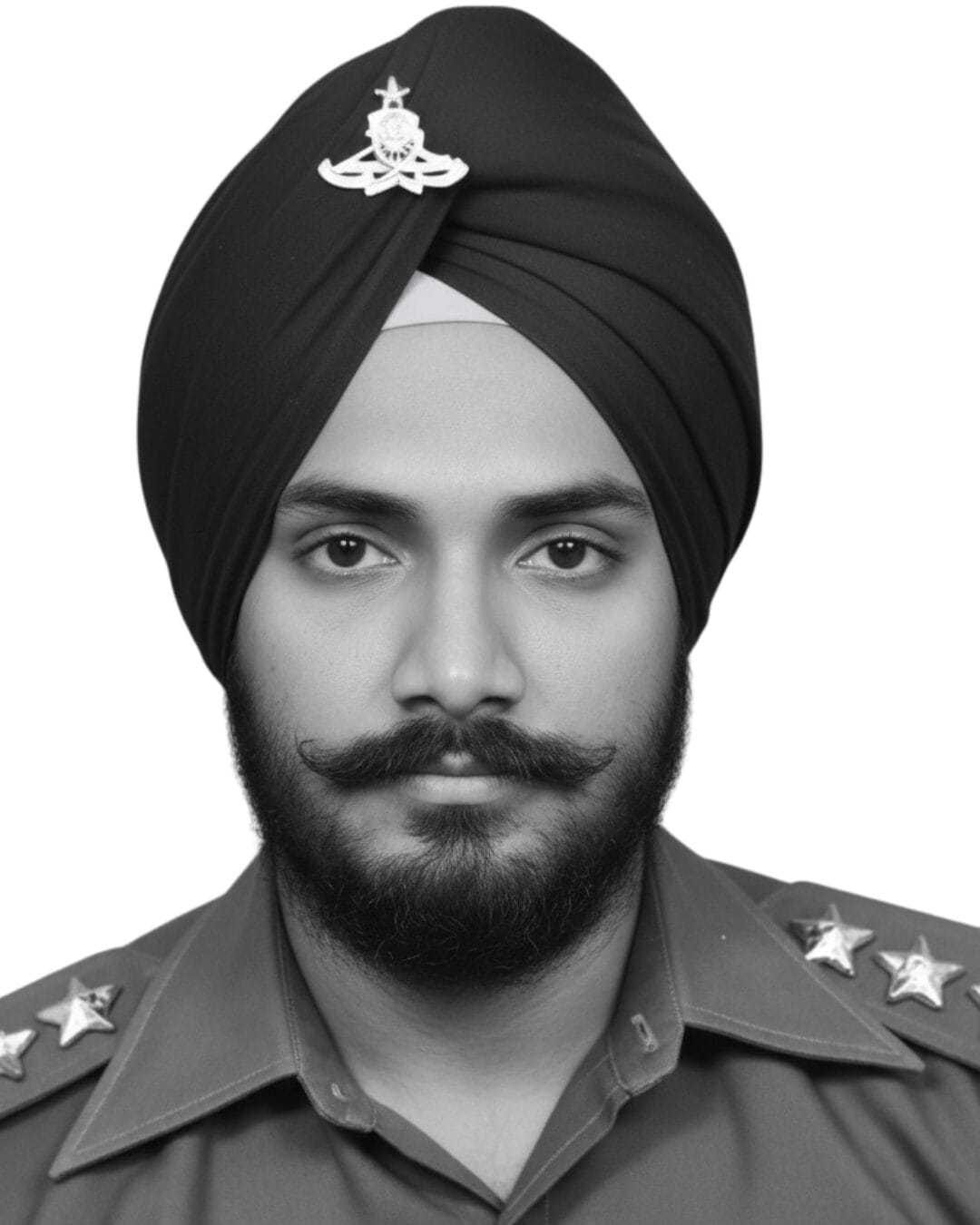
Written by
Capt. Dhaliwal · Director, New Careers Academy
Ex-Indian Army officer and SSB mentor at NCA Academy, Chandigarh (est. 1967), coaching NDA, CDS, AFCAT and SSB aspirants since the 1980s. About the author →
Reviewed by Hartaj Dhaliwal — SSB Strategist, NCA · third-generation officer · recommended by the SSB three times.