
📢 NDA 1 2027 is official! Notification 2 Dec 2026, exam 11 Apr 2027 — read the full NDA 1 2027 Notification guide (dates, vacancy, eligibility, how to apply).
📋 KEY TAKEAWAYS
- Written Exam: 2 papers — Maths (300 marks, 120 Qs) & GAT (600 marks, 150 Qs), each 2.5 hours
- SSB Interview: 900 marks — equal weight to the entire written exam
- Grand Total: 1800 marks (Written 900 + SSB 900)
- Negative Marking: –0.83 per wrong answer in Maths, –1.33 in GAT
- NDA 1 2026 Exam: Conducted April 12, 2026 | NDA 2 2026: September 13, 2026
- Eligibility: 10+2 pass or appearing, age 16.5–19.5 years (PCM for Navy/Air Force)
Quick Answer — NDA 2026 Exam Pattern
The NDA 2026 written exam has two papers — Mathematics (300 marks, 120 questions) and the General Ability Test / GAT (600 marks, 150 questions) — for a total of 900 marks, each lasting 2.5 hours. The SSB Interview adds 900 marks, making the grand total 1800. Negative marking is 0.83 per wrong answer in Maths and 1.33 in GAT. The NDA 2 2026 written exam is on 13 September 2026; applications closed on 9 June 2026.
Last updated: 9 June 2026 — reflects the confirmed NDA 2 2026 (158th Course) schedule.
The UPSC NDA 2026 exam is your gateway to a career as an officer in the Indian Army, Navy, or Air Force — straight after Class 12. Before you start preparing, understanding the NDA exam pattern 2026 end to end is non-negotiable. This complete guide covers everything: the written exam structure, detailed subject-wise syllabus, marking scheme, important 2026 dates, SSB interview breakdown, preparation strategy, and best books — all in one place.
NDA 2026 Exam Pattern — At a Glance
The NDA selection process has two stages: a written examination (900 marks) and the SSB interview (900 marks). Candidates must clear the written exam cutoff to be called for SSB. Both stages carry equal weight in the final merit list.
| Detail | Paper I — Mathematics | Paper II — GAT |
|---|---|---|
| Total Marks | 300 | 600 |
| Number of Questions | 120 | 150 |
| Duration | 2 hours 30 minutes | 2 hours 30 minutes |
| Marks per Correct Answer | 2.5 | 4.0 |
| Negative Marking (Wrong Answer) | −0.83 (1/3 of 2.5) | −1.33 (1/3 of 4.0) |
| Exam Mode | Offline (OMR sheet) | Offline (OMR sheet) |
| Language | English & Hindi | English & Hindi |
Important: Unanswered questions carry zero marks — there is no penalty for leaving a question blank. A strategic approach to difficult questions is crucial given the 1/3rd negative marking.
NDA Paper I — Mathematics Syllabus (300 Marks)
The Mathematics paper tests candidates on CBSE Class 11 and 12 level concepts. With 120 questions worth 300 marks, this paper rewards consistent practice and conceptual clarity. Here is the complete NDA Maths syllabus 2026 with topic-wise weightage:
| Topic | Sub-Topics | Approx. Weightage |
|---|---|---|
| Algebra | Sets, Relations & Functions, Complex Numbers, Quadratic Equations, Permutations & Combinations, Binomial Theorem, Sequences & Series, Logarithms | 25–30% |
| Matrices & Determinants | Types of Matrices, Operations, Determinants, Inverse of a Matrix, Applications in solving linear equations | 6–8% |
| Trigonometry | Trigonometric ratios, Identities, Multiple & Sub-multiple angles, Inverse Trigonometric Functions, Properties of Triangles | 10–12% |
| Analytical Geometry (2D) | Rectangular Cartesian Coordinate System, Lines, Circles, Parabola, Ellipse, Hyperbola | 10–12% |
| Analytical Geometry (3D) | Points in 3D space, Distance formula, Direction Cosines, Equations of Lines & Planes, Sphere | 6–8% |
| Differential Calculus | Functions, Limits, Continuity, Derivatives, Applications (Maxima/Minima, Tangents) | 10–12% |
| Integral Calculus & Differential Equations | Integration methods, Definite Integrals, Areas under curves, Order & Degree, Formation & Solution of Differential Equations | 10–12% |
| Vector Algebra | Vectors, Magnitude & Direction, Scalar & Cross Products, Applications | 6–8% |
| Statistics & Probability | Mean, Median, Mode, Variance, Standard Deviation, Probability theorems, Binomial Distribution | 8–10% |
NDA Maths Preparation Tip: Algebra and Calculus together account for nearly 40–50% of the paper. Master these first. Use NCERT Class 11 and 12 Maths as your primary reference, then move to NDA-specific practice sets.
NDA Paper II — General Ability Test Syllabus (600 Marks)
The General Ability Test (GAT) is split into two parts — Part A: English (200 marks) and Part B: General Knowledge (400 marks). With 150 questions and a higher per-question mark (4 marks each), GAT scores heavily influence your written cutoff rank.
Part A — English (200 Marks, ~50 Questions)
The English section tests your command of grammar, vocabulary, and reading comprehension. Key topics:
| Topic | What to Expect |
|---|---|
| Grammar & Usage | Spot the error, fill in the blanks, subject-verb agreement, tense usage, articles, prepositions |
| Vocabulary | Synonyms, antonyms, one-word substitution, idioms & phrases |
| Reading Comprehension | Unseen passages with questions on main idea, inference, tone |
| Para Jumbles / Sentence Ordering | Rearranging sentences to form coherent paragraphs |
| Cloze Test | Fill in the blanks in a passage with the most appropriate word |
Part B — General Knowledge (400 Marks, ~100 Questions)
GK is the biggest section in the NDA exam. It covers science and social studies at the Class 9–12 level, plus current affairs. Here is the subject-wise breakdown:
| Subject | Approx. Questions | Key Topics |
|---|---|---|
| Physics | 20–25 | Mechanics, Heat, Light & Sound, Electricity & Magnetism, Atomic Structure, Laws of Motion |
| Chemistry | 12–15 | Physical & Chemical Changes, Elements & Compounds, Acids, Bases & Salts, Metals & Non-metals, Carbon compounds |
| General Science / Biology | 8–10 | Cell Theory, Human Body (Nutrition, Respiration, Circulation), Diseases, Ecology |
| History | 15–20 | Indian History (Ancient, Medieval, Modern), National Movement, World Wars, Constitutional Development |
| Geography | 15–20 | Indian Geography (Rivers, Climate, Resources), Physical Geography (Atmosphere, Latitude/Longitude), Economic Geography |
| Current Events / Civics | 10–15 | Defence news, Constitutional provisions, Awards & appointments, Science & technology updates, International events |
GAT Tip: Physics carries the highest weightage in GK. Current Events questions are based on the 6–12 months before the exam date — read a good newspaper (The Hindu / Indian Express) daily and track defence-related news especially.
NDA 2026 Marking Scheme — Detailed Breakdown
Understanding the NDA marking scheme 2026 is critical to your exam strategy. Attempting a question you’re unsure about can cost you more than leaving it blank.
| Scenario | Maths Paper | GAT Paper |
|---|---|---|
| Correct Answer | +2.5 marks | +4.0 marks |
| Wrong Answer | −0.83 marks (−1/3 × 2.5) | −1.33 marks (−1/3 × 4.0) |
| Unanswered / Skipped | 0 marks | 0 marks |
| Multiple answers marked | Treated as wrong (−0.83) | Treated as wrong (−1.33) |
Break-even calculation: In Maths, every 3 wrong answers wipe out 2.5 marks (= 1 correct answer). In GAT, every 3 wrong answers wipe out 4 marks. Attempt only questions where you are 70%+ confident.
NDA 2026 Important Dates — NDA 1 & NDA 2
UPSC conducts the NDA examination twice a year. Here are the confirmed and expected important dates for NDA 2026:
| Event | NDA 1 2026 | NDA 2 2026 |
|---|---|---|
| Official Notification | December 10, 2025 | May 20, 2026 |
| Application Form Opens | December 10, 2025 | May 20, 2026 |
| Last Date to Apply | December 30, 2025 | June 9, 2026 |
| Admit Card Release | April 2, 2026 | August 2026 |
| Written Exam Date | April 12, 2026 | September 13, 2026 |
| Answer Key Release | April 16, 2026 | September 2026 |
| Written Result Declaration | May 2026 | November 2026 |
| SSB Interview | June–September 2026 | December 2026 – March 2027 |
All dates are as per official UPSC notification. Always verify at upsc.gov.in for the latest updates.
NDA SSB Interview — 900 Marks Breakdown
The SSB (Services Selection Board) interview carries 900 marks — exactly equal to the written exam. Candidates who clear the written cutoff are called to one of the SSBs across India for a 5-day assessment. SSB tests your Officer-Like Qualities (OLQs), not your academic knowledge.
| Stage | Day | Tests Conducted |
|---|---|---|
| Stage 1 (Screening) | Day 1 | OIR Test (Verbal + Non-Verbal), Picture Perception & Discussion Test (PPDT) |
| Psychology Tests | Day 2 | TAT (Thematic Apperception Test), WAT (Word Association Test), SRT (Situation Reaction Test), SD (Self Description) |
| GTO Tasks | Day 3–4 | Group Discussion, Group Planning Exercise, Progressive Group Task, Half Group Task, Individual Obstacles, Command Task, Final Group Task, Lecturette |
| Personal Interview | Day 2–4 | One-on-one interview with an interviewing officer — assesses personality, background, knowledge & potential |
| Conference | Day 5 | Final board discussion; Recommended or Not Recommended announced |
Only about 10–15% of candidates who appear for SSB get recommended. NCA Academy’s SSB coaching focuses on developing genuine OLQs — hot just techniques — through mock SSBs, group tasks, and psychological profiling.
NDA 2026 Selection Process — Step by Step
Here is the complete NDA 2026 selection journey from application to joining:
Step 1 — Apply Online: Fill the UPSC online application form at upsconline.gov.in within the notification window.
Step 2 — Written Exam: Appear for the offline OMR-based exam (Maths + GAT). UPSC releases merit list of candidates scoring above the cutoff (typically ~25% per paper and ~33% aggregate, though cutoffs vary each year).
Step 3 — SSB Interview: Recommended candidates appear before a medical board. All three services (Army, Navy, Air Force) have their own medical standards.
Step 4 — Medical Examination: Conducted at designated military hospitals. Service-specific standards apply — Air Force is the strictest.
Step 5 — Final Merit List: UPSC publishes the final merit list combining written exam marks + SSB interview marks. Allocation to Army, Navy, or Air Force depends on rank and vacancies.
Step 6 — Joining NDA, Khadakwasla: Selected candidates join the National Defence Academy for a 3-year residential training programme followed by 1 year at the respective service academy.
NDA 2026 Eligibility Criteria — Quick Recap
| Criteria | Details |
|---|---|
| Nationality | Indian citizen (or eligible foreign nationals as per UPSC rules) |
| Gender | Males only (females not eligible for NDA) |
| Age | 16.5 to 19.5 years as on the date of commencement of course |
| Educational Qualification | 10+2 passed or appearing — PCM mandatory for Navy and Air Force wings; any stream for Army |
| Marital Status | Unmarried |
| Physical Standards | As per service-specific medical standards (height, weight, vision, etc.) |
Subject-Wise Preparation Strategy for NDA 2026
Mathematics — Build Concepts, Not Just Formulas
The NDA Maths paper is time-pressured — 120 questions in 150 minutes means 75 seconds per question. Speed and accuracy both matter.
Start with NCERT Class 11 and 12 for conceptual clarity. Then solve at least 5 years of NDA previous papers to understand the question pattern. Focus on Algebra and Calculus first (together ~40–50% of paper). Practice mental calculation for Trigonometry identities. Revision over the last month should focus entirely on past papers and mock tests.
English — Daily Reading Is the Best Preparation
English questions are relatively straightforward if you read regularly. Read The Hindu editorial daily — it improves vocabulary, grammar awareness, and comprehension simultaneously. Solve grammar exercise books like Wren & Martin for 20–30 minutes daily. Vocabulary building through word lists (synonym/antonym sets) is a quick win.
General Knowledge — NCERT + Daily Current Affairs
Physics in the GK paper is CBSE Class 9–10 level — do not over-prepare. Master the basics: Newton’s Laws, Optics, Electricity. For History and Geography, NCERT Class 9–12 is sufficient. Maintain a current affairs notebook from January to the month before the exam. Focus on defence-related news, national appointments, science & technology, and international events — UPSC NDA consistently tests these areas.
Best Books for NDA 2026 Preparation
| Subject | Recommended Book | Why It Helps |
|---|---|---|
| Mathematics | R.S. Aggarwal — Mathematics for NDA/NA | Covers all NDA Maths topics with practice sets at the right level |
| Mathematics | NCERT Class 11 & 12 Maths | Essential for conceptual foundation — UPSC follows NCERT framework |
| English | Wren & Martin — High School English Grammar | The definitive grammar reference; covers all tested grammar rules |
| General Knowledge | Lucent’s General Knowledge | Comprehensive static GK coverage — standard reference for defence exams |
| Physics / Science | NCERT Science Class 9 & 10 | Direct source material for NDA GK science questions |
| History & Geography | NCERT History & Geography Class 9–12 | All NDA History and Geography questions are rooted in NCERT |
| Previous Papers | Pathfinder NDA/NA by Arihant | 24+ years of solved papers with explanations — must-have for practice |
| Current Affairs | Monthly Magazines (Pratiyogita Darpan / GK Today) | Covers recent events in format aligned to UPSC questions |
NDA 2026 Written Exam — Common Mistakes to Avoid
Attempting questions blindly: Negative marking of 1/3rd means random guessing is dangerous. Only attempt questions where you can eliminate at least 2 options.
Ignoring the GAT paper: Many students over-prepare Maths and underestimate GAT. GAT carries 600 marks — twice the Maths paper. A strong GAT score can compensate for an average Maths performance.
Skipping current affairs: Current Events questions are free marks if you read newspapers regularly. Most students skip this — don’t be one of them.
Not practising with OMR sheets: The exam is offline. Practice marking answers on OMR sheets during mock tests to avoid errors on exam day.
Neglecting SSB preparation: The written exam gets you to SSB — SSB gets you into the academy. Start SSB awareness (OLQ development, current affairs, leadership skills) from Day 1 of your preparation, not after results.
How NCA Academy Prepares You for NDA 2026
NCA Academy — India’s oldest defence coaching institute since 1967 — has guided thousands of candidates through the NDA written exam and SSB. Our NDA programme covers:
Written Exam Coaching: Topic-wise classes for Maths and GAT, weekly mock tests, doubt-clearing sessions, and comprehensive study material aligned to the latest UPSC NDA pattern.
SSB Interview Preparation: Full-length 5-day mock SSBs, psychology test practice (TAT/WAT/SRT/SD), GTO outdoor tasks, personal interview coaching, and personality development.
Proven Results: Over 59 years of experience, with thousands of NCA alumni serving as commissioned officers across all three Indian armed services.
Start Your NDA 2026 Journey with NCA Academy
India’s Oldest Defence Coaching Institute — Since 1967
Book a Free Counselling Session →🎯 Planning ahead? See the NDA 1 2027 exam guide (exam 11 April 2027).
Related NDA 2026 Resources
- NDA 2 2026 Notification — Dates, Vacancy, Eligibility & SSB Guide
- NDA Syllabus 2026 — Complete Mathematics & GAT Breakdown
- NDA Cut Off 2026 — Expected Cut Off, Trends & Predictor
- NDA Previous Year Question Papers (2015–2024)
- Best Books for NDA 2026 Preparation
- SSB OIR Test — Complete Guide
- NDA Coaching in Chandigarh — NCA Academy
Frequently Asked Questions — NDA Exam Pattern 2026
Q: What is the NDA exam pattern 2026?
The NDA written exam has two papers: Paper I Mathematics (300 marks, 120 questions, 2.5 hours) and Paper II General Ability Test or GAT (600 marks, 150 questions, 2.5 hours). There is also an SSB interview of 900 marks. Grand total is 1800 marks.
Q: Is there negative marking in NDA 2026?
Yes. For every wrong answer, 1/3rd of the marks are deducted: −0.83 marks in Mathematics and −1.33 marks in GAT. Unanswered questions carry zero marks.
Q: How many questions are in the NDA exam?
Total 270 questions — 120 in Mathematics (Paper I) and 150 in General Ability Test (Paper II).
Q: What subjects are in the NDA GAT paper?
Part A (English — 200 marks) covers grammar, vocabulary, and comprehension. Part B (General Knowledge — 400 marks) covers Physics, Chemistry, General Science, History, Geography, and Current Events.
Q: When is the NDA 2 2026 exam?
The NDA 2 2026 written exam is scheduled for September 13, 2026. The application window is May 20 to June 9, 2026.
Q: What is the NDA 2026 written exam cutoff?
UPSC does not officially pre-announce cutoffs. Historically, the written cutoff has been around 25% per paper and 33% aggregate of total written marks, but this varies with difficulty level each year.
Q: Can PCB students appear for NDA?
Yes — PCB students can appear for the Army wing of NDA. PCM is mandatory for the Navy and Air Force wings.
Q: How much time should I give to NDA preparation?
Ideally 12–15 months for a strong foundation, though many candidates crack NDA in 6 months with focused preparation. SSB prep should run parallel to written exam prep — not after it.
Q: Is Class 12 board exam marks considered for NDA selection?
No — UPSC does not use board exam marks. Only the NDA written exam score and SSB interview marks determine selection.
Q: What is the total marks for NDA?
The grand total is 1800 marks — 900 from the written examination (Maths + GAT) and 900 from the SSB interview.
💻 Preparing from home? Explore NCA’s online NDA coaching in India — live classes, mock tests and complete SSB training.
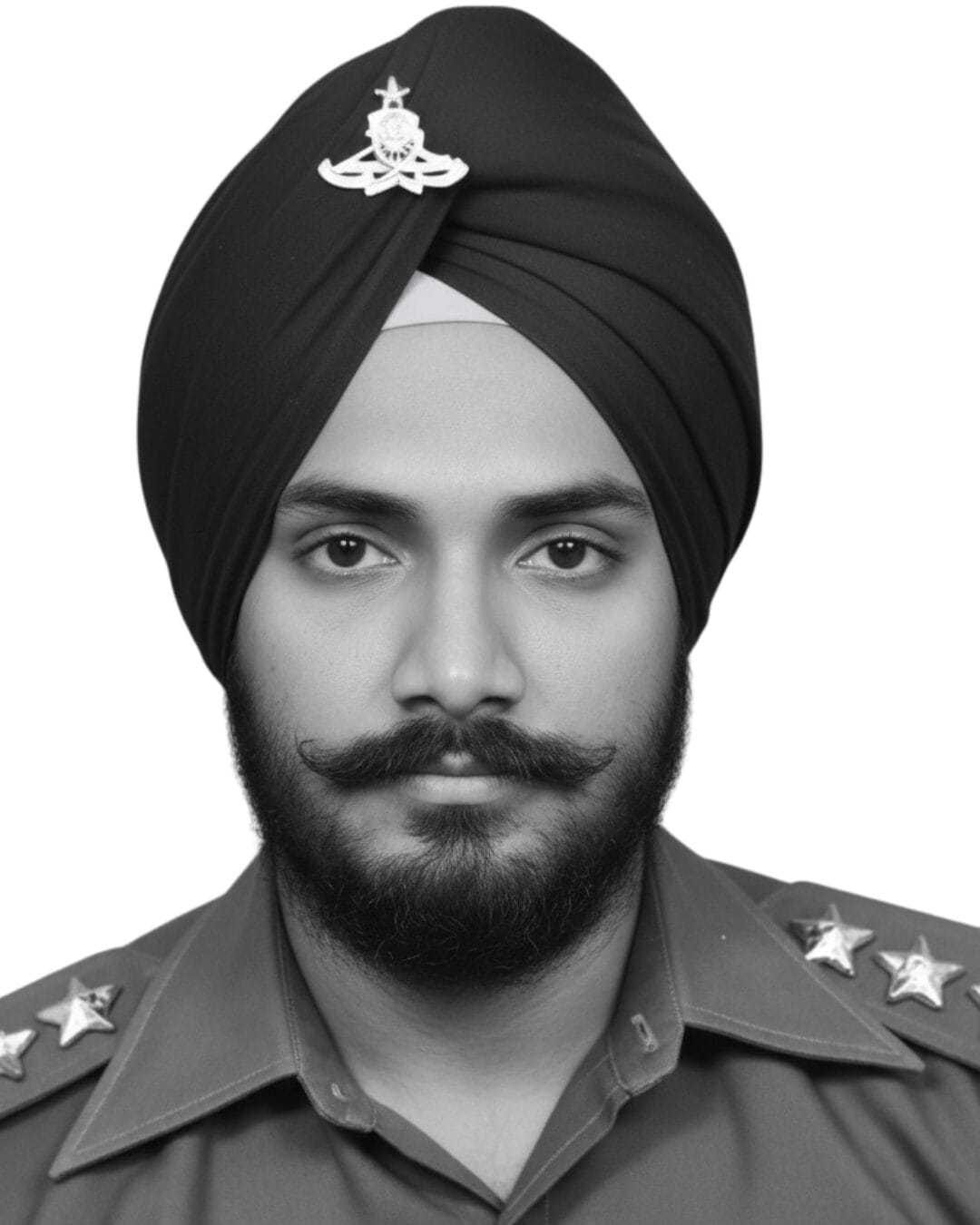
Written by
Capt. Dhaliwal · Director, New Careers Academy
Ex-Indian Army officer and SSB mentor at NCA Academy, Chandigarh (est. 1967), coaching NDA, CDS, AFCAT and SSB aspirants since the 1980s. About the author →
Reviewed by Hartaj Dhaliwal — SSB Strategist, NCA · third-generation officer · recommended by the SSB three times.