How to Crack SSB Interview in First Attempt: Expert Tips from Defence Coaching Experts
The Services Selection Board (SSB) interview is the most crucial stage in your journey toward becoming an Indian Armed Forces officer. Structured SSB coaching dramatically improves your chances of clearing it in the first attempt. It’s the gateway between your written examination success and commission. Understanding how to crack SSB interview is essential because over 50% of candidates who pass the written examination fail at the SSB stage. This comprehensive guide provides expert strategies, day-by-day preparation tips, and insider knowledge to help you crack SSB interview in your first attempt.
The SSB interview process is unique because it doesn’t test only your knowledge—it evaluates your personality, leadership qualities, decision-making ability, psychological stability, and suitability for military service. Success requires a different approach than written exam preparation. Let’s explore the complete SSB interview structure and proven strategies to excel at every stage.
What is the SSB Interview and Why is it Critical?
The Services Selection Board (SSB) is the personnel selection agency of the Indian Armed Forces. It conducts interviews for all three services: Indian Army, Navy, and Air Force. The SSB interview evaluates candidates who have cleared the written examination for NDA, CDS, AFCAT coaching in Chandigarh, and other officer recruitment examinations.
The SSB interview carries equal weightage to the written examination. For NDA, it’s 900 marks out of 1800 total. For CDS, it’s 300 marks out of 600 total. This means your SSB performance can make or break your selection, regardless of your written exam score. Many candidates with excellent written marks fail at SSB because they underestimate its importance or lack specialized preparation.
The primary objective of SSB is to identify candidates with officer-like qualities, leadership potential, and psychological resilience. It assesses your ability to handle stress, make decisions under pressure, work in teams, and lead subordinates—skills essential for military service.
SSB Interview Structure: A Day-by-Day Breakdown
The complete SSB interview spans 5 days with specific tests conducted each day. Understanding this structure helps you prepare methodically and mentally prepare for each phase.
Day 1: Psychological Tests
Contrary to popular belief, Day 1 includes initial Officer Intelligence Rating (OIR) screening and psychological testing. However, in most SSBs, the sequence varies. On your first day:
- Medical and Documentation Check: Verification of your certificates and preliminary medical examination
- Officer Intelligence Rating (OIR) Test: A non-verbal intelligence test assessing your mental ability without language dependence
- Picture Perception and Discussion Test (PPDT): Shown a picture for 30 seconds and asked to create a story. This assesses imagination and communication
Day 2: Psychometric Tests
Day 2 focuses on psychological evaluation through three tests:
- Thematic Apperception Test (TAT): You’re shown ambiguous pictures and asked to create detailed stories explaining what’s happening, what led to it, and the outcome
- Word Association Test (WAT): Rapid-fire 60 words presented one by one, requiring quick response with the first word that comes to mind
- Situation Reaction Test (SRT): 60 military-related situations presented, requiring you to describe your immediate reaction to each
Day 3: Group Testing Officers (GTO) Tests
This day evaluates your leadership, teamwork, and decision-making abilities through group exercises. Tests include:
- Group Discussion: A topic is given, and 10-12 candidates discuss for 10 minutes
- Group Planning Exercise: A scenario is presented, and the group must collectively solve it
- Progressive Group Task (PGT): The group must move from one point to another solving multiple challenges
- Individual Obstacle Course: You navigate physical obstacles demonstrating courage and persistence
- Command Task: You command others to complete a task, evaluating your leadership
- Group Obstacle Course (GOC): The entire group works together to overcome obstacles, assessing teamwork
Day 4: Personal Interview
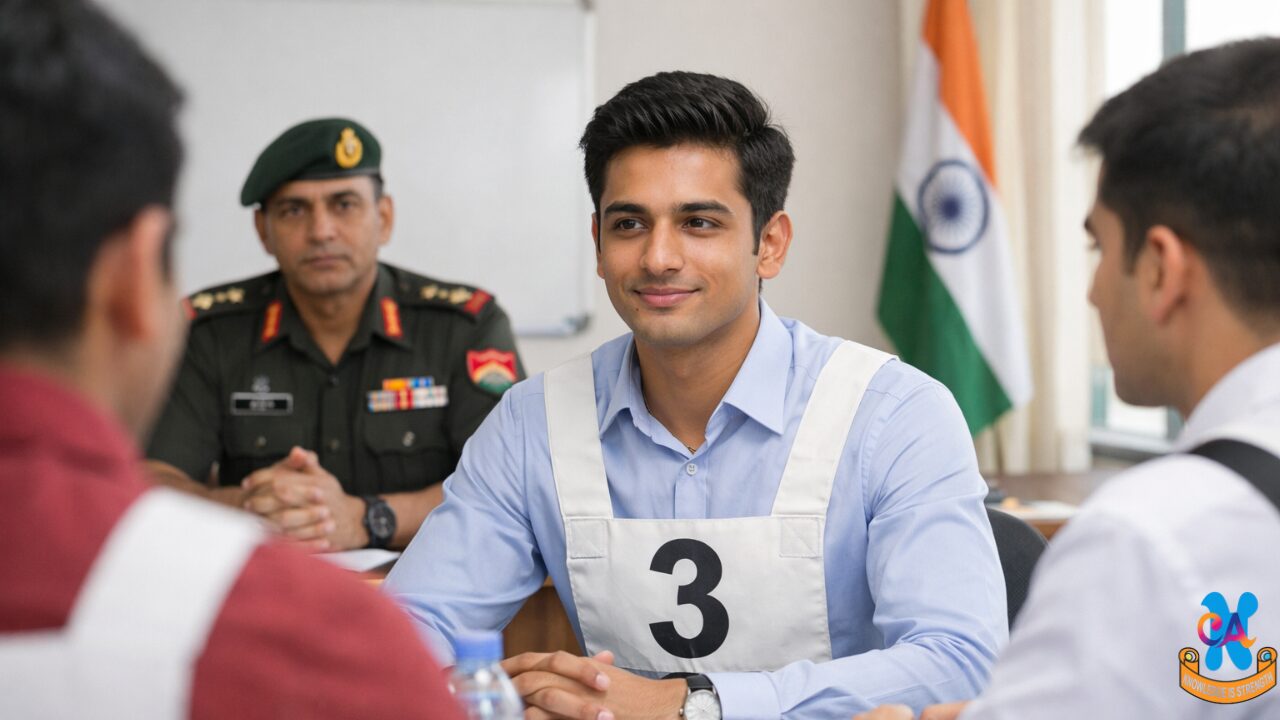
This is a one-on-one conversation with a panel of experienced military officers. They’ll ask about your background, motivation, strengths, weaknesses, current affairs, and military knowledge. This is your chance to convince them you’re officer material.
Day 5: Conference
The final day involves remaining tests and confirmation of medical status. You may receive preliminary feedback from your assigned Psychological Officer.
How to Crack OIR (Officer Intelligence Rating) Test?
The OIR is your first major test, and performing well sets a positive tone for the entire interview. It’s a non-verbal intelligence assessment consisting of visual puzzles, pattern recognition, and spatial reasoning.
Key strategies for OIR success:
- Practice pattern recognition: Regularly solve IQ puzzles focusing on visual patterns, matrix reasoning, and series completion
- Time management: With 30-45 questions in 40 minutes, speed is crucial. Skip difficult questions initially and return to them
- Understand question types: Classification, analogies, number series, spatial visualization—practice each type extensively
- Stay calm under time pressure: Don’t panic if you can’t answer a question. The test evaluates both accuracy and speed
- Avoid overthinking: These questions have definite patterns. Trust your pattern recognition rather than overthinking
Practice previous years’ OIR questions and take mock tests regularly. Websites like UPSC and defence coaching platforms provide sample OIR tests. Aim for at least 60-70% accuracy to score well and boost your confidence for subsequent tests.
Mastering PPDT (Picture Perception and Discussion Test)
PPDT is unique because it has both an individual and group component. Your story and your participation in group discussion are both evaluated.
Individual Story Writing Phase (4 minutes):
You’re shown a picture for 30 seconds, after which it’s removed. You then write a story answering four questions:
- What is happening in the picture?
- What led to this situation?
- What will happen next?
- What is the moral of the story?
Tips for excellent PPDT stories:
- Create military-related narratives: Stories involving soldiers, courage, sacrifice, patriotism, and duty score well
- Ensure positive conclusions: Your story should end with constructive outcomes, character growth, or learning
- Show imagination within realism: Your story must be believable yet imaginative, demonstrating creativity
- Use proper language and structure: Ensure your written story is grammatically correct with clear beginning, middle, and end
- Demonstrate leadership traits: If applicable, show how characters demonstrate initiative, courage, or problem-solving
- Include social values: Stories reflecting patriotism, honesty, helping others, and social responsibility are preferred
Group Discussion Phase (10 minutes):
After all candidates finish writing, their stories are discussed collectively. During this phase:
- Participate actively but don’t dominate
- Support good points made by others
- Present your story confidently without being defensive
- Appreciate diverse perspectives
- Show maturity in handling disagreements
Psychology Tests: TAT, WAT, and SRT Strategies
Thematic Apperception Test (TAT):
TAT evaluates your imagination, perception, emotional stability, and social awareness. You’ll see 12 ambiguous pictures and have 4 minutes per picture to write a detailed story.
Winning TAT strategies:
- Include context: Explain the characters’ backgrounds, relationships, and emotional states
- Show mature thinking: Avoid childish or overly fantastical stories. Display psychological maturity
- Positive resolutions: Stories should resolve constructively, demonstrating optimism and problem-solving
- Include social elements: Reference family, duty, helping others, or societal benefits
- Demonstrate emotional intelligence: Show understanding of human emotions and relationships
- Write legibly and concisely: You have limited time. Write clearly and within reasonable length
Word Association Test (WAT):
This rapid-fire test presents 60 words, requiring immediate association. There’s no “correct” answer, but your associations reveal your personality, values, and psychological state.
Preparing for WAT:
- Build positive association vocabulary: Practice associating words with positive, socially acceptable, and constructive concepts
- Avoid negative associations: Don’t associate words with violence, depression, negativity, or socially unacceptable concepts
- Show patriotism and duty: Many successful candidates associate words with military, nation, duty, and sacrifice
- Practice speed: You have seconds per word. Practice until responses become automatic
- Stay consistent: Your associations should reflect coherent personality and values
Situation Reaction Test (SRT):
SRT presents 60 military or civil situations requiring your immediate reaction. It evaluates your decision-making, problem-solving, and stress management.
Excelling in SRT:
- Show decisive action: Your reactions should demonstrate ability to take command and act decisively
- Prioritize duty and values: Military and national duty should override personal interests
- Demonstrate calmness: Your reactions should show composure even in crisis situations
- Show empathy alongside authority: Balance decisive action with concern for subordinates’ welfare
- Practice common scenarios: Prepare reactions to frequent situations: fire, equipment failure, subordinate misconduct, civilian unrest
- Avoid recklessness: While showing courage, ensure your reactions are logical and calculated
Specialized SSB interview coaching at institutes like NCA Academy provides expert guidance on all three psychological tests, including psychometric interpretation and personalized feedback on your responses.
GTO (Group Testing Officer) Tests: Leadership and Teamwork
GTO tests evaluate your leadership potential, teamwork, decision-making under pressure, and physical courage. These tests are critical because military service fundamentally requires leading and working with teams.
Group Discussion:
A topic is announced, and 10-12 candidates discuss for 10 minutes without any moderator.
Key points for group discussion success:
- Speak clearly and confidently without being aggressive
- Make 3-4 substantive contributions rather than many trivial ones
- Support good ideas from others to show team spirit
- Bring others into the discussion if they’re quiet
- Avoid personal attacks or defensive arguments
- Ensure your points are logically sound and well-articulated
- Listen actively to others’ viewpoints before responding
Group Planning Exercise (GPE):
A scenario is presented—often a rescue or military operation—and your group must develop a plan within time constraints.
Excelling in GPE:
- Suggest a clear, logical approach early
- Encourage others to contribute
- Evaluate suggestions objectively based on merit
- Ensure the group’s final plan is coherent and executable
- If selected as leader, be inclusive and decisive
- Document the plan clearly as the group may need to present it
Progressive Group Task (PGT):
The group faces multiple obstacles (often rope, wall, or physical barriers) and must move from point A to point B solving each challenge collectively.
Succeeding in PGT:
- Contribute physically and mentally to solving each obstacle
- Don’t let stronger members dominate—help weaker members participate
- Show concern for group members’ safety
- Adapt strategy based on what works
- Remain calm if the first attempt fails
- Encourage the group even when facing difficult obstacles
Individual Obstacle Course (IOC):
Physical obstacles are presented that you must navigate individually. This evaluates courage, determination, and physical fitness.
Performing well in IOC:
- Maintain physical fitness before SSB
- Attempt every obstacle, even if you struggle
- Show determination and courage, not recklessness
- Learn from previous candidates’ approaches
- Believe you can complete each obstacle
- If you fall or fail, get up immediately and try again
Command Task:
You’re given command of 10-12 candidates to complete a task (often moving the group across obstacles). This evaluates your leadership directly.
Becoming an effective commander:
- Assess the situation before giving orders
- Give clear, logical commands
- Ensure all group members understand their roles
- Monitor task execution and adjust if needed
- Show concern for group members during the task
- Take responsibility if the task fails
- Appreciate group members’ efforts and contributions
Personal Interview: Making the Final Impression
The personal interview is your one-on-one opportunity with the SSB panel to convince them you’re officer material. This is where your personality, knowledge, and communication skills are thoroughly evaluated.
Common interview questions and how to answer them:
- “Tell us about yourself”: Provide a 2-3 minute structured response covering your background, education, interests, and why you want to join the armed forces
- “Why do you want to join the military?”: Give genuine reasons related to patriotism, service, career prospects, and personal goals—avoid clichéd answers
- “What are your strengths and weaknesses?”: Mention genuine strengths backed by examples. For weaknesses, choose areas you’re actively improving
- “Tell us about current affairs”: Be prepared to discuss recent military, national, and international events intelligently
- “What do you know about the service you’re joining?”: Demonstrate knowledge of the service’s role, structure, recent operations, and traditions
- “Describe a challenging situation you’ve overcome”: Share a personal example showing problem-solving, resilience, and maturity
Interview success strategies:
- Dress professionally: Wear formal attire, ensuring you’re neat and well-groomed
- Maintain posture and eye contact: Sit upright, make consistent eye contact with the interviewer asking the question
- Speak clearly and confidently: Avoid mumbling, speaking too fast, or appearing nervous
- Answer directly: Don’t go off on tangents. Answer the question asked concisely
- Show enthusiasm: Your passion for military service should be evident in your communication
- Be honest: Don’t fabricate stories or exaggerate achievements. Military officers value integrity
- Ask thoughtful questions: At the end, asking 1-2 intelligent questions about the service shows genuine interest
- Thank the panel: Express gratitude for the opportunity as you leave
How to Prepare for SSB Interview Effectively
One month before SSB:
- Increase physical fitness with running, strength training, and obstacle course practice
- Collect and practice previous years’ OIR and PPDT tests
- Read defence publications and current affairs related to armed forces
- Join coaching institutes like NCA Academy’s SSB interview coaching for expert guidance
- Begin mock interviews with friends or mentors
Two weeks before SSB:
- Take full-length mock SSB simulations
- Practice PPDT stories—write 20-30 stories based on different pictures
- Prepare TAT stories, practice WAT associations, and SRT reactions
- Conduct mock personal interviews with experienced interviewers
- Review current affairs and military knowledge
- Maintain physical fitness with daily running and obstacle practice
One week before SSB:
- Do light practice—don’t overwork and become fatigued
- Ensure you have all required documents
- Arrange accommodation near the SSB center
- Practice deep breathing and relaxation techniques
- Sleep well and maintain physical fitness
- Review your answers to common interview questions
Common SSB Interview Mistakes to Avoid
Mistake 1: Underestimating Psychological Tests
Many candidates focus only on personal interview and GTO tests, neglecting psychological evaluation. All tests are equally important for your overall assessment.
Mistake 2: Trying to Be Impressive Rather Than Authentic
The panel is experienced at identifying fake stories and exaggerated claims. Authenticity and genuine military aptitude matter far more than impressive-sounding but false narratives.
Mistake 3: Weak Physical Performance
Failing to maintain physical fitness affects both GTO performance and your overall confidence. The panel expects officers to be physically capable.
Mistake 4: Poor Communication in Group Exercises
Many candidates are either too dominant or too passive in group discussions. The ideal is balanced participation showing both leadership and teamwork.
Mistake 5: Lack of Military Knowledge
Not knowing basic facts about the service you’re joining reflects poorly on your commitment. Study your chosen service thoroughly.
Mistake 6: Negative Body Language
Slouching, poor eye contact, or nervous gestures create negative impressions. Maintain confident, open body language throughout.
NCA Academy’s SSB Interview Coaching: Your Success Partner
NCA Academy, India’s oldest defence coaching institute since 1967, offers specialized SSB interview coaching with several advantages:
- Experienced instructors who are former military personnel understand the SSB evaluation process intimately
- Real-time feedback on your performance in mock tests and interviews
- Customized preparation based on your strengths and weaknesses
- Access to comprehensive study materials and previous years’ actual SSB questions
- Regular mock SSB simulations with realistic scenarios
- Confidence-building sessions and stress management techniques
- Guidance on current affairs, military knowledge, and interview preparation
Many successful SSB candidates attribute their success to specialized coaching at NCA Academy, which provides the structured preparation and expert guidance essential for cracking SSB in the first attempt.
Mental Preparation: The Key to SSB Success
Beyond technical preparation, mental resilience is crucial for SSB success. The interview is designed to evaluate psychological stability under stress. Here’s how to mentally prepare:
- Build confidence: Remember that you’ve already beaten millions of candidates by clearing the written exam. You have the ability to succeed at SSB too
- Practice mindfulness: Daily meditation and breathing exercises improve focus and stress management
- Visualize success: Spend 10 minutes daily visualizing yourself performing excellently in various SSB tests
- Develop resilience: Accept that mistakes happen during SSB. The panel evaluates how you recover and continue
- Stay positive: Negative thoughts about failure reduce confidence. Maintain positive self-talk
- Read inspirational stories: Stories of officers’ bravery, sacrifice, and leadership inspire you to embody these qualities
Final Days Before SSB: Last-Minute Preparation
Three days before SSB:
- Reduce study intensity. Light revision only
- Ensure all documents are arranged and verified
- Travel to the SSB center one day early to familiarize yourself with the location
- Get adequate sleep to be well-rested on the interview day
- Prepare formal clothing and ensure it’s clean and well-fitted
Night before SSB:
- Do light physical exercise but nothing strenuous
- Review your personal information and background briefly
- Sleep early to wake up refreshed
- Avoid heavy meals that might affect your digestion
- Mentally prepare with positive visualization and breathing exercises
Morning of SSB:
- Wake early and exercise lightly for 15-20 minutes
- Bathe and dress in formal attire
- Eat a light but nutritious breakfast
- Reach the center on time with all required documents
- Take deep breaths and maintain positive mental state
How many days does the complete SSB interview process take?
The complete SSB interview process spans 5 days. Candidates must remain at the SSB center throughout this period, undergoing various psychological tests, group exercises, physical assessments, and personal interviews.
What is the passing percentage for SSB interview?
Approximately 15-20% of candidates who appear for SSB interview are recommended for commission. This means about 80% fail, making it highly competitive. Success requires comprehensive preparation across all phases.
Can I improve my SSB performance if I fail the first time?
Yes, many successful officers were not recommended the first time but cleared SSB on their second or third attempt. Learning from failure, addressing weaknesses, and re-preparing with renewed focus helps candidates succeed eventually.
How important are physical fitness and GTO tests?
Physical fitness and GTO performance are very important. They demonstrate courage, leadership, teamwork, and determination—core military qualities. Candidates lacking physical fitness often struggle even if they excel in other areas.
What should I do if I make a mistake during the SSB interview?
The panel evaluates how you handle mistakes, not perfection. If you make an error, acknowledge it calmly, learn from it, and move forward. Resilience and composure in face of mistakes demonstrate maturity and officer-like qualities.
Is coaching necessary to crack SSB interview?
While self-preparation is possible, specialized SSB coaching significantly improves success probability. Experienced instructors provide real-time feedback, mock interviews, and expert guidance that are difficult to replicate through self-study alone.
How should I prepare for current affairs questions in SSB interview?
Read defence and national security publications regularly. Watch news related to military operations, defence budgets, and armed forces activities. Be prepared to discuss recent events intelligently with opinions backed by logical reasoning, not just superficial knowledge.
Written by
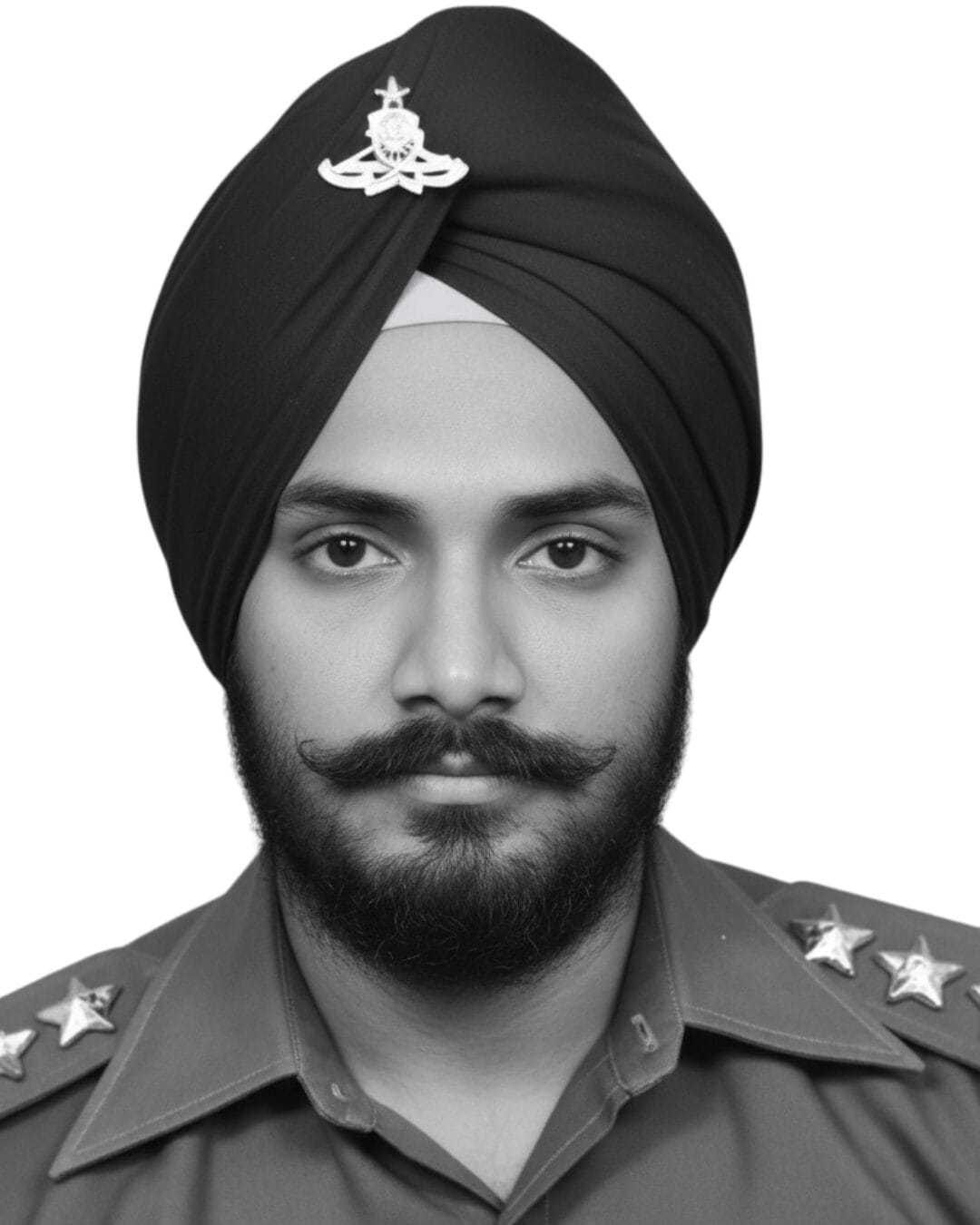
Capt. Dhaliwal · Director, New Careers Academy
Ex-Indian Army officer and SSB mentor at NCA Academy, Chandigarh (est. 1967), coaching NDA, CDS, AFCAT and SSB aspirants since the 1980s. About the author →
Reviewed by Hartaj Dhaliwal — SSB Strategist, NCA · third-generation officer · recommended by the SSB three times.