📢 CDS 1 2027 is official! Notification 2 Dec 2026, exam 11 Apr 2027 — read the full CDS 1 2027 Notification guide (dates, vacancy, eligibility, how to apply).
CDS Syllabus 2026: Complete Subject-Wise Breakdown and Preparation Guide
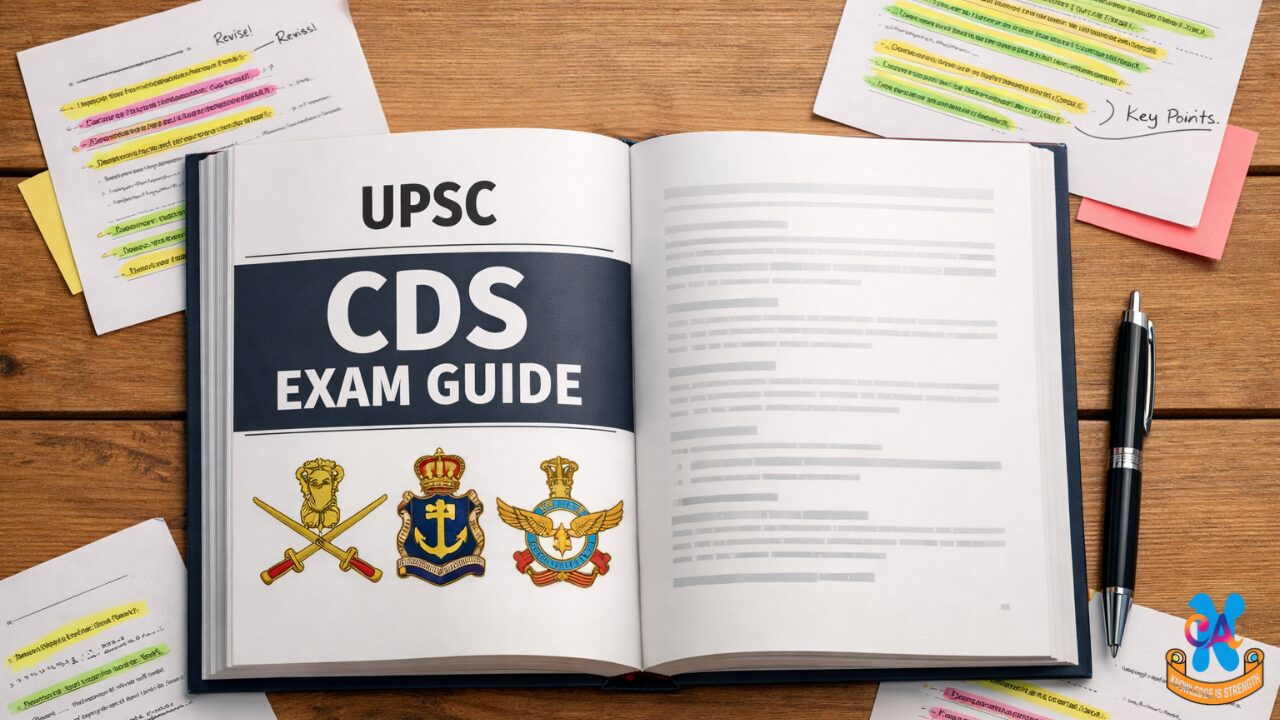
The Combined Defence Services (CDS) examination is conducted by the Union Public Service Commission (UPSC) twice yearly, recruiting officers for the Indian Military Academy (IMA), Naval Academy (NA), Air Force Academy (AFA), and Officers’ Training Academy (OTA). Understanding the complete CDS syllabus 2026 is fundamental to structuring an effective preparation strategy. The CDS examination consists of three papers—English, General Knowledge, and Elementary Mathematics—each testing specific competencies required of military officers.
This comprehensive guide provides the complete CDS syllabus 2026 breakdown, explains subject-wise topics, highlights differences between various academy-specific syllabi, and recommends the best books for preparation. Whether you’re aiming for IMA, OTA, or specialized academies, this detailed syllabus guide will help you prepare systematically and achieve success in the CDS examination.
CDS Exam Pattern 2026 Overview
Before diving into the syllabus, understanding the exam structure is essential:
Written Examination:
- Paper 1: English — 100 marks, 2 hours
- Paper 2: General Knowledge — 100 marks, 2 hours
- Paper 3: Elementary Mathematics — 100 marks, 2 hours
- Total Written Exam: 300 marks
- SSB Interview: 300 marks
- Total Score: 600 marks
All papers are objective-type with multiple-choice questions. Each correct answer carries 1 mark, while 1/3 mark is deducted for each incorrect answer. There is no negative marking for unanswered questions.
CDS English Syllabus 2026 – Paper 1 (100 marks)
The English paper evaluates reading comprehension, grammar, vocabulary, and basic language skills. It doesn’t require advanced English literature knowledge but rather tests practical communication abilities essential for military officers.
English Syllabus Topics:
1. Comprehension Passages:
- Unseen passages (prose and poetry)
- Questions on comprehension, inference, and vocabulary from passages
- Multiple passages with 5-7 questions each
- Typically 15-20 marks allocated to comprehension
2. Grammar and Usage:
- Tenses (Present, Past, Future—Simple, Continuous, Perfect)
- Modals and their usage
- Active and Passive voice
- Direct and Indirect speech
- Subject-Verb Agreement
- Conditional sentences
- Articles (A, An, The)
- Prepositions
3. Sentence Correction:
- Identifying and correcting errors in given sentences
- Types of errors: grammatical, usage, structural
- Multiple-choice sentences with errors to identify
4. Vocabulary:
- Synonyms and antonyms
- One-word substitutions
- Phrases and idioms
- Words often confused (like, as; their, there; your, you’re)
- Word meanings in context
5. Spotting Errors:
- Finding errors in underlined portions of sentences
- Grammatical and spelling errors
- Questions typically contain one error per sentence
6. Sentence Completion:
- Filling blanks with appropriate words or phrases
- Logical flow and coherence of sentences
7. Word Formation and Transformation:
- Forming words using prefixes and suffixes
- Converting one form of speech to another
- Compound word formation
Preparation Strategy for English:
- Read English newspapers and magazines daily
- Practice comprehension passages regularly—aim for 5-7 passages weekly
- Maintain a vocabulary notebook and revise daily
- Study grammar rules systematically, focusing on frequently tested topics
- Solve previous years’ CDS English papers to understand question patterns
- Take mock tests to improve speed and accuracy
CDS General Knowledge Syllabus 2026 – Paper 2 (100 marks)
The General Knowledge paper is the most comprehensive, covering history, geography, current affairs, science, defence, and international relations. It tests an officer’s awareness of the world and India’s place in it.
History Syllabus:
- Indian History:
- Ancient India: Vedic Period, Mauryan Empire, Gupta Empire
- Medieval India: Delhi Sultanate, Mughal Empire, Marathas
- Modern India: British Raj, Indian Independence Movement, Freedom Fighters, Partition
- Independence and Post-Independence India: Constitution, National Movements
- World History:
- Renaissance, Industrial Revolution, World Wars
- Age of Exploration, Colonization
- United Nations, International Organizations
- Recent Historical Events:
- Major world events of the last 10-15 years
- Important dates and their significance
Geography Syllabus:
- Physical Geography:
- Earth structure, lithosphere, hydrosphere, atmosphere
- Climate and weather patterns
- Natural disasters: earthquakes, tsunamis, cyclones, volcanoes
- Rivers, mountains, plateaus, plains
- Water bodies and their importance
- Human Geography:
- Population and demography
- Migration patterns
- Urbanization and development
- Indian Geography:
- Physical features: Himalayas, Western and Eastern Ghats, Deccan Plateau, Indo-Gangetic Plain
- Rivers: Ganga, Brahmaputra, Indus, and their tributaries
- States and capitals
- Soil types and their distribution
- Climate zones and vegetation
- Natural resources: minerals, energy sources, forests
- World Geography:
- Major countries, capitals, important geographical features
- Continental geography
- Economic geography and trade
Science Syllabus (Physics, Chemistry, Biology):
- Physics:
- Force, Motion, and Newton’s Laws
- Energy, Work, and Power
- Mechanics: pressure, density, floating and sinking
- Heat and Temperature
- Sound: frequency, wavelength, reflection
- Light: reflection, refraction, dispersion
- Electricity: circuits, Ohm’s Law, current, voltage
- Magnetism: magnetic field, electromagnets
- Chemistry:
- Atomic Structure: electrons, protons, neutrons
- Periodic Table and element properties
- Chemical Reactions and equations
- Acids, bases, and salts
- Oxidation and reduction
- Common compounds: water, salt, sulfuric acid
- Biology:
- Cell Structure and Function
- Genetics and Heredity
- Evolution and Natural Selection
- Human Body: circulatory, digestive, respiratory, nervous systems
- Photosynthesis and Respiration
- Ecology and Ecosystems
- Disease and immunity
Current Affairs and Contemporary Issues:
- Recent national and international events (last 18-24 months)
- Government policies and schemes
- Major achievements in science and technology
- Sports and cultural events
- Important conferences and summits
- Environmental issues and climate change
Polity and Governance:
- Indian Constitution: Preamble, fundamental rights, directive principles
- Separation of powers: Executive, Legislature, Judiciary
- Parliament: Lok Sabha, Rajya Sabha, legislative process
- President, Vice President, Prime Minister
- State government structure
- Local governance: Municipal Corporation, Panchayat Raj
- Election Commission and electoral process
Defence and Military Knowledge:
- Indian Armed Forces: Army, Navy, Air Force—structure and roles
- Defence ministry and DRDO
- Important defence policies
- Ranks and insignia of all three services
- Border security and national security issues
- Defence procurement and indigenous weapons systems
Economics Basics:
- Basic economic concepts: GDP, inflation, fiscal policy
- Currency and exchange rates
- Indian Economy: growth, sectors, employment
- Banking system and RBI
- Stock market basics
General Knowledge Preparation Strategy:
- Read newspapers daily, especially defence and current affairs sections
- Follow news channels and websites for current affairs
- Study history and geography systematically—use NCERT books as base
- Create notes on important dates, events, and personalities
- Revise science basics from 10th and 12th standard textbooks
- Study NDA exam pattern and syllabus 2026 resources which overlap with CDS GK
- Take monthly mock tests and analyse weak areas
- Maintain a GK notebook for revision
CDS Elementary Mathematics Syllabus 2026 – Paper 3 (100 marks)
The Mathematics paper tests fundamental mathematical concepts and problem-solving ability. Despite being labeled “elementary,” it requires solid understanding of core concepts and calculation speed.
Arithmetic Topics:
- Number System:
- Natural, whole, integer, rational, and real numbers
- Divisibility and factors
- LCM and HCF
- Prime and composite numbers
- Percentage:
- Basic percentage calculations
- Percentage increase/decrease
- Profit and loss problems
- Discount calculations
- Simple and Compound Interest:
- SI and CI formulas
- Rate of interest calculations
- Time period problems
- Ratio and Proportion:
- Simplifying ratios
- Direct and inverse proportions
- Partnership problems
- Mixture and alligation
- Average and Weighted Average:
- Mean, median, mode
- Weighted average
- Time and Work:
- Work efficiency
- Time to complete work
- Multiple workers scenarios
- Time and Distance (Speed):
- Speed, time, distance relationships
- Relative speed
- Boats and streams
- Trains problems
Algebra Topics:
- Linear Equations:
- Solving linear equations in one variable
- Simultaneous linear equations
- Word problems based on linear equations
- Quadratic Equations:
- Solving by factorization
- Solving by formula
- Nature of roots
- Polynomials:
- Basic operations on polynomials
- Factors and remainder theorem
- Simplification
- Indices and Surds:
- Laws of indices
- Simplification of surds
- Rationalizing denominators
- Logarithms:
- Definition and properties
- Solving logarithmic equations
- Change of base formula
Geometry Topics:
- Triangle Properties:
- Angle sum property
- Congruence and similarity
- Area of triangles
- Pythagorean theorem
- Quadrilateral Properties:
- Types: parallelogram, rectangle, rhombus, trapezium
- Area and perimeter
- Circle:
- Radius, diameter, circumference
- Chord and tangent
- Area of circle and sector
- 3D Geometry:
- Cube, cuboid, cylinder, sphere, cone
- Surface area and volume
Trigonometry Topics:
- Angles and their measurement (degrees and radians)
- Trigonometric ratios: sin, cos, tan, cosec, sec, cot
- Trigonometric identities and their applications
- Heights and distances (application of trigonometry)
- Sine and cosine rules in triangles
Statistics Topics:
- Data collection and representation
- Measures of central tendency: mean, median, mode
- Measures of dispersion: range, variance, standard deviation
- Probability basics
Coordinate Geometry Topics:
- Cartesian coordinate system
- Distance between two points
- Straight line equations
- Slope and intercepts
Mathematics Preparation Strategy:
- Master fundamentals first—don’t skip basic concepts
- Practice calculation speed with regular mental math exercises
- Solve previous CDS mathematics papers to understand question types
- Focus on high-frequency topics: percentage, ratio, time and work, geometry
- Create error log and review mistakes regularly
- Use shortcuts and tricks for faster calculations
- Take mock tests weekly to assess progress
- Aim for 60-70% accuracy before attempting timed practice tests
Academy-Specific Syllabus Variations
While the basic CDS written exam syllabus is identical for all academies, the SSB interview and training focus vary:
IMA (Indian Military Academy) – Ground Combat Officers:
- Training emphasis: Infantry, armor, artillery, engineering
- SSB interview focus: Leadership for ground operations, tactical understanding
- Duration: 1 year permanent commission course
OTA (Officers’ Training Academy) – Short Service Commission:
- Training emphasis: Similar to IMA but shorter duration
- SSB interview focus: Ability to complete shorter training duration
- Duration: 49 weeks for women officers, 24 weeks for men (short service)
NA (Naval Academy) – Naval Officers:
- Training emphasis: Naval operations, seamanship, naval warfare
- SSB interview focus: Comfort with sea operations, naval leadership
- Duration: 4 years integrated course
AFA (Air Force Academy) – Air Force Officers:
- Training emphasis: Flying operations, air warfare tactics
- SSB interview focus: Aptitude for flying, spatial reasoning
- Duration: 2 years permanent commission course
The written examination syllabus is common, but understanding your chosen academy’s specific requirements helps tailor your SSB interview preparation.
Best Books for CDS Syllabus 2026 Preparation
English Books:
- High School English Grammar and Composition by Wren and Martin – Comprehensive grammar reference
- Word Power Made Easy by Norman Lewis – Vocabulary building
- The Functional Grammar by Michael Halliday – Advanced grammar understanding
- UPSC CDS English by various publishers – CDS-specific practice
General Knowledge Books:
- NCERT History Books (Classes 6-12) – Foundation for history
- NCERT Geography Books (Classes 6-12) – Foundation for geography
- NCERT Science Books (Classes 6-10) – Science concepts
- Spectrum’s A Brief History of Modern India by Rajiv Ahir – Modern Indian history
- Indian Polity by M. Laxmikanth – Constitutional knowledge
- Lucent’s General Knowledge – Quick reference guide
- Defence Related Current Affairs – Monthly publications
Mathematics Books:
- NCERT Mathematics Books (Classes 10-12) – Core concept foundation
- Algebra by S.K. Goyal – Comprehensive algebra coverage
- Geometry by S.L. Loney – Detailed geometry problems
- CDS Mathematics by various publishers – CDS-specific patterns
- Quantitative Aptitude by R.S. Aggarwal – Problem-solving practice
Previous Years’ Papers:
- Official UPSC CDS previous years’ question papers (2015-2025)
- These are invaluable for understanding exam patterns and question types
Study Plan for CDS Syllabus 2026
6-Month Preparation Plan:
Month 1-2: Foundation Building
- Week 1-2: Understand exam pattern and syllabus completely
- Week 3-4: Study English grammar basics systematically
- Week 5-6: Begin General Knowledge with history and geography
- Week 7-8: Start mathematics with arithmetic topics
Month 3-4: Concept Deepening
- Continue GK with science, current affairs, and polity
- Develop English vocabulary and comprehension skills
- Master mathematics with algebra and geometry
- Take first mock tests in individual subjects
Month 5: Advanced Practice
- Solve previous years’ CDS papers in full-length format
- Identify weak areas and focus revision
- Practice time management in mock tests
- Revise high-frequency topics
Month 6: Final Revision and Confidence Building
- Take full-length mock tests weekly
- Revise complete syllabus in condensed notes
- Analyze mock test performance and improve weak areas
- Stay updated with current affairs
CDS Coaching for Syllabus Coverage
Many candidates benefit from structured coaching that ensures complete syllabus coverage. CDS coaching at NCA Academy provides comprehensive syllabus coverage with expert guidance on all three subjects. The institute’s experienced faculty ensures you understand every topic thoroughly while maintaining focused preparation for CDS-specific question patterns.
NCA Academy’s CDS modules systematically cover the complete syllabus with regular assessments to track your progress. Their integrated approach combining classroom learning with mock tests ensures you’re fully prepared for the CDS written examination.
Tips for Effective Syllabus Preparation
- Create a detailed schedule: Allocate time to each subject based on its importance and your comfort level
- Use mind maps: Organize syllabus topics using mind maps for better retention
- Revise regularly: Review completed topics weekly to maintain retention
- Link current affairs to syllabus: Connect current news to relevant syllabus topics
- Practice under exam conditions: Solve papers with time limits to build speed and accuracy
- Maintain health: Regular exercise and adequate sleep improve learning efficiency
- Join discussion groups: Discuss difficult topics with peers for better understanding
Is the CDS syllabus same for all academies?
Yes, the written examination syllabus (English, General Knowledge, Mathematics) is identical for all CDS academies—IMA, OTA, NA, and AFA. However, the SSB interview and training are academy-specific, focusing on the particular service’s requirements.
What is the difficulty level of CDS mathematics compared to NDA?
CDS mathematics is considerably easier than NDA mathematics. CDS tests elementary mathematical concepts and practical problem-solving, while NDA requires deeper mathematical understanding and advanced topics. CDS is ideal for candidates who aren’t strong in math.
How much time should I allocate to each subject?
Ideally, allocate time based on your comfort: 25% for English, 40-45% for General Knowledge (most vast and complex), and 30-35% for Mathematics. However, adjust based on your strengths and weaknesses. Weak areas require more time.
Can I clear CDS without coaching?
Yes, many candidates clear CDS through self-study using quality books, previous years’ papers, and online resources. However, structured coaching ensures comprehensive syllabus coverage, expert guidance on strategy, and regular mock testing that accelerates preparation.
How often are CDS examinations conducted?
CDS examinations are conducted twice yearly by UPSC, typically around January and September. This gives aspirants multiple opportunities yearly to attempt the examination.
What are the best NCERT books for CDS GK preparation?
For CDS GK, NCERT History books (Classes 6-12), NCERT Geography books (Classes 6-12), and NCERT Science books (Classes 6-10) provide the core foundation. Additionally, study NCERT Polity and Economics for constitutional and basic economic knowledge.
Is current affairs important for CDS General Knowledge?
Yes, current affairs comprise approximately 15-20% of the GK paper. Stay updated with recent national and international events, government policies, defence-related news, and major achievements in science and technology through daily newspaper reading and news websites.
💻 Prefer to prepare from home? Explore NCA’s online CDS coaching in India — live classes, mock tests and complete SSB training.
📚 How to Prepare for CDS 2 2026 in 2 Months
Written by
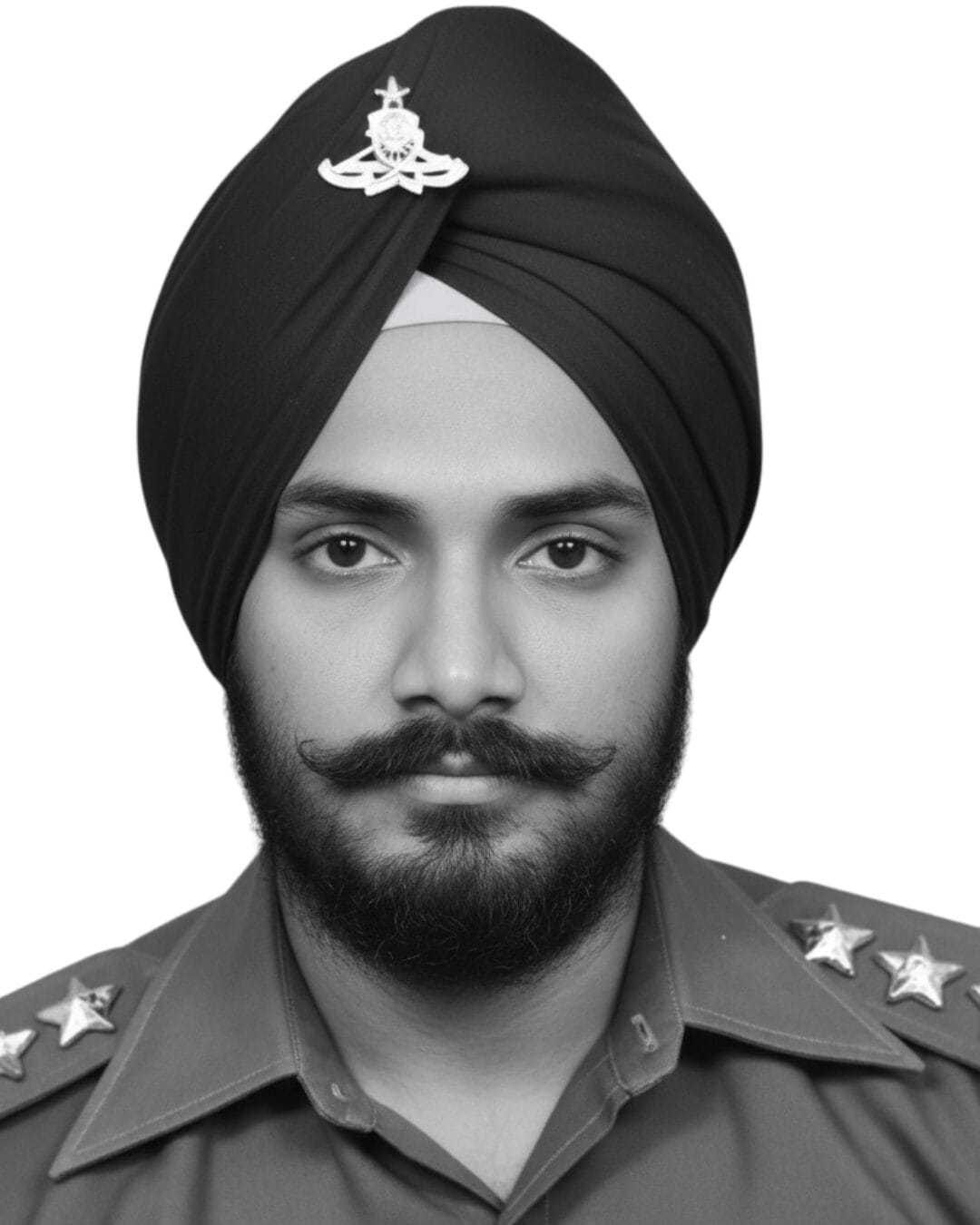
Capt. Dhaliwal · Director, New Careers Academy
Ex-Indian Army officer and SSB mentor at NCA Academy, Chandigarh (est. 1967), coaching NDA, CDS, AFCAT and SSB aspirants since the 1980s. About the author →
Reviewed by Hartaj Dhaliwal — SSB Strategist, NCA · third-generation officer · recommended by the SSB three times.