What Are Rare-Earth Elements? Why They Matter for India’s Future
What are rare-earth elements and why they matter has become a key question as India focuses on clean energy, defence manufacturing, and strategic minerals.. From smartphones and electric vehicles to wind turbines and defence systems, these elements sit at the heart of technologies that define economic growth and national security. Understanding what rare-earth elements are and why they matter for India’s future is crucial—especially at a time when global supply chains are under stress and clean energy ambitions are rising.
What Are Rare-Earth Elements? (Simple Explanation)
Rare-earth elements (REEs) are a group of 17 metallic elements in the periodic table. They include:
15 lanthanides (from lanthanum to lutetium)
Scandium and yttrium
Despite their name, rare-earth elements are not always rare in quantity. The challenge is that they are:
Found in low concentrations
Usually mixed together
Difficult and expensive to separate
This complexity makes them strategically valuable rather than geologically scarce.
Why Are They Called “Rare Earths”?
The term comes from history, not availability:
“Earth” was an old chemical term for oxide powders
These elements were first identified as oxides that were hard to isolate
They are rarely found as pure metals in nature
Today, the name remains, even though some rare-earth elements are more abundant than metals like gold or platinum.
What Are Rare-Earth Elements and Why Are They Important for India?
Rare-earth elements have unique magnetic, optical, and electronic properties. These properties make them indispensable for modern and emerging technologies.
Key Uses of Rare-Earth Elements
High-performance magnets (electric vehicles, wind turbines, drones)
Electronics (smartphones, laptops, hard drives)
Renewable energy systems
LED lighting and display screens
Defence and aerospace equipment
Medical imaging and lasers
For example, neodymium-iron-boron magnets are among the strongest permanent magnets in the world and are essential for compact, efficient motors.
The Science Behind Rare-Earth Magnets (In Brief)
Rare-earth atoms have electrons in the 4f shell, which:
Stay close to the nucleus
Maintain strong magnetic moments
Resist demagnetisation even at high temperatures
This makes rare-earth magnets powerful, stable, and efficient—qualities no other materials can match at scale.
Rare-Earth Elements and Green Technology
Clean energy systems depend heavily on rare-earth elements:
Electric vehicles need rare-earth magnets for motors
Wind turbines rely on them for efficient generators
Energy-efficient appliances use rare-earth-based components
Without rare-earth elements, scaling up green technologies would be slower, costlier, and less efficient.
Why Processing Rare-Earth Elements Is So Difficult
Mining is only the first step. The real challenge lies in processing and separation:
Beneficiation – Crushing and concentrating the ore
Chemical cracking – Breaking minerals using acids or heat
Leaching – Dissolving rare-earth ions into liquid
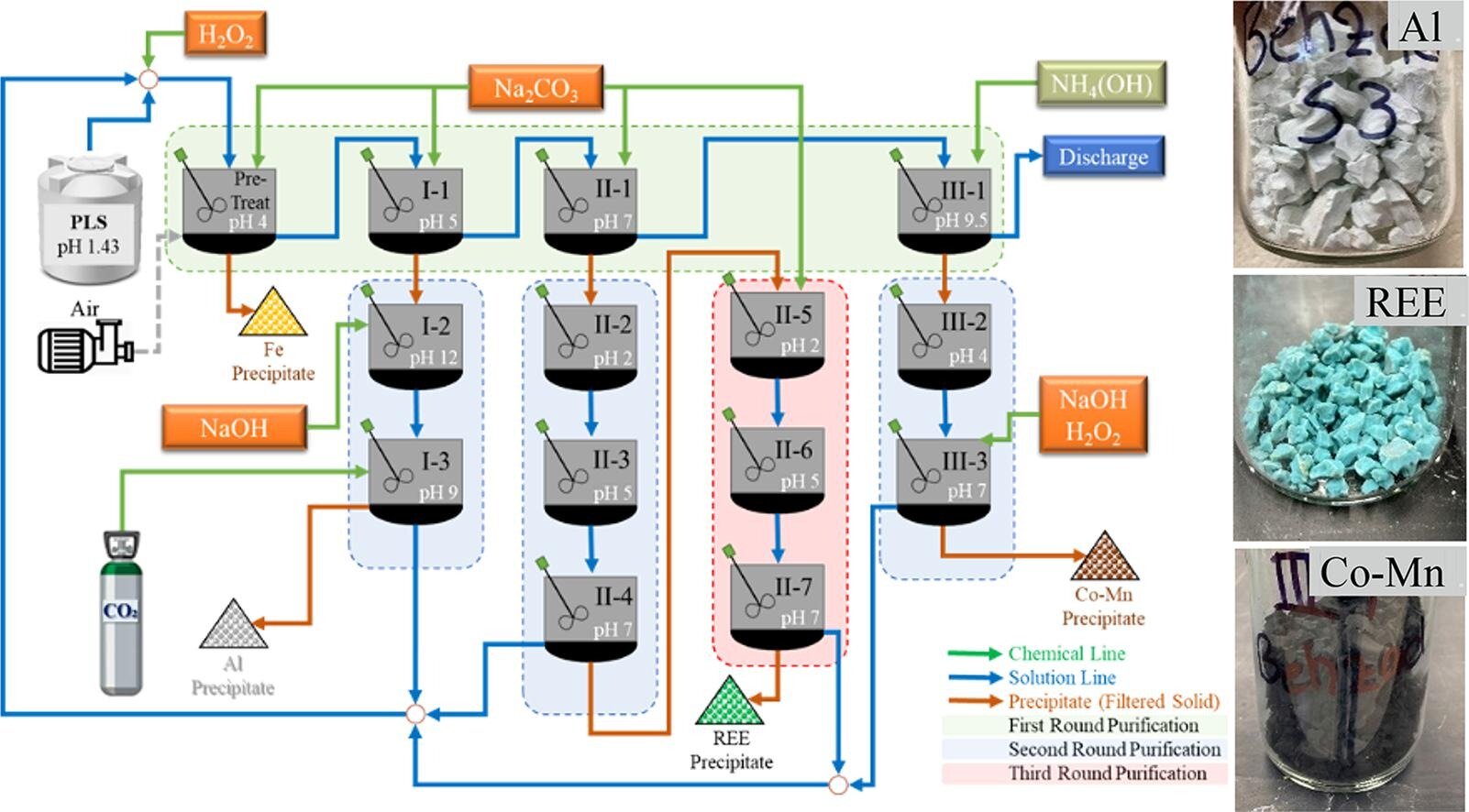
Solvent extraction – Separating each element through hundreds of stages
Precipitation and purification – Producing high-purity oxides
Each element behaves almost the same chemically, making separation energy-intensive, expensive, and technically demanding.
Why China Dominates Rare-Earth Supply Chains

China leads the world not just in mining, but in refining and magnet production:
Over 90% of global rare-earth refining
Nearly 95% of rare-earth permanent magnet production
Other countries may have reserves, but without refining capacity, they remain dependent on China.
Why Rare-Earth Elements Matter for India’s Future
India has significant rare-earth reserves, especially in monazite-rich coastal sands, yet remains underdeveloped in processing.
Strategic Importance for India
Energy independence and clean energy goals
Defence manufacturing and self-reliance
Advanced electronics and semiconductor growth
Reduced import dependency
Building domestic refining and magnet-making capacity is now a national priority, not just an industrial goal.
FAQs: Rare-Earth Elements Explained
1. Are rare-earth elements actually rare?
Not always. They are relatively abundant but difficult to extract and separate economically.
2. Why can’t substitutes replace rare-earth elements?
Their magnetic and optical properties are unique and hard to replicate without losing efficiency.
3. Are rare-earth elements environmentally harmful?
Mining and processing can create pollution if poorly managed, especially due to radioactive by-products.
4. Which rare-earth element is most important?
Neodymium is crucial for magnets, while europium and terbium are vital for lighting and displays.
5. Does India have rare-earth resources?
Yes, India has sizable reserves but limited large-scale refining capacity.
6. Why are rare-earth elements linked to national security?
They are essential for defence technologies, aerospace systems, and advanced electronics.
Why Understanding Strategic Resources Matters for Future Leaders
India’s journey toward self-reliance in critical minerals, clean energy, and defence manufacturing requires informed leadership and strategic thinking. These topics are no longer limited to scientists or policymakers—they are increasingly relevant for aspirants of civil services and central armed police forces.
Why Choose New Careers Academy for CAPF Coaching?
At New Careers Academy, aspirants are trained not just to clear exams, but to understand India’s strategic challenges—from internal security to resource geopolitics.
What Sets New Careers Academy Apart
Expert faculty with deep insight into UPSC CAPF syllabus
Strong focus on current affairs, defence, and national security
Concept-based learning for GS Paper, Essay, and Interview
Proven track record of successful CAPF selections
If you aim to serve the nation as a leader in uniform, understanding topics like rare-earth elements and their strategic value gives you a clear edge—both in exams and in service.
Final Thought
Rare-earth elements may be invisible in daily life, but they power the future. For India, mastering their supply chain is about economic strength, energy security, and national sovereignty. And for aspirants preparing to lead from the front, knowledge like this is not optional—it’s essential.

Written by
Capt. Dhaliwal · Director, New Careers Academy
Ex-Indian Army officer and SSB mentor at NCA Academy, Chandigarh (est. 1967), coaching NDA, CDS, AFCAT and SSB aspirants since the 1980s. About the author →
Reviewed by Hartaj Dhaliwal — SSB Strategist, NCA · third-generation officer · recommended by the SSB three times.