
Best OSCE Coaching in Chandigarh — NCA Academy Since 1967
Quick facts
| Exam | OSCE for UK (NMC), Australia (AHPRA) and New Zealand (NCNZ) |
|---|---|
| Regulator | NMC · NMBA/AHPRA · NCNZ |
| NCA course fee | ₹95,000 (₹1,000 seat registration adjusted against the fee) |
| Duration | 2–4 months |
| Mode | Campus simulation ward (Chandigarh / Mohali) or live online · counselling at 2570, Sector 35-C, Chandigarh |
| Next batch | Confirm the next start date on WhatsApp +91-90410-12051 |
| Enrol | Call +91-95010-70051 · WhatsApp +91-90410-12051 · admissions@ncaacademy.com |
Last updated:
OSCE Coaching in Chandigarh – NCA Academy Since 1967
Searching for expert OSCE coaching in Chandigarh? New Careers Academy (NCA), located at SCO 71, Sector 91, Chandigarh, offers the most comprehensive Objective Structured Clinical Examination coaching in North India — preparing Indian nurses for registration in the United Kingdom, Australia, and New Zealand. With 59 years of exam coaching legacy and a 92% first-attempt pass rate, NCA is Chandigarh’s most trusted OSCE coaching centre.Whether you are applying to the UK NMC, Australian AHPRA, or New Zealand Nursing Council, our country-specific faculty guide you through every clinical station, drug calculation, and communication scenario — in person at our Chandigarh campus or live online from anywhere in India.Practise on NCA’s NCLEX-RN CAT Simulator
NCA Academy’s NCLEX-RN CAT simulator uses the same Computer Adaptive Testing approach as the real exam — 10,000+ questions with detailed rationales for every option, adaptive difficulty, and a real-time readiness prediction. Start with the free NCLEX practice questions (no sign-up required), or work through the NCLEX question bank by topic. Nurses preparing for OSCE can also use the OSCE prep module.
What is the OSCE Exam?
The Objective Structured Clinical Examination (OSCE) is a standardised clinical skills test required by nursing regulatory bodies in the UK, Australia, and New Zealand. Unlike written tests, the OSCE evaluates Indian nurses through a series of timed clinical stations where they must demonstrate practical nursing skills, safe medication administration, patient communication, and critical decision-making under exam conditions.For internationally educated nurses (IENs) from India, clearing the OSCE is the final step before receiving full nursing registration in their destination country. NCA Chandigarh’s OSCE coaching covers every station type — clinical procedures, SBAR handovers, drug calculations, infection control, patient assessment — aligned with the current blueprint of each country’s regulatory body.For Which Countries is the OSCE Exam Required?
The OSCE is a mandatory nursing registration exam in three countries, each with its own regulatory authority, format, and eligibility criteria. NCA Chandigarh prepares Indian nurses for all three:| Country | Regulatory Body | Exam Required | Pre-Requirement |
|---|---|---|---|
| United Kingdom | NMC (Nursing & Midwifery Council) | NMC OSCE (10 stations) | CBT (Computer-Based Test) |
| Australia | AHPRA (Australian Health Practitioner Regulation Agency) | AHPRA OSCE (NCLEX pathway) | NCLEX-RN |
| New Zealand | Nursing Council of New Zealand (NCNZ) | NCNZ OSCE | CBA (Computer-Based Assessment) |
OSCE Coaching in Chandigarh — Sector 35-C Centre
New Careers Academy, 2570, Sector 35-C, Chandigarh 160035 is our city centre for counselling, admissions and NCLEX, OSCE, OET, DHA and CBT course enquiries — open Monday to Saturday, till 9 pm. Call +91-95010-70051 / +91-62396-61414 · WhatsApp +91-90410-12051 · admissions@ncaacademy.com.
Classroom batches run at the Mohali campus (SCO 71, Sector 91, SAS Nagar 140307), a short drive from Sector 35; nursing batches run live online with a Morning or Evening shift chosen at enrolment, and OSCE station practice runs in the campus simulation ward.
NCLEX & Nursing batches for Chandigarh candidates
| Batch | Enrol at | Classes at | Next start | Mode |
|---|---|---|---|---|
| NCLEX-RN / NCLEX-PN — live online batch 4 months (16 weeks), classes 6 days a week | Sector 35-C, Chandigarh or online | Live online · Morning or Evening shift | Rolling — confirm on WhatsApp | Online |
| OSCE (UK NMC / Australia AHPRA / NZ NCNZ) 2–4 months, simulation-ward practice | Sector 35-C, Chandigarh or Mohali campus | Campus (Chandigarh / Mohali) or live online | Rolling — confirm on WhatsApp | Classroom / Online |
| OET · DHA · CBT (UK & NZ) 4 months (16 weeks), classes 6 days a week | Sector 35-C, Chandigarh or online | Live online · Morning or Evening shift | Rolling — confirm on WhatsApp | Online |
Confirm your shift and start date at the Sector 35-C centre or on WhatsApp before the batch starts.
Why Choose NCA Chandigarh for OSCE Coaching
When it comes to OSCE coaching in Chandigarh, NCA Academy stands apart for three reasons: experience, specialisation, and results. Here is why hundreds of Indian nurses choose NCA every year:59 years of Coaching Excellence
Founded by Lt. Col. H.S. Dhaliwal (Retd.) in 1967, NCA has guided over 39,000 students through India’s toughest exams. Our structured, result-oriented methodology now powers our OSCE coaching programme in Chandigarh with the same discipline and rigour.Country-Specific Faculty with International Experience
NCA’s OSCE trainers have direct clinical experience working in UK NHS trusts, Australian hospitals, and New Zealand DHBs. They know exactly what assessors look for in each country and train you accordingly — not just on clinical skills, but on communication style, cultural expectations, and documentation habits.Realistic Mock OSCE Stations
We replicate real OSCE conditions with timed mock stations, standardised assessors, and structured written feedback after each attempt. You practice until the stations feel automatic, so there are no surprises on exam day.Small Batch Sizes
OSCE coaching at NCA Chandigarh runs in small groups to ensure every nurse receives personal attention. Individual feedback on posture, language, technique, and station management makes a measurable difference to your final score.Offline + Online Flexibility
Attend at our Chandigarh campus or join live online classes. All sessions are recorded and available on NCA’s learning portal. Nurses from Punjab, Haryana, Himachal Pradesh, and across India benefit from both modes.Upcoming OSCE Coaching Batches in Chandigarh
| Batch | Mode | Duration | Timings | Enrol |
|---|---|---|---|---|
| UK NMC OSCE – Complete Prep | Offline (Chandigarh) + Online | 6 Weeks | 9 AM – 12 PM IST | |
| Australia AHPRA OSCE – Full Course | Offline (Chandigarh) + Online | 6 Weeks | 2 PM – 5 PM IST | |
| New Zealand NCNZ OSCE – Full Prep | Offline (Chandigarh) + Online | 5 Weeks | 7 PM – 9 PM IST | |
| Mock OSCE Intensive (All Countries) | Offline at Chandigarh Campus | 2 Weeks | Flexible |
What You Will Get in NCA’s OSCE Coaching Chandigarh
Clinical Skills Training – All Stations Covered
Wound care, urinary catheterisation, IV cannulation, tracheostomy management, NG tube insertion, blood glucose monitoring, airway management. Every clinical station in the UK, Australian, and NZ OSCE blueprint is practiced with structured assessor feedback.Drug Calculation Mastery
Drug calculation errors cause a significant number of OSCE failures. NCA Chandigarh dedicates entire sessions to IV drip rates, unit conversions, paediatric dosing, oral drug calculations, and decimal safety checks — building the accuracy and speed needed under exam pressure.Communication and Handover Scenarios
SBAR patient handover, breaking bad news, escalating a deteriorating patient, gaining valid consent, handling difficult relatives — all practiced under timed conditions with real-time feedback on language, tone, and structure appropriate for each country.Full Mock OSCE Days
Before your actual exam, NCA runs complete mock OSCE days with timed stations, standardised assessors, and written station-by-station feedback. You identify and close gaps before they cost you on exam day.Registration Guidance
As part of OSCE coaching in Chandigarh, NCA also assists with CBT and NCLEX preparation, document verification checklists for NMC, AHPRA and NCNZ, OET/IELTS guidance, and step-by-step registration walkthroughs specific to each country’s portal and requirements.OSCE Syllabus Coverage at NCA Chandigarh
| Domain | Key Topics |
|---|---|
| Clinical Skills | Wound management, catheterisation, IV cannulation, tracheostomy, NG tube, blood glucose monitoring, oxygen therapy |
| Medication Safety | Drug calculations, oral/IV/IM medications, controlled drugs, allergy screening, five rights of medication administration |
| Communication | SBAR handover, consent, breaking bad news, telephone escalation, cultural competence, interpreter use |
| Patient Assessment | NEWS2 / NEWS scoring, ABCDE assessment, deteriorating patient escalation, vital signs documentation |
| Infection Prevention | PPE donning/doffing, ANTT (aseptic non-touch technique), sharps disposal, hand hygiene, isolation protocols |
OSCE coaching for all of India, run from Chandigarh. The sections below cover what the OSCE costs from India, pass rates, every station you will face, and the country-specific routes for the UK (NMC), Australia (AHPRA) and New Zealand (NCNZ). Classroom batches run at the Chandigarh–Mohali campus; the same faculty teaches the live online batch for nurses anywhere in India.
How much does the OSCE exam cost from India?
There are two separate costs, and they are often confused. The exam fee is paid to the regulator in the destination country’s currency: £794 for the UK, approximately AUD 4,000 for Australia, and NZ$3,000 for New Zealand (plus a compulsory NZ$500 orientation course). What that comes to in rupees depends on the exchange rate on the day you pay, so any site quoting a fixed rupee figure is guessing.
The coaching fee is what you pay in India to prepare. At New Careers Academy that is ₹95,000 for the 2- to 4-month programme, the same for all three countries, on campus or live online. Beyond those two, budget for the qualification-verification service, the criminal record check, English language testing, travel and visa — these are usually larger than the exam fee itself.
What is the OSCE pass rate?
Pass rates are not published consistently, and you should be sceptical of any coaching institute quoting a precise national figure. The regulators release limited data, and rates move between cohorts and between station types. What is consistently reported is the pattern of why candidates fail: a break in aseptic technique the candidate did not notice, a drug calculation error, or failing to escalate an abnormal observation. Those three account for a large share of failed stations.
That pattern is the reason our mock circuits are marked station by station rather than pass/fail overall — you need to know which station broke, and why, while there is still time to fix it before you fly.
OSCE stations explained
Assessment station (A of APIE)
You take a structured history and complete a full set of observations on a simulated patient, then document what you found. Marks are lost most often for skipping introductions and consent, for not washing hands at the right moments, and for recording observations without acting on an abnormal reading. NCA drills this as a timed routine so the sequence becomes automatic.
Planning station (P)
You write a care plan from the assessment data — identifying the nursing problem, setting a measurable goal and choosing interventions. Candidates commonly fail by writing medical rather than nursing goals, or by leaving the goal unmeasurable. We mark practice plans against the regulator’s own criteria.
Implementation station (I)
A hands-on skill delivered under time pressure — commonly medication administration, wound care, catheterisation or an aseptic procedure. The most frequent fail is a break in aseptic technique the candidate does not notice. Our assessors stop and replay the break so you see it.
Evaluation station (E)
You review whether the care given worked, and decide what changes next. This station rewards clear clinical reasoning and honest documentation rather than speed.
Vital signs and clinical observations
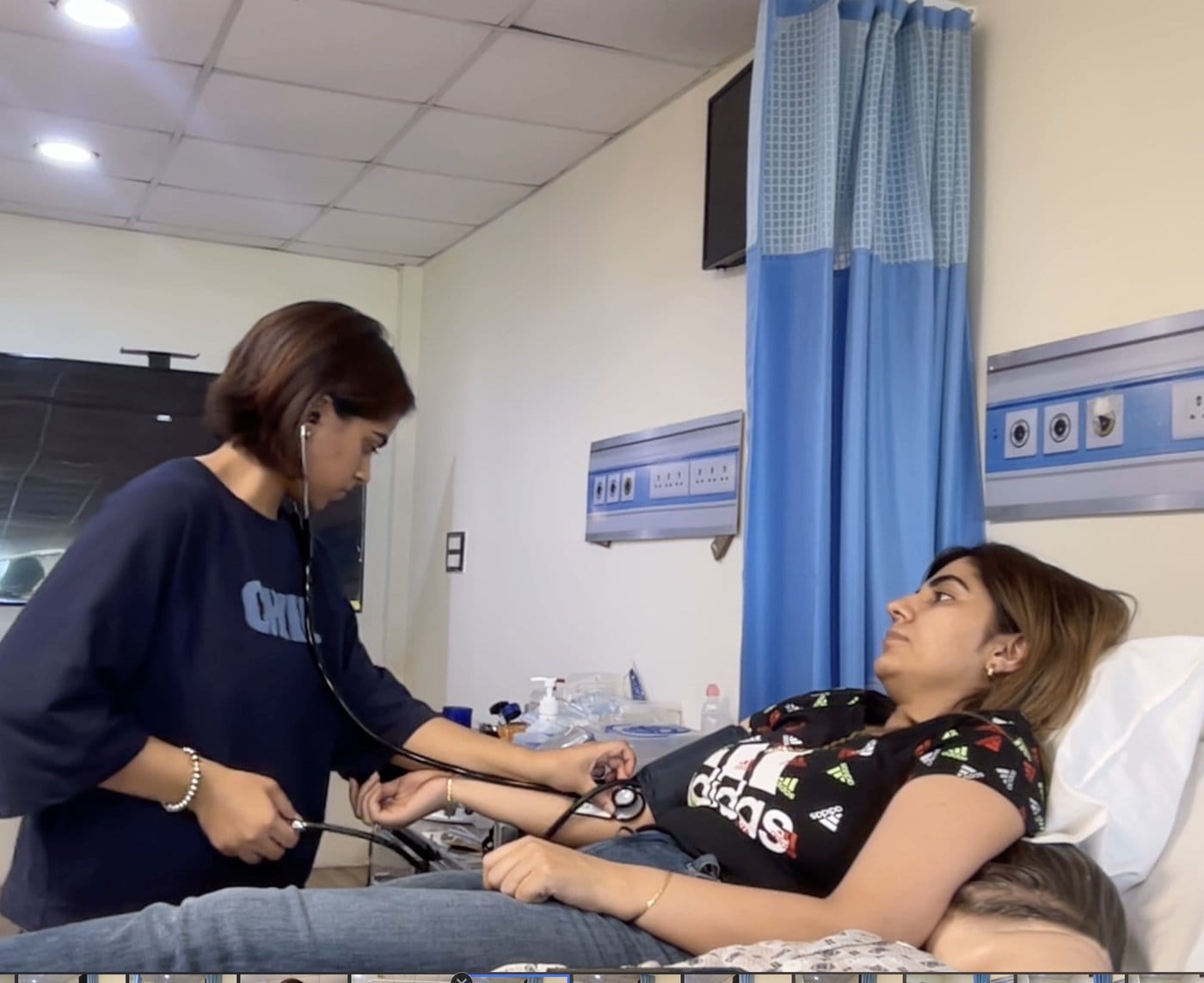
Manual blood pressure, pulse, respiratory rate, temperature, oxygen saturation and a full early warning score. Examiners watch cuff placement, whether you actually palpate, and whether you escalate an abnormal score. Practised here on both manikins and live partners.
Aseptic non-touch technique (ANTT)
Preparing a sterile field and completing a procedure without contaminating key parts. This is the single most common reason candidates lose a skills station, and it is almost always a small, habitual error — the hand that steadies the trolley, the dropped cap.
Medication administration and drug calculations
Checking the prescription, the patient, the allergy status, the drug, the dose and the route — then calculating accurately under observation. Calculation errors are unforgiving; we run daily timed calculation sets.
CPR and basic life support
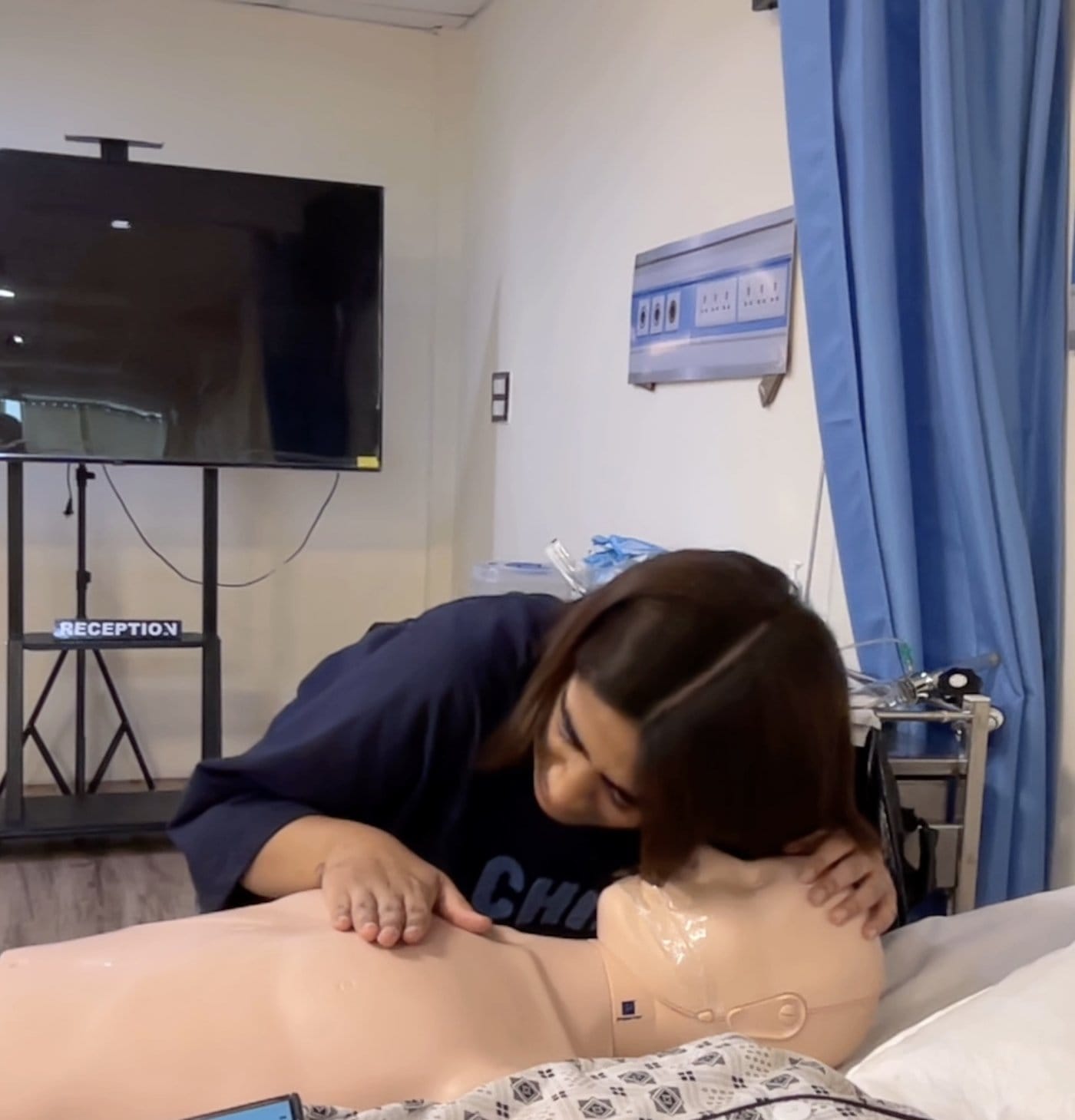
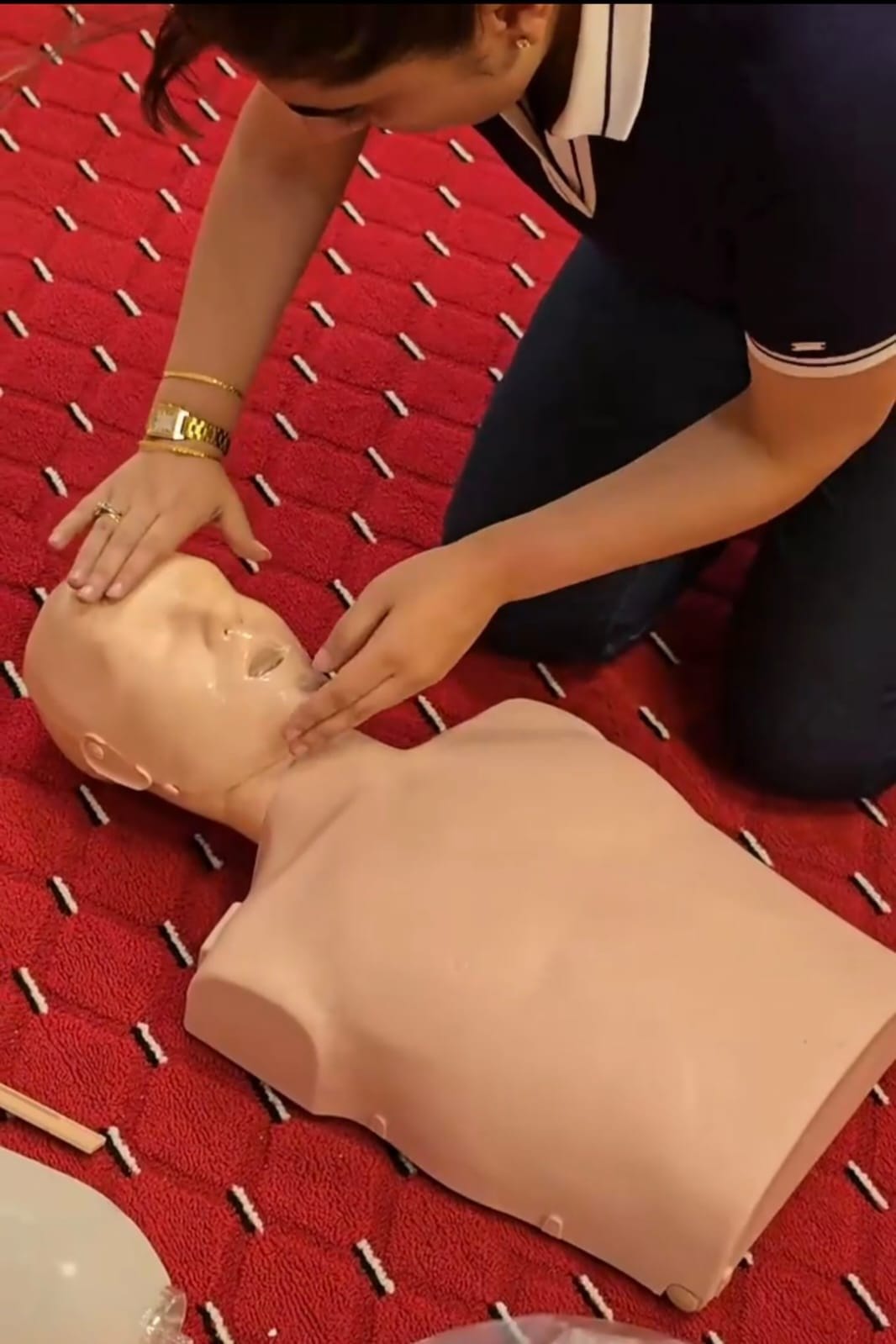
Assessment for danger and response, calling for help, opening the airway, checking breathing and delivering compressions at the correct rate and depth. Our manikins give live compression feedback, so depth and recoil are corrected during practice rather than after.
Professional values and evidence-based practice
Questions on the regulator’s code, consent, safeguarding, dignity and using evidence in decisions. Answers must reflect practice in that country — a UK answer will not pass an Australian station.
Why our OSCE course runs for 2–4 months, not five weeks
Most institutes sell a five or six-week OSCE batch. Two to four months — set after an initial skills assessment, not a fixed batch length — is a deliberate choice, not padding. The first weeks rebuild the underlying skills — hand hygiene sequence, aseptic technique, calculations — because these are habits, and habits take repetition to change. Only then do the full timed circuits begin, and those need to be run enough times that the clock stops being the thing you are fighting. Candidates who compress this into a few weeks tend to know the theory and still lose stations on execution.
OSCE coaching for the UK (NMC)
The NMC OSCE is part two of the Test of Competence, taken alongside the CBT — you can sit them in either order, but both must be passed. It has 10 stations, costs £794, and you get three attempts with at least 10 days between each. All resits must be taken at the same centre as your first attempt. If you do not pass at the third attempt your application closes, and you must wait six months before sitting all 10 stations again.
OSCE coaching for the United Kingdom →
OSCE coaching for Australia (NMBA / AHPRA)
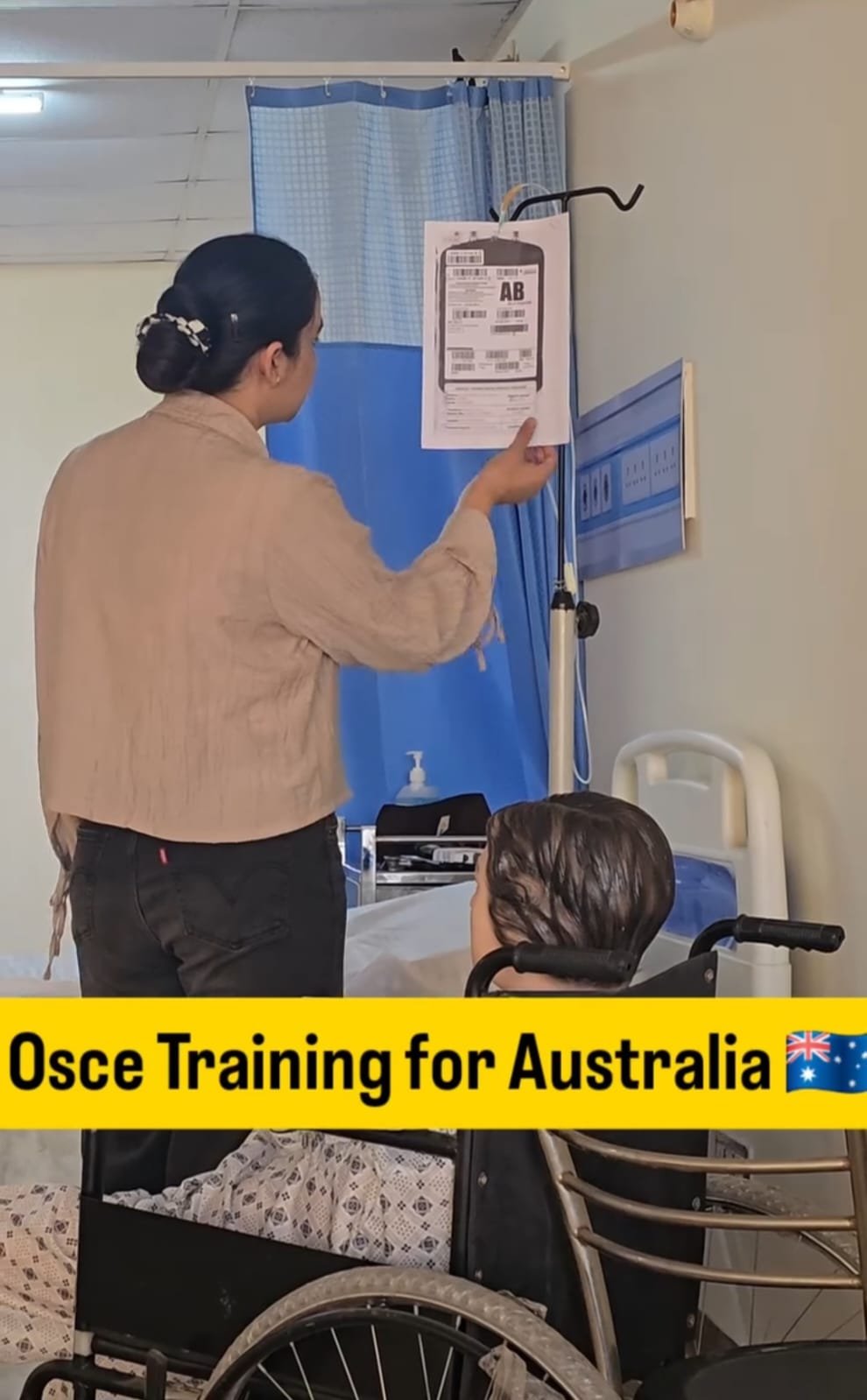
Australia’s OSCE is the final stage of the Outcomes-Based Assessment (Stream B), taken after Orientation Part 1, your portfolio and the MCQ exam. It is an in-person clinical exam held in Adelaide or Melbourne, with separate exams for registered nurses, enrolled nurses and midwives. A pass is valid for five years, but only satisfies the recency-of-practice standard for two — so timing your application matters.
OSCE coaching for New Zealand (NCNZ)
The NZ OSCE comes after the theoretical exam — see our IQN coaching for New Zealand (the NZ CBT: Part A medication safety, Part B nursing knowledge) if you have not passed it yet.
New Zealand’s competence assessment has two parts: an online theoretical exam at a Pearson VUE centre (Part A medication safety, Part B nursing knowledge, NZ$140, three attempts), then a clinical assessment taken in person in Christchurch. The clinical part is a two-day orientation and preparation course (NZ$500) followed by the OSCE itself (NZ$3,000). Registered nurses sit 10 stations, enrolled nurses 8, at 12 minutes per station. You may sit the OSCE up to three times.
OSCE coaching for New Zealand →
Online OSCE training for nurses in Kerala and across India
The live online batch runs the same syllabus, same faculty and same mock circuits as the campus programme, at the same ₹95,000. It is taken by nurses in Kerala, Punjab, Delhi NCR, Maharashtra and across the Gulf, and is built for nurses already working shifts — sessions run morning and evening, and are recorded.
What online cannot replicate is the feel of a sterile field or the depth of a compression. Online candidates who can travel are encouraged to attend the final mock circuits in person at the Mohali campus before their exam date; those who cannot are given extra assessed video submissions instead.
Other OSCE Coaching Programmes at NCA
NCA offers dedicated country-specific OSCE coaching in Chandigarh and online across India. Explore our full range of OSCE coaching programmes:- UK NMC OSCE Coaching for Indian Nurses – Prepare for the 10-station NMC OSCE with NCA’s UK-experienced faculty.
- Australian OSCE Coaching for Indian Nurses – AHPRA-aligned curriculum with 92% first-attempt pass rate.
- New Zealand Nursing OSCE Coaching – NCNZ-specific preparation for Indian nurses targeting New Zealand registration.
About New Careers Academy (NCA) – Chandigarh Since 1967
New Careers Academy was founded in 1967 by Lt. Col. H.S. Dhaliwal (Retd.) and has produced over 39,000 successful exam selections across India. While NCA’s core heritage is India’s defence services coaching, the same institutional discipline and outcome-focused culture now drives our OSCE coaching programme for Indian nurses seeking registration abroad.NCA is located at SCO 71, Sector 91, Chandigarh, easily accessible from Mohali, Panchkula, Zirakpur, Ludhiana, and across Punjab and Haryana. Our campus offers dedicated clinical simulation areas, small-group coaching rooms, and a library of OSCE resources aligned to UK, Australian, and New Zealand nursing standards.Established in 1967
Over 39,000 Successful Selections
59 years of Coaching Excellence






(function(){
var track = document.getElementById(‘nca-chd-track’);
if(!track) return;
var slides = track.querySelectorAll(‘.nca-slide’);
var total = slides.length;
var cur = 0;
var dotsEl = document.getElementById(‘nca-chd-dots’);
for(var i = 0; i < total; i++){ var d = document.createElement('span'); d.setAttribute('data-i', i); d.style.cssText = 'display:inline-block;width:8px;height:8px;border-radius:50%;margin:0 3px;background:' + (i === 0 ? '#fff' : 'rgba(255,255,255,0.55)') + ';cursor:pointer;vertical-align:middle;'; (function(idx){ d.addEventListener('click', function(){ goTo(idx); }); })(i); dotsEl.appendChild(d); } function goTo(n){ cur = (n + total) % total; track.style.transform = 'translateX(-' + (cur * 100) + '%)'; var dots = dotsEl.querySelectorAll('span'); for(var j = 0; j < dots.length; j++) dots[j].style.background = j === cur ? '#fff' : 'rgba(255,255,255,0.55)'; } window.ncaChdNext = function(){ goTo(cur + 1); }; window.ncaChdPrev = function(){ goTo(cur – 1); }; setInterval(function(){ goTo(cur + 1); }, 3000); })();
Looking for the full programme? See OSCE coaching in India — UK NMC, Australia AHPRA and New Zealand tracks, ₹95,000 for 2–4 months, on campus or live online.