
Updated 19 September 2026 · Fees and exam details verified by NCA nursing faculty
Quick answer: OSCE coaching prepares internationally qualified nurses for the practical clinical exam required to register with the UK’s Nursing and Midwifery Council (NMC), Australia’s NMBA/AHPRA, or the Nursing Council of New Zealand (NCNZ). New Careers Academy’s 2- to 4-month programme (length set after an initial skills assessment) (₹95,000, Chandigarh/Mohali campus or live online) drills all 10 OSCE stations — patient assessment, clinical skills and professional values — in a full simulation ward, with mock stations marked to the regulator’s own criteria.
OSCE at a glance — UK, Australia and New Zealand
| UK (NMC) | Australia (NMBA / AHPRA) | New Zealand (NCNZ) | |
|---|---|---|---|
| Stations | 10 | 10 (separate OSCE for RN, EN and midwife) | 10 for registered nurses · 8 for enrolled nurses |
| Exam fee | £794 (resit £397 if resitting 7 or fewer stations) | Approx. AUD 4,000 — confirm the current fee with the NMBA | NZ$3,000 (resit NZ$3,000), plus NZ$500 orientation course |
| Where it is held | Oxford Brookes · University of Northampton · Ulster University · Leeds Teaching Hospitals NHS Trust | Adelaide or Melbourne | Nurse Maude Simulation & Assessment Centre, Christchurch |
| Attempts | 3 (minimum 10 days between attempts) | Re-sits governed by the NMBA exam re-sit policy | 3 |
| Comes after | CBT — the two parts of the Test of Competence can be taken in either order | Orientation Part 1, portfolio and the MCQ exam (Stream B) | IQN theoretical exam — Part A medication safety, Part B nursing knowledge (NZ$140) |
| Station timing | Set out in the NMC OSCE information booklet | 10 minutes per station | 12 minutes per station — 2 reading, 8 performing, 2 moving |
| NCA course | 2–4 months · ₹95,000 | 2–4 months · ₹95,000 | 2–4 months · ₹95,000 |
Regulator figures verified against the NMC, the NMBA and the Nursing Council of New Zealand in September 2026. Exam fees and venues are set by the regulators and can change — always check the official page before you book. Note: the Northumbria University OSCE centre closed on 19 February 2026 and is no longer an NMC test venue.
What is the OSCE exam?
The OSCE — Objective Structured Clinical Examination — is a practical exam in which you move through a circuit of timed stations and are marked by examiners while you actually perform nursing care. There is no multiple choice and no essay. You assess a simulated patient, give a medication, manage an aseptic procedure or run a resuscitation, and you are scored on what the examiner sees you do. It is the final clinical hurdle before an internationally qualified nurse is allowed onto a foreign register.
Which countries require an OSCE for nurses?
Three of the main destinations for Indian nurses require one: the United Kingdom (NMC), Australia (NMBA/AHPRA) and New Zealand (NCNZ). Each sets its own stations, fee, venue and attempt limit, and each expects answers that reflect practice in that country — so preparation cannot be generic. The United States does not use an OSCE for registered nurses; the NCLEX-RN is a computer-adaptive written exam instead.
How much does the OSCE exam cost from India?
There are two separate costs, and they are often confused. The exam fee is paid to the regulator in the destination country’s currency: £794 for the UK, approximately AUD 4,000 for Australia, and NZ$3,000 for New Zealand (plus a compulsory NZ$500 orientation course). What that comes to in rupees depends on the exchange rate on the day you pay, so any site quoting a fixed rupee figure is guessing.
The coaching fee is what you pay in India to prepare. At New Careers Academy that is ₹95,000 for the 2- to 4-month programme, the same for all three countries, on campus or live online. Beyond those two, budget for the qualification-verification service, the criminal record check, English language testing, travel and visa — these are usually larger than the exam fee itself.
What is the OSCE pass rate?
Pass rates are not published consistently, and you should be sceptical of any coaching institute quoting a precise national figure. The regulators release limited data, and rates move between cohorts and between station types. What is consistently reported is the pattern of why candidates fail: a break in aseptic technique the candidate did not notice, a drug calculation error, or failing to escalate an abnormal observation. Those three account for a large share of failed stations.
That pattern is the reason our mock circuits are marked station by station rather than pass/fail overall — you need to know which station broke, and why, while there is still time to fix it before you fly.
What NCA’s OSCE coaching covers
- Patient assessment, planning, implementation and evaluation (APIE) stations
- Vital signs and clinical observations
- Aseptic non-touch technique (ANTT)
- Medication administration and drug calculations
- CPR and basic life support
- Wound care and dressing
- Catheterisation
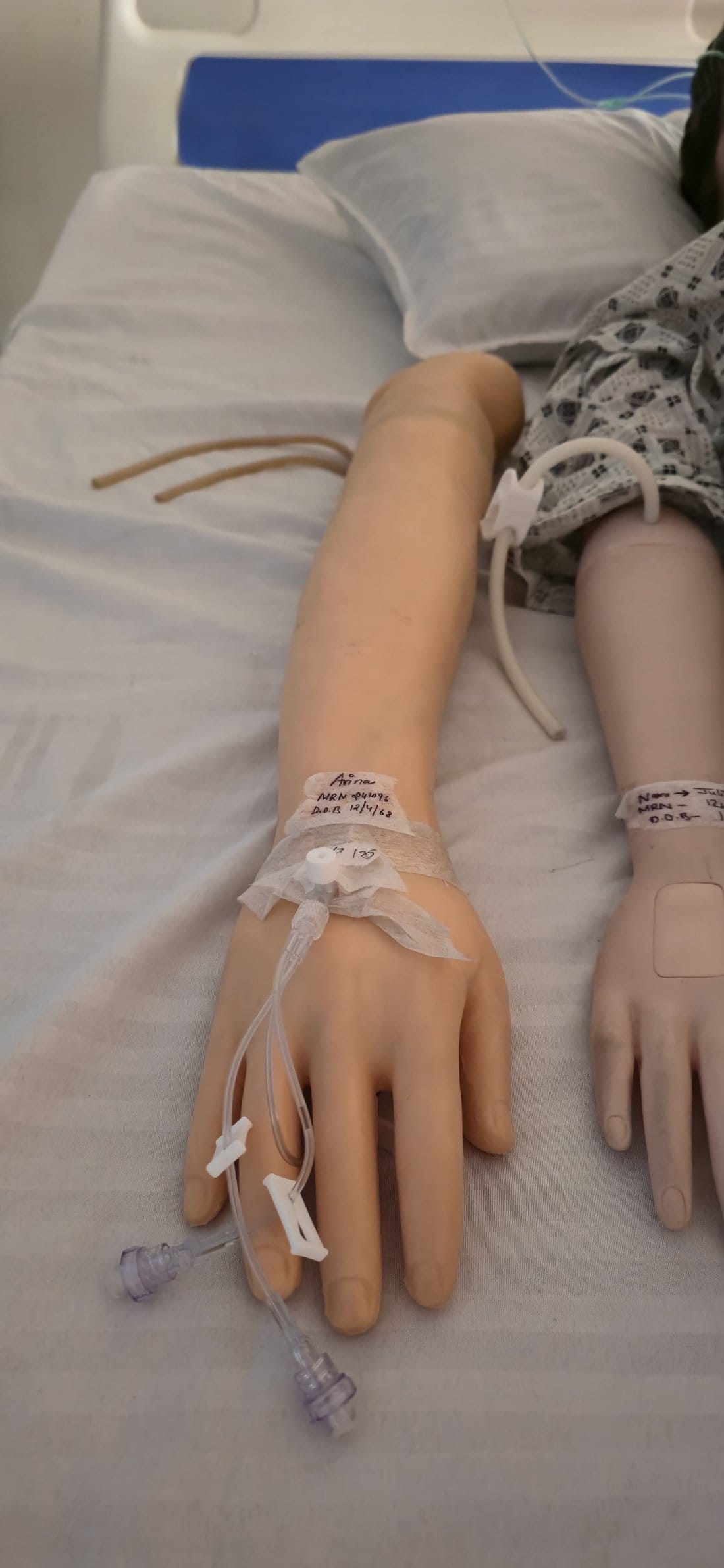
- IV cannulation and infusion care
- Communication, documentation and professional values
- Full mock OSCE circuits with station-by-station written feedback
Inside the OSCE training lab
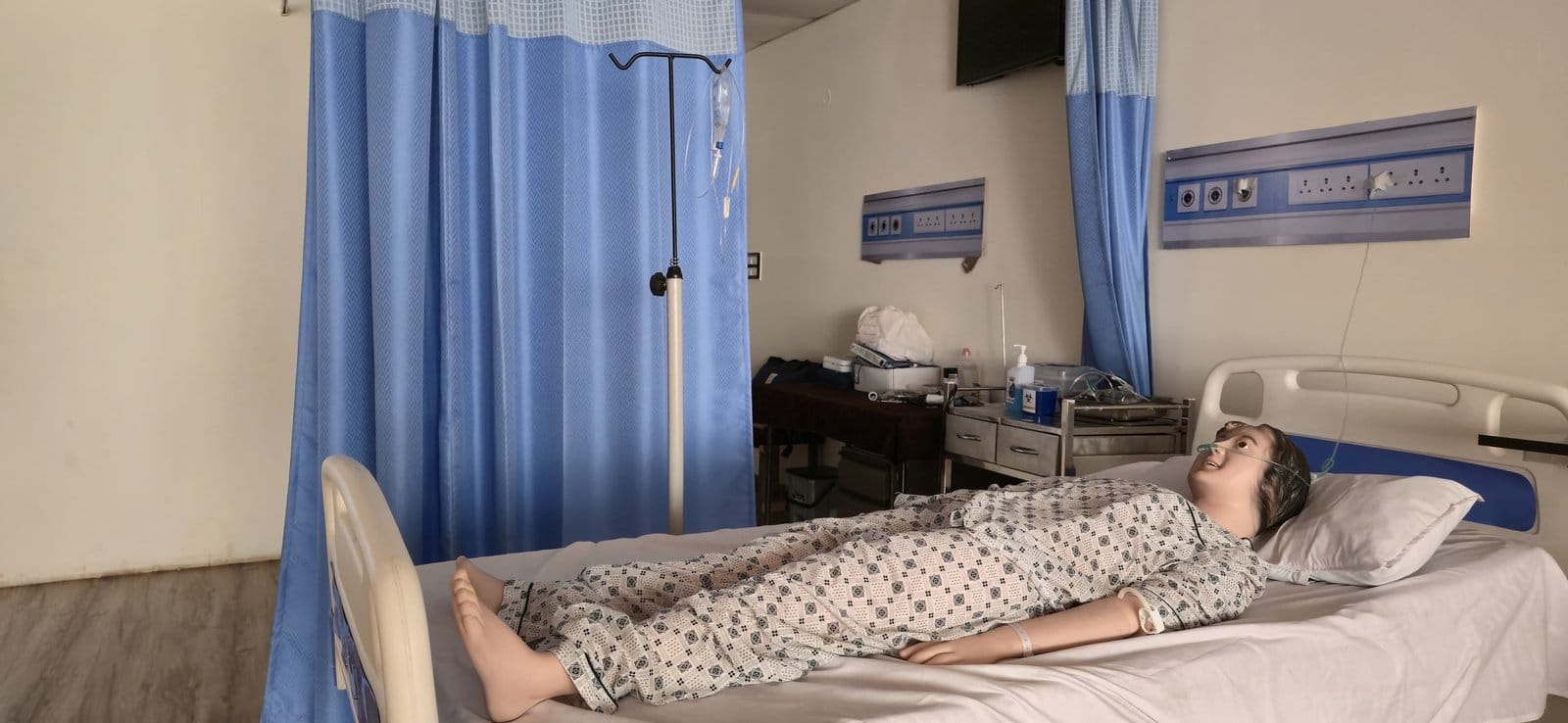
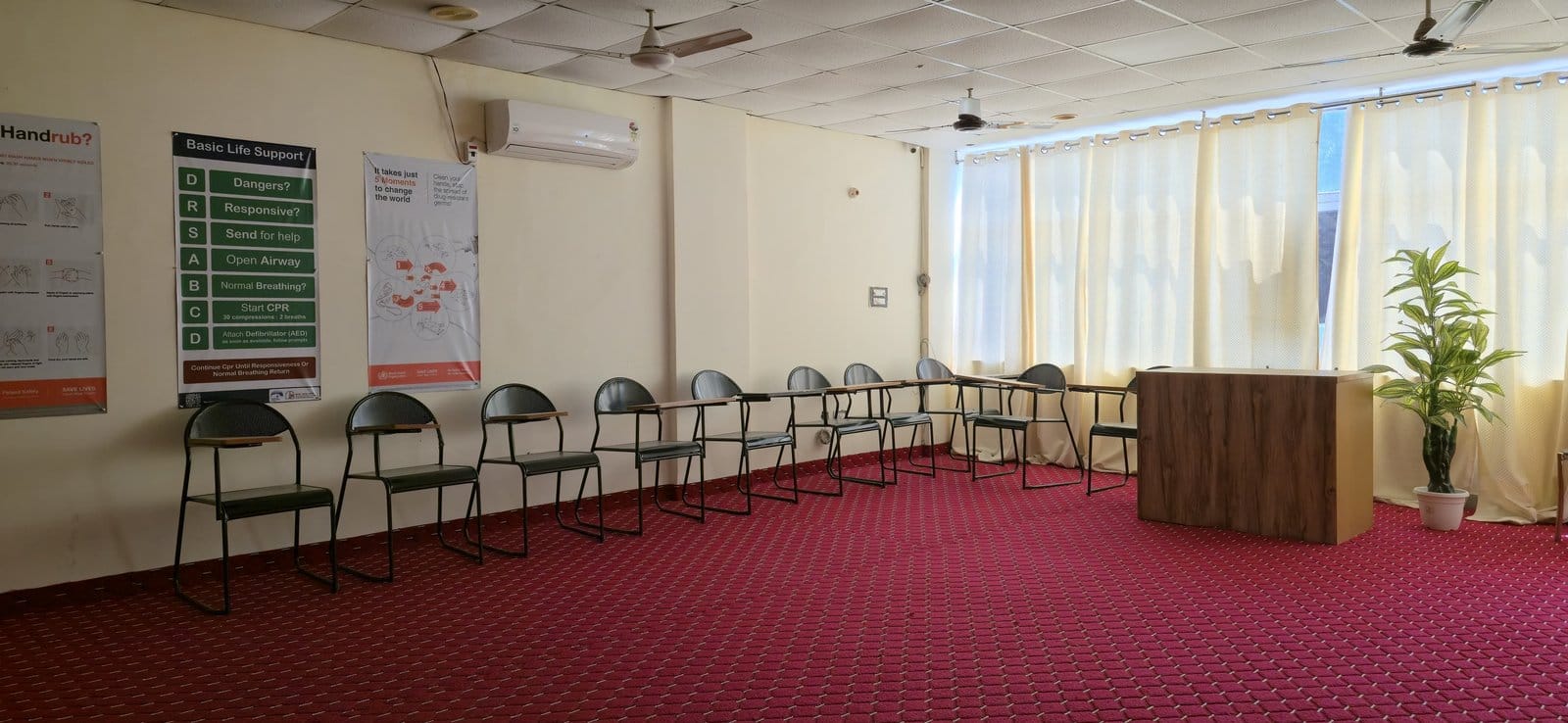
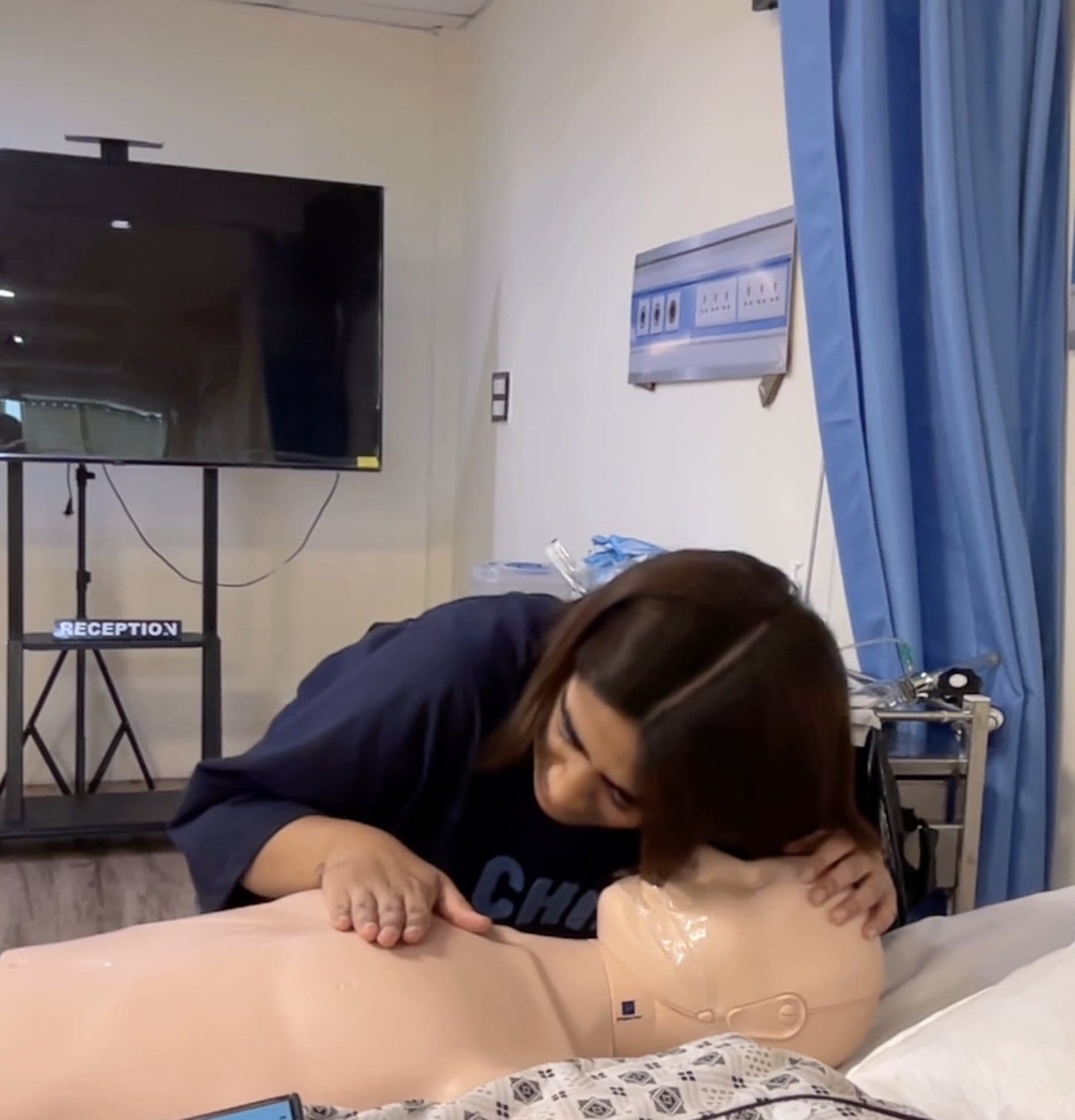
Every station is practised in a working simulation ward at our Mohali campus — hospital beds, piped-gas headwall panels, high-fidelity manikins with CPR feedback, IV arms, and a separate BLS floor area. Candidates rehearse on equipment laid out the way the real exam centres lay it out, not on desks.
OSCE stations explained
Assessment station (A of APIE)
You take a structured history and complete a full set of observations on a simulated patient, then document what you found. Marks are lost most often for skipping introductions and consent, for not washing hands at the right moments, and for recording observations without acting on an abnormal reading. NCA drills this as a timed routine so the sequence becomes automatic.
Planning station (P)
You write a care plan from the assessment data — identifying the nursing problem, setting a measurable goal and choosing interventions. Candidates commonly fail by writing medical rather than nursing goals, or by leaving the goal unmeasurable. We mark practice plans against the regulator’s own criteria.
Implementation station (I)
A hands-on skill delivered under time pressure — commonly medication administration, wound care, catheterisation or an aseptic procedure. The most frequent fail is a break in aseptic technique the candidate does not notice. Our assessors stop and replay the break so you see it.
Evaluation station (E)
You review whether the care given worked, and decide what changes next. This station rewards clear clinical reasoning and honest documentation rather than speed.
Vital signs and clinical observations
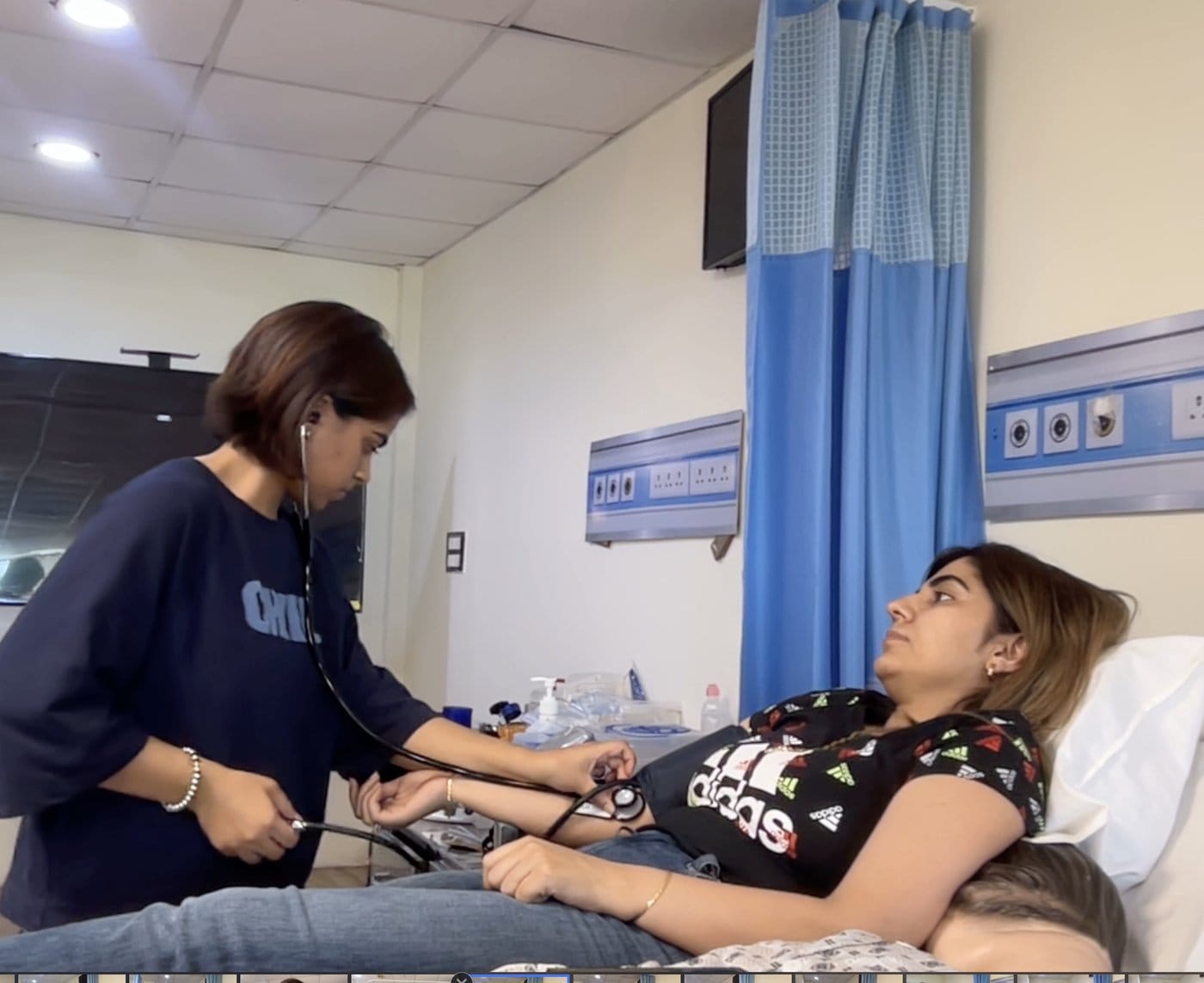
Manual blood pressure, pulse, respiratory rate, temperature, oxygen saturation and a full early warning score. Examiners watch cuff placement, whether you actually palpate, and whether you escalate an abnormal score. Practised here on both manikins and live partners.
Aseptic non-touch technique (ANTT)
Preparing a sterile field and completing a procedure without contaminating key parts. This is the single most common reason candidates lose a skills station, and it is almost always a small, habitual error — the hand that steadies the trolley, the dropped cap.
Medication administration and drug calculations
Checking the prescription, the patient, the allergy status, the drug, the dose and the route — then calculating accurately under observation. Calculation errors are unforgiving; we run daily timed calculation sets.
CPR and basic life support
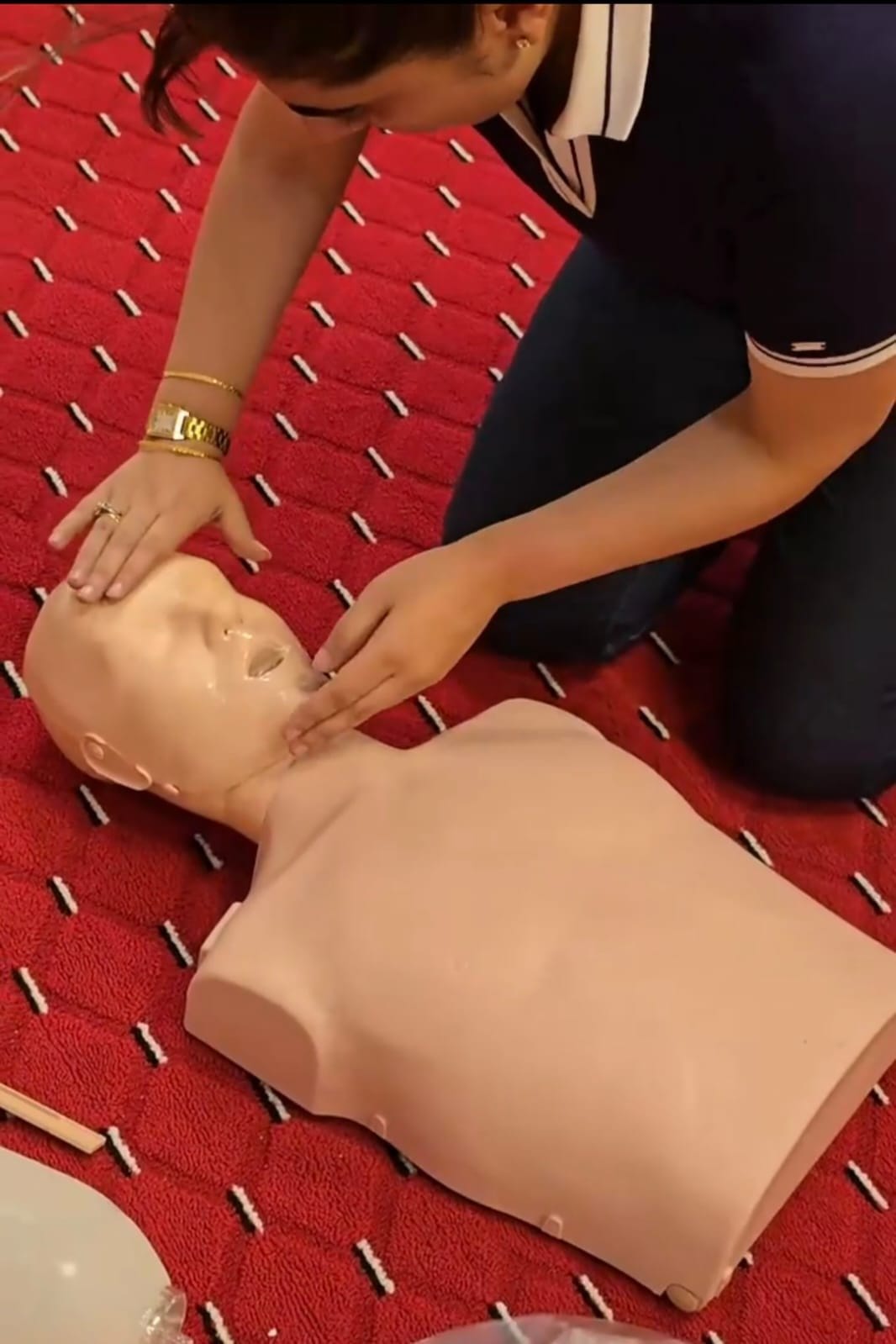
Assessment for danger and response, calling for help, opening the airway, checking breathing and delivering compressions at the correct rate and depth. Our manikins give live compression feedback, so depth and recoil are corrected during practice rather than after.
Professional values and evidence-based practice
Questions on the regulator’s code, consent, safeguarding, dignity and using evidence in decisions. Answers must reflect practice in that country — a UK answer will not pass an Australian station.
Why our OSCE course runs for 2–4 months, not five weeks
Most institutes sell a five or six-week OSCE batch. Two to four months — set after an initial skills assessment, not a fixed batch length — is a deliberate choice, not padding. The first weeks rebuild the underlying skills — hand hygiene sequence, aseptic technique, calculations — because these are habits, and habits take repetition to change. Only then do the full timed circuits begin, and those need to be run enough times that the clock stops being the thing you are fighting. Candidates who compress this into a few weeks tend to know the theory and still lose stations on execution.
OSCE coaching for the UK (NMC)
The NMC OSCE is part two of the Test of Competence, taken alongside the CBT — you can sit them in either order, but both must be passed. It has 10 stations, costs £794, and you get three attempts with at least 10 days between each. All resits must be taken at the same centre as your first attempt. If you do not pass at the third attempt your application closes, and you must wait six months before sitting all 10 stations again.
OSCE coaching for the United Kingdom →
OSCE coaching for Australia (NMBA / AHPRA)
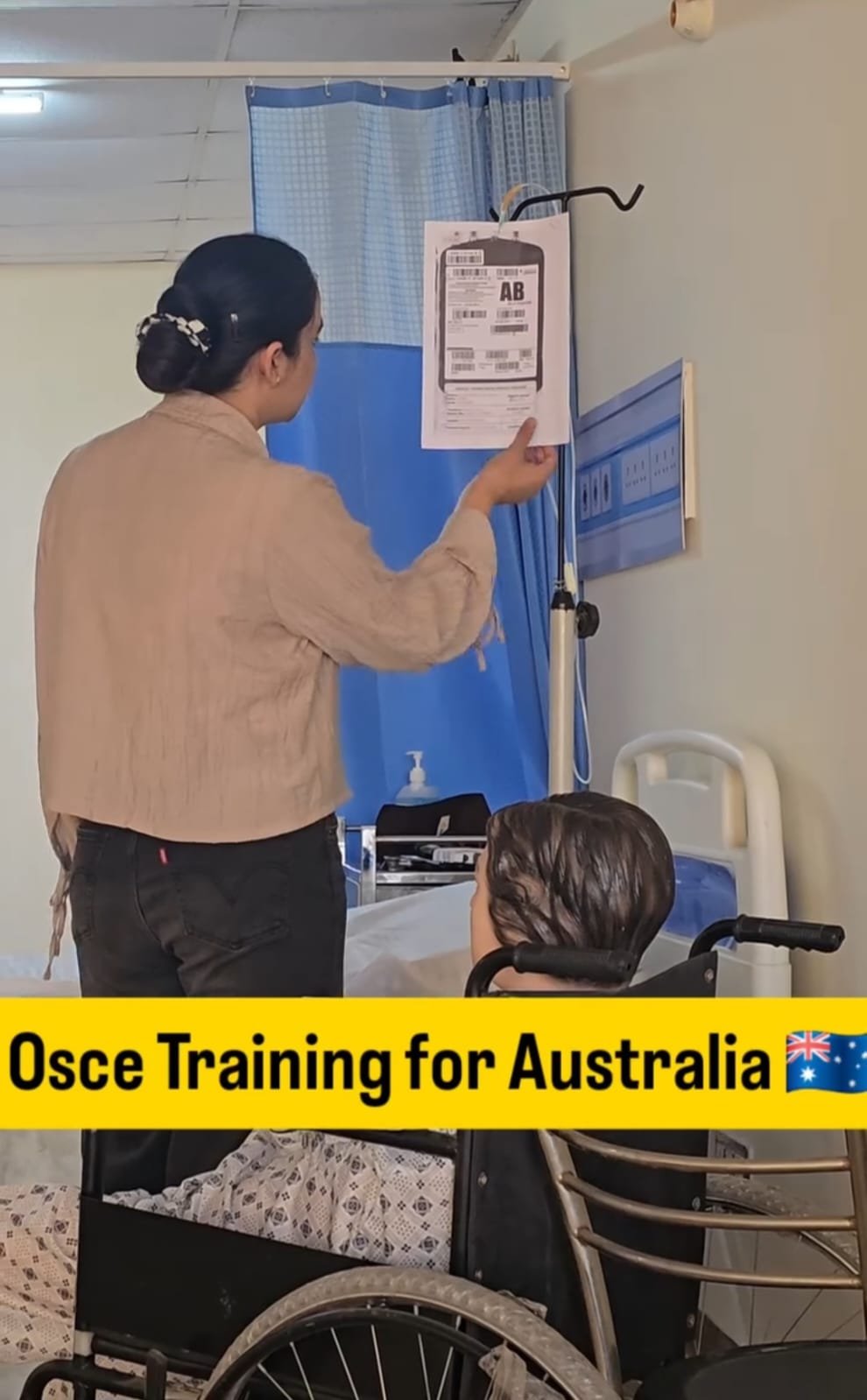
Australia’s OSCE is the final stage of the Outcomes-Based Assessment (Stream B), taken after Orientation Part 1, your portfolio and the MCQ exam. It is an in-person clinical exam held in Adelaide or Melbourne, with separate exams for registered nurses, enrolled nurses and midwives. A pass is valid for five years, but only satisfies the recency-of-practice standard for two — so timing your application matters.
OSCE coaching for New Zealand (NCNZ)
New Zealand’s competence assessment has two parts: an online theoretical exam at a Pearson VUE centre (Part A medication safety, Part B nursing knowledge, NZ$140, three attempts), then a clinical assessment taken in person in Christchurch. The clinical part is a two-day orientation and preparation course (NZ$500) followed by the OSCE itself (NZ$3,000). Registered nurses sit 10 stations, enrolled nurses 8, at 12 minutes per station. You may sit the OSCE up to three times.
OSCE coaching for New Zealand →
Online OSCE training for nurses in Kerala and across India
The live online batch runs the same syllabus, same faculty and same mock circuits as the campus programme, at the same ₹95,000. It is taken by nurses in Kerala, Punjab, Delhi NCR, Maharashtra and across the Gulf, and is built for nurses already working shifts — sessions run morning and evening, and are recorded.
What online cannot replicate is the feel of a sterile field or the depth of a compression. Online candidates who can travel are encouraged to attend the final mock circuits in person at the Mohali campus before their exam date; those who cannot are given extra assessed video submissions instead.
Who teaches you
OSCE stations at NCA are taught and assessed by nurses who have worked on the registers you are applying to — ex-NHS nurses for the UK circuit and AHPRA-registered nurses for the Australian one. That matters more than it sounds: the examiner is not marking whether the care was reasonable, but whether it matched that country’s expected standard, and only someone who has practised there reliably knows the difference.
Mock stations are marked against the regulator’s own criteria and returned with written feedback per station, not a single overall score.
OSCE course fees and batches
| Option | Duration | Fee |
|---|---|---|
| Campus — Chandigarh / Mohali, full simulation ward | 2–4 months | ₹95,000 |
| Live online — same faculty, same mock circuits | 2–4 months | ₹95,000 |
| Seat registration (adjusted against the course fee) | — | ₹1,000 |
New batches start every Tuesday, morning and evening. Same fee for the UK, Australia and New Zealand tracks — the station drills differ, the price does not.
OSCE Coaching — ₹95,000 · 2–4 months · morning or evening batch · next batch Tuesday
Enrol now — choose your shiftAsk on WhatsAppCall +91 90410 12051
Pay securely via PayU · Seat registration ₹1,000 is adjusted against the fee · Same fee for UK, Australia and NZ tracks
OSCE training at NCA — video
What Will You Learn in Nursing OSCE Training? | Practical Skills — a walk through the practical skills covered across the OSCE stations. Watch on YouTube.
Nursing OSCE Preparation with High-Fidelity Manikins | NCA Academy — inside the simulation ward, showing the manikins used for the clinical skills stations. Watch on YouTube.
Related nursing exam coaching at NCA
OSCE is usually the second of two exams. If you are on the UK route you will sit the NMC CBT first; on the Australian route the NCLEX-RN comes before the OBA and OSCE; New Zealand candidates take the NCNZ CBT. NCA also runs online NCLEX coaching, OET coaching for the English requirement, DHA exam coaching for Dubai, and campus OSCE batches in Chandigarh and Mohali. See all programmes on the nursing exam coaching hub.
Frequently asked questions — OSCE coaching
Which countries require an OSCE for nurses?
The United Kingdom (NMC), Australia (NMBA/AHPRA) and New Zealand (NCNZ) all require internationally qualified nurses to pass an OSCE before registration. The stations, fees and venues differ in each country, so preparation has to be country-specific.
What is the OSCE exam fee?
The UK NMC OSCE costs £794, with a reduced resit fee of £397 if you are resitting seven or fewer stations. New Zealand’s OSCE costs NZ$3,000 plus a NZ$500 orientation course. Australia’s OSCE fee is set by the NMBA and should be confirmed on their website before booking.
Where is the OSCE exam held for Indian nurses?
The OSCE is always taken in the destination country, never in India. UK candidates test at Oxford Brookes, Northampton, Ulster or Leeds Teaching Hospitals. Australian candidates test in Adelaide or Melbourne. New Zealand candidates test at the Nurse Maude centre in Christchurch. Coaching is what happens in India; the exam is not.
Is online OSCE training enough?
Online is enough for the theory, the documentation and the communication stations, and our online candidates pass. What it cannot replicate is the feel of a sterile field or compression depth on a manikin. Online candidates who can reach Chandigarh are encouraged to attend the mock circuits in person before the exam.
What is the difference between the OSCE and the CBT?
The CBT is a computer-based multiple-choice test of nursing knowledge, taken in India. The OSCE is a practical clinical exam taken in the destination country, where examiners watch you perform. Both are required for UK registration and can be taken in either order.
How many attempts do I get at the OSCE?
Three, in the UK and in New Zealand. In the UK you must wait at least 10 days between attempts and take all resits at the same test centre; if you fail three times your application closes and you must wait six months before starting again. Australian re-sits are governed by the NMBA’s exam re-sit policy.
How many stations are there in the OSCE?
Ten in the UK, ten in Australia, and ten in New Zealand for registered nurses — eight for enrolled nurses in New Zealand. New Zealand allows 12 minutes per station: two to read the instructions, eight to perform, two to move on.
How long is the OSCE course at NCA?
Two to four months, on campus in Chandigarh/Mohali or live online, at ₹95,000. New batches begin every Tuesday.
Does NCA offer OSCE coaching online for nurses outside Chandigarh?
Yes. The live online batch runs the same syllabus with the same faculty and the same mock circuits, and is taken by nurses across Kerala, Punjab, Delhi NCR and the Gulf. Campus and online cost the same.
Which is easier, the Australian or the New Zealand OSCE?
Neither is easier — they test different things. New Zealand pairs its OSCE with a separate theoretical exam and a compulsory two-day orientation in Christchurch. Australia places the OSCE at the end of a longer portfolio and MCQ pathway. Choose on where you want to work and which pathway you already qualify for, not on perceived difficulty.